How tall should a dresser be? 30 to 36 inches
The Wooden Stars is a participant in the Amazon Services LLC Associates Program. We may earn a commission when you buy through links on our site, at no extra cost to you.
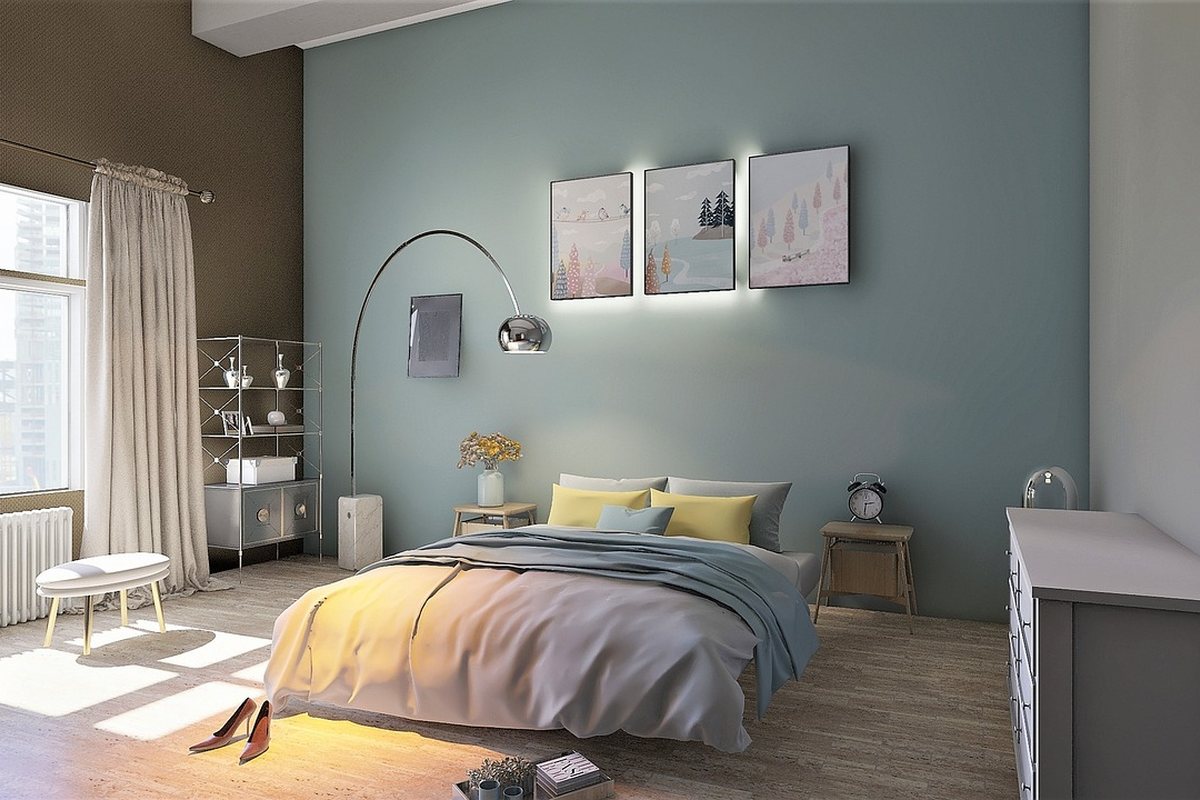
How tall should a dresser be? 30 to 36 inches for a wide horizontal dresser and 40 to 56 for a tall chest — and the deciding number is whether you want to use the top.
Above about 42 inches the top stops being a surface and becomes a shelf you cannot see.
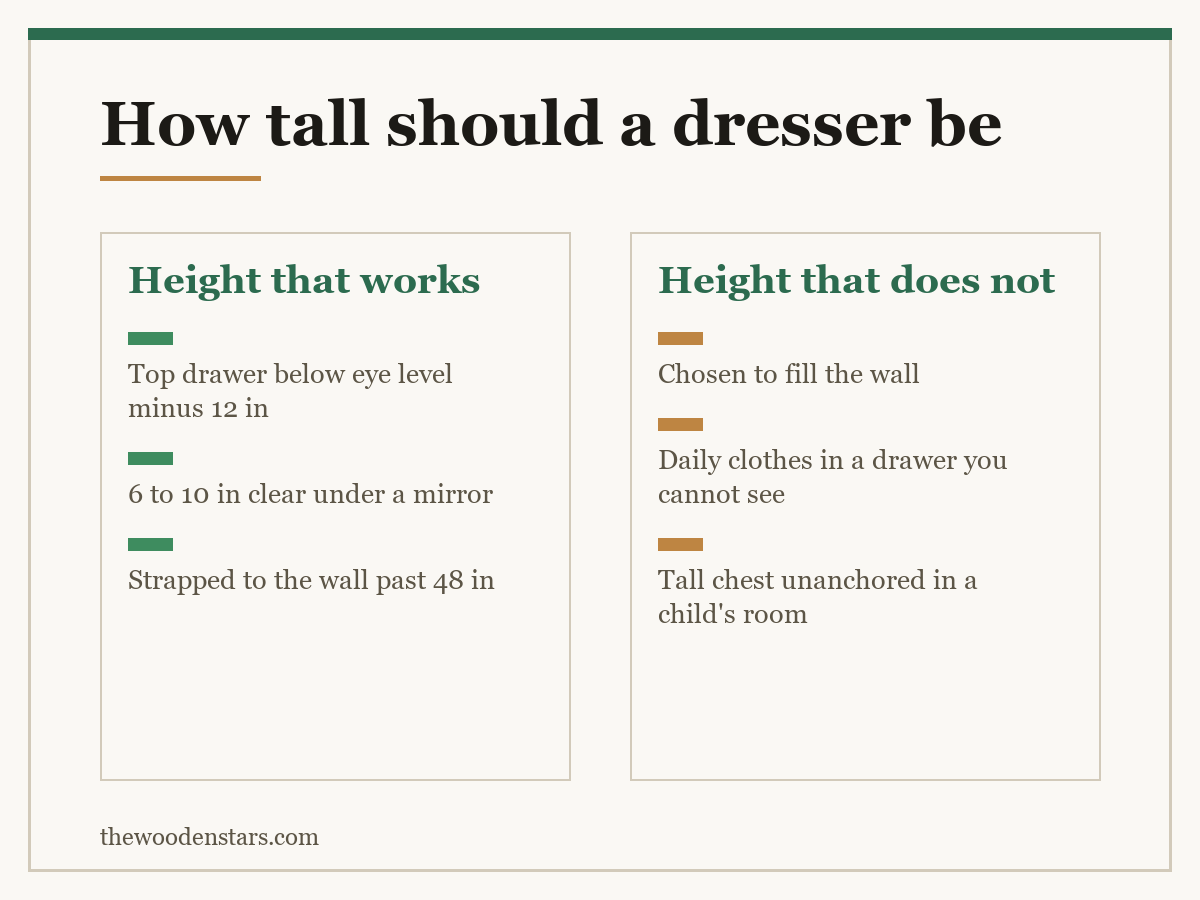
Two families. A horizontal dresser is 30 to 36 inches tall, wide, and its top works as a surface for a lamp, a tray or a TV. A tall chest or highboy is 40 to 56 inches, narrow, and its top is decorative only. The practical ceiling for a usable top is eye level minus about 12 inches — for most adults that is 42 to 48 inches, past which you cannot see into the top drawer without leaning. If a mirror goes above it, 32 to 34 inches leaves room. Anything over 48 inches must be strapped to the wall.
How tall should a dresser be for each job
- Horizontal dresser, 30 to 36 inches. Six to nine drawers across, usually 52 to 66 inches wide. The top is a real surface.
- Standard chest, 36 to 42. Four or five drawers, 30 to 38 inches wide. Top usable if you are tall.
- Tall chest or highboy, 44 to 56. Five to seven drawers stacked. The top is decoration.
- Under a wall-mounted TV, 30 to 34. Screen centre wants to land at seated eye level — the same logic as how tall a TV stand should be.
- Beside a bed as a nightstand, 24 to 30. Level with the mattress top, per nightstand height.
| Type | Height | Width | Top usable |
|---|---|---|---|
| Horizontal dresser | 30 to 36 in | 52 to 66 in | Yes |
| Standard chest | 36 to 42 in | 30 to 38 in | If you are tall |
| Tall chest, highboy | 44 to 56 in | 30 to 38 in | No |
| Under a wall TV | 30 to 34 in | Wider than the screen | Yes |
| Used as a nightstand | 24 to 30 in | 18 to 28 in | Yes |
The rule that sets the ceiling
Eye level minus 12 inches.
Standing eye level is roughly 4.5 inches below your total height: about 59 inches at 5 ft 4 in and 67 at 6 ft. Subtract 12 and you get the tallest a dresser can be while you can still look into the top drawer without leaning over it: 47 inches and 55 respectively.
That is the functional limit, not a style rule. Past it you are reaching into a drawer you cannot see, which is fine for spare bedding and annoying for socks.
Two consequences worth planning around. In a shared bedroom, size to the shorter person. And put what you use daily in the drawers between hip and chest height — on a tall chest that is the middle two, not the top one.
What goes above it
The dresser’s height is usually decided by what sits above, not by the dresser.
A mirror. Leave 6 to 10 inches between the dresser top and the bottom of the mirror, and the mirror’s centre should land near standing eye level. With a 60-inch eye level and a 30-inch mirror, the dresser wants to be 32 to 34 inches. A 42-inch dresser pushes the mirror too high to use.
A wall-mounted TV. Screen centre at seated eye level, about 42 inches from the floor. A 30 to 34-inch dresser puts a 40-inch screen exactly there.
Artwork. Bottom edge 8 to 10 inches above the top, so the two read as one group.
Nothing. Then go tall — a highboy stores far more per square foot of floor, which is the whole argument for one in a small bedroom. See tall wood dresser and small dresser for a small bedroom.
Height and tipping
Tall furniture with drawers is the classic tipping hazard, because opening two drawers moves the centre of gravity outside the footprint.
Three things that matter more than the published weight:
- Height against depth. A 52-inch chest on an 18-inch-deep base is the risky proportion. A 34-inch dresser on the same depth is not.
- Whether it is anchored. Anything over 48 inches, and anything at all in a room a child uses, should be strapped to a stud — anti-tip kits for dressers.
- Drawer stops. Good slides stop before the drawer clears the carcass. Cheap side rollers let a loaded drawer come most of the way out.
Carrying capacity is a separate question — how much weight a dresser can hold — and drawer depth decides what actually fits, per how deep a dresser drawer should be.
Depth and width are set elsewhere: how deep a standard dresser is and 6 drawer against 9 drawer. For what the carcass is made of, solid wood dresser and what “all wood” actually means.
One thing that changes the answer in a rented flat: the window sill. A dresser under a window wants to stop below the sill, and sills commonly sit at 30 to 36 inches. That single constraint is why so many bedrooms end up with a horizontal dresser rather than a chest, regardless of what the room would otherwise take. Measure to the sill before measuring anything else, because it is the one dimension you cannot change.
Setting the height
- Anti-tip furniture straps Required past 48 inches, and in any child’s room
- Tape measure Your eye level minus 12 inches is the ceiling for a usable top
- Furniture levellers A dresser that rocks opens its drawers on its own
- Drawer liners What stops the contents of a deep drawer sliding on every pull
What to buy

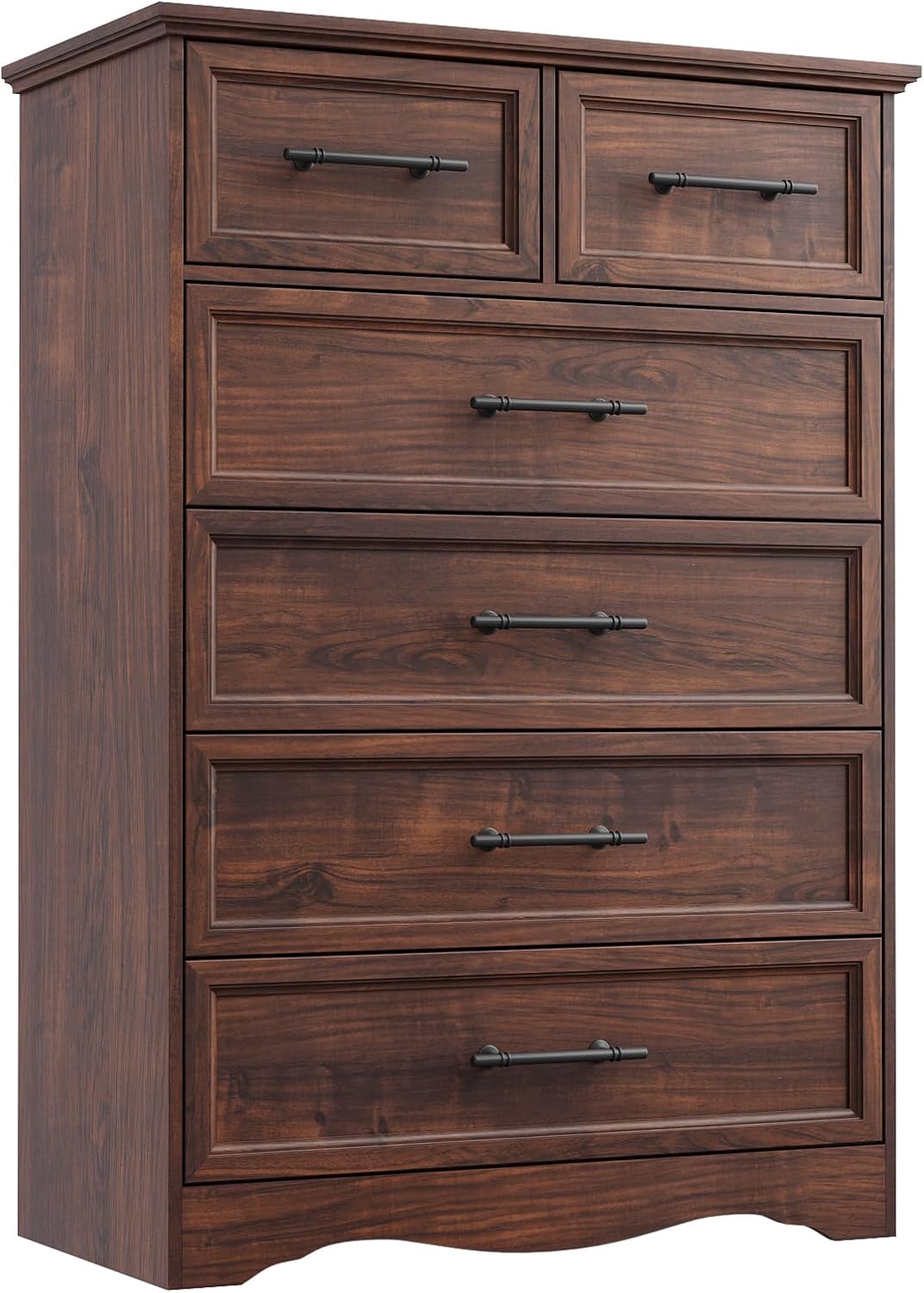


For the other dimensions, see how deep a standard dresser is and how much space in front of a dresser. For the type, chest of drawers against dresser and armoire against dresser.
Questions we get asked
How tall should a dresser be?
Thirty to 36 inches for a wide horizontal dresser, 40 to 56 for a tall chest.
What is the limit for a usable top?
Your eye level minus about 12 inches — roughly 47 inches at 5 ft 4 in and 55 at 6 ft.
What height works under a mirror?
Thirty-two to 34 inches, leaving 6 to 10 inches between the top and the bottom of the mirror.
What height for a TV above it?
Thirty to 34 inches, which puts a 40-inch screen’s centre at about seated eye level.
When do I have to anchor it?
Past 48 inches, and in any room a child uses regardless of height.
Tall chest or wide dresser in a small room?
Tall, if you do not need the top. A highboy stores far more per square foot of floor.