Bed Slat Replacement: Spacing Limits, Sizes and What to Buy
The Wooden Stars is a participant in the Amazon Services LLC Associates Program. We may earn a commission when you buy through links on our site, at no extra cost to you.
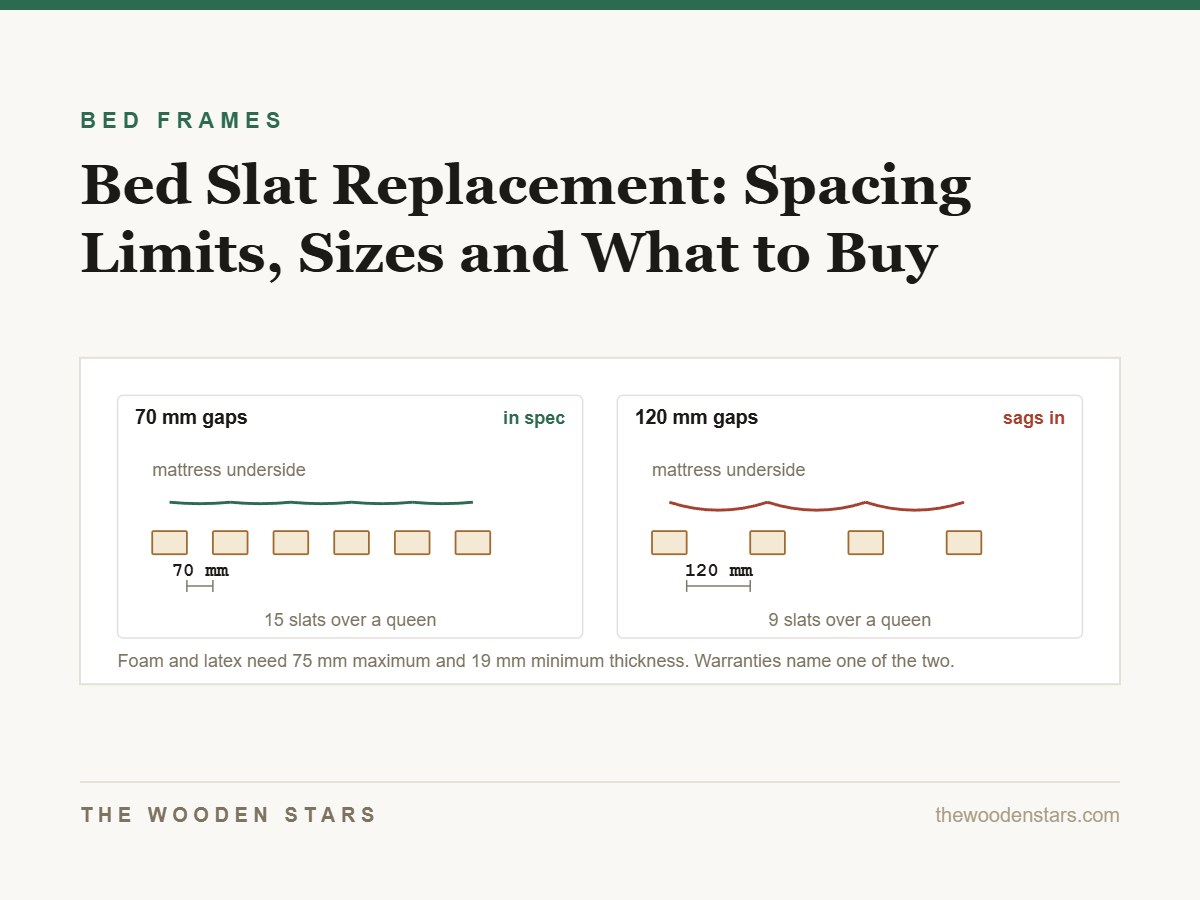
Broken bed slats are one of the few furniture failures with a hard engineering limit behind them. A slat is a beam, and a beam that spans too far with too little depth will break — not eventually, but predictably. Which means replacing slats without changing the spacing is replacing them so they can break again.
The practical rule for a solid wood bed is slats no more than 75 mm (3 in) apart, ideally 50–70 mm, and at least 19 mm (3/4 in) thick — most mattress warranties specify one or both. Wider gaps let a foam mattress sag between slats and void the warranty. Measure the interior width of your frame, not the mattress size, before ordering replacements.
Start here: a slat set sized by bed is the quickest way back to a frame that meets your mattress warranty.

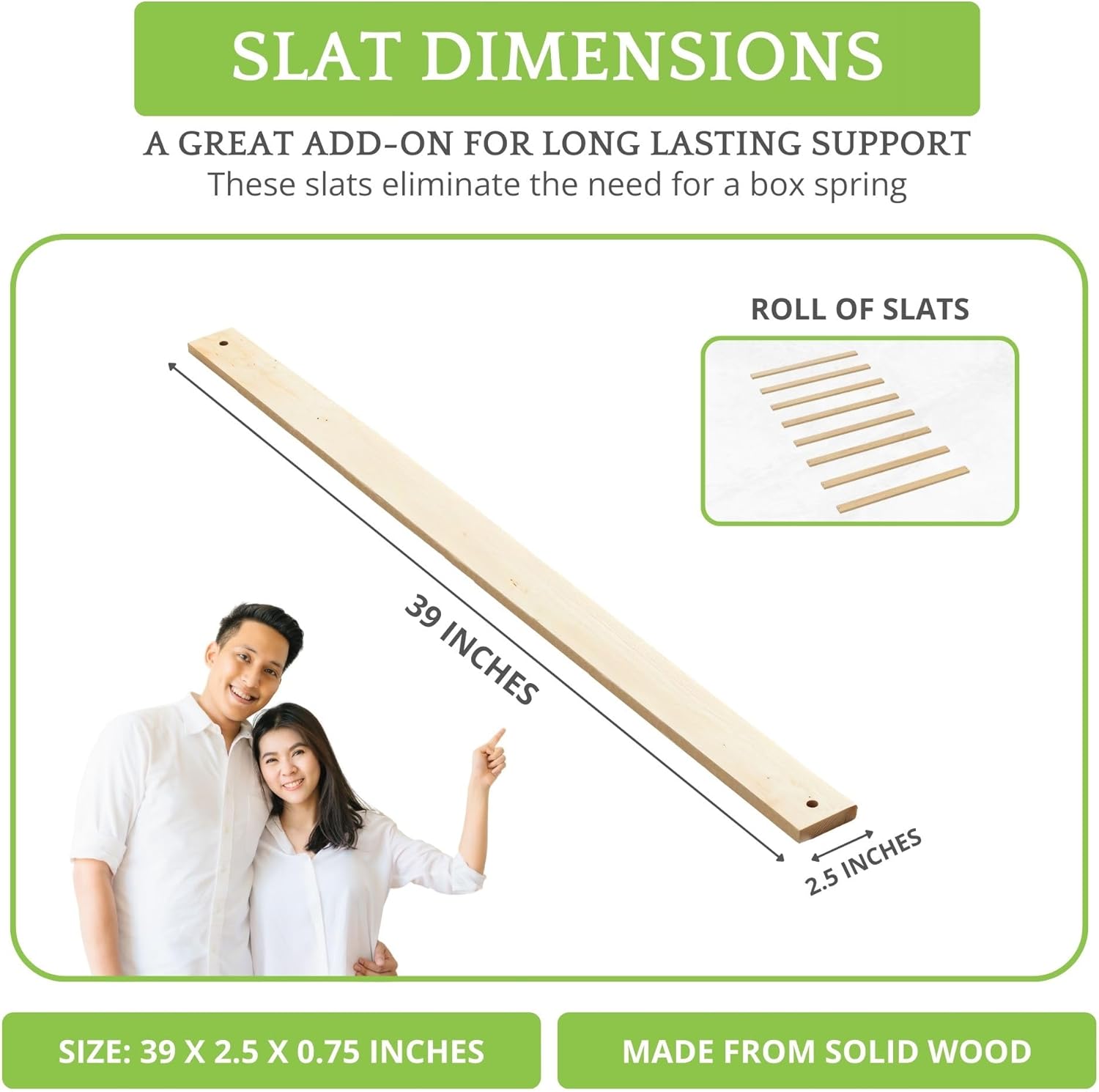
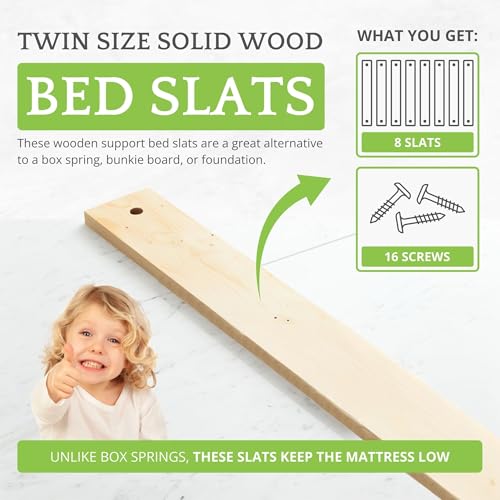
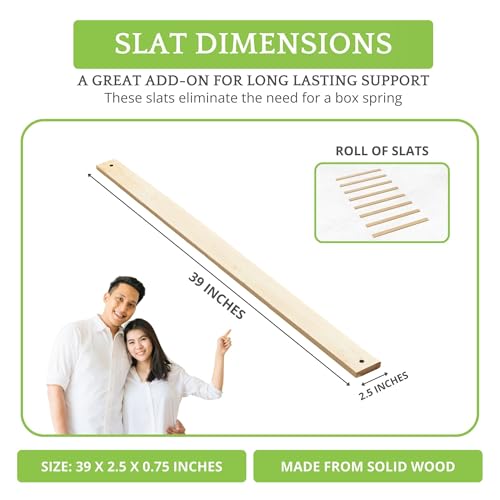
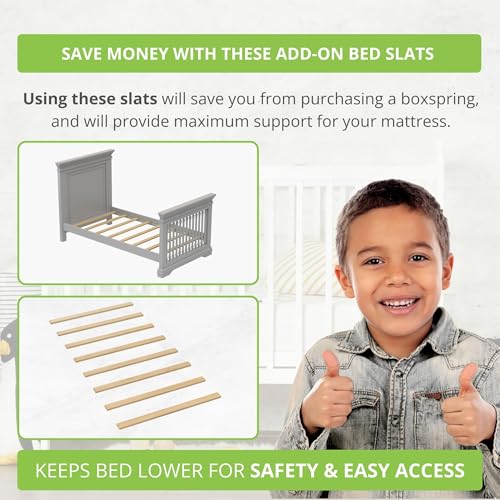
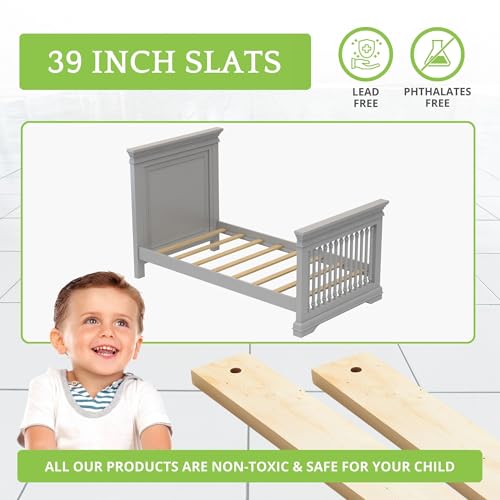
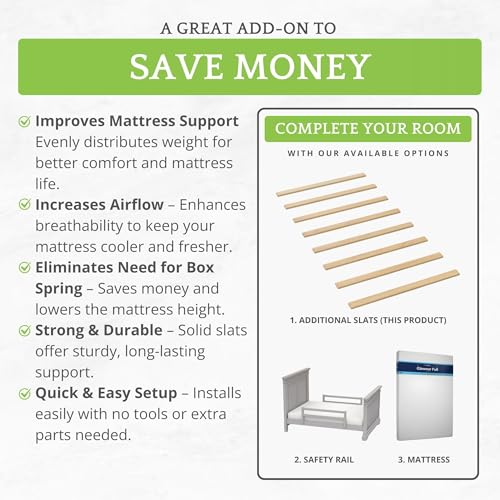
Prime Replacement Bed Slats for Twin, Full, Queen & King Beds; Solid Wood Support




The numbers that actually matter
| Mattress | Max gap | Min slat thickness | Notes |
|---|---|---|---|
| Memory foam | 60–75 mm | 19 mm | Most warranties specify 75 mm max |
| Latex | 60 mm | 19 mm | Heavy; the tightest spacing of the three |
| Innerspring / pocket sprung | 75–100 mm | 19 mm | Spreads load itself, more tolerant |
| Hybrid | 75 mm | 19 mm | Treat as foam |
| Futon / thin mattress | 50 mm | 19 mm | Gaps telegraph straight through |
Two further numbers matter as much as the gap:
- Slat width. 70 to 100 mm is standard. Narrower slats need to be closer together; wider ones are stiffer but heavier and can rub.
- Span. A slat spanning the full width of a king with no centre support is the fundamental problem. Solid wood slats over about 1,100 mm of unsupported span will take a permanent set under a heavy mattress, whatever their thickness. That is what centre rails are for.
How many slats, by bed size
Work it out from the interior length of the frame rather than trusting a slat kit’s claim. Divide the interior length by (slat width + gap) and round up.
| Bed size | Interior length | Slats needed | Centre supports |
|---|---|---|---|
| Twin / Single | 188–190 cm | 13–14 | Not required |
| Full / Double | 188–190 cm | 13–14 | 1 centre leg |
| Queen | 200–203 cm | 14–15 | 1–2 centre legs |
| King | 200–203 cm | 14–15 | 2–3 centre legs |
| Cal King | 213 cm | 15–16 | 2–3 centre legs |
A slat kit that arrives with eight slats for a queen is not a slat kit; it is a bunkie board substitute, and it will need the spacing filled in.
Measuring before you order
This is where most replacement purchases go wrong. Three measurements, all taken from the frame and none from the mattress:
- Interior width, ledger to ledger. This is the slat length. Take it at both ends and in the middle — frames are rarely perfectly parallel, and you want the smallest of the three, minus 3–5 mm of clearance so the slat drops in without forcing.
- Ledger depth. How much of the slat end actually sits on the rail. Under about 15 mm and the slat can pop off the ledger under load.
- Interior length. For the count, as above.
Bed sizes are mattress standards, not frame standards. Two queen frames from different makers can differ by 20 mm internally, which is more than enough for a slat kit to be useless.
Solid slats, sprung slats, or a bunkie board
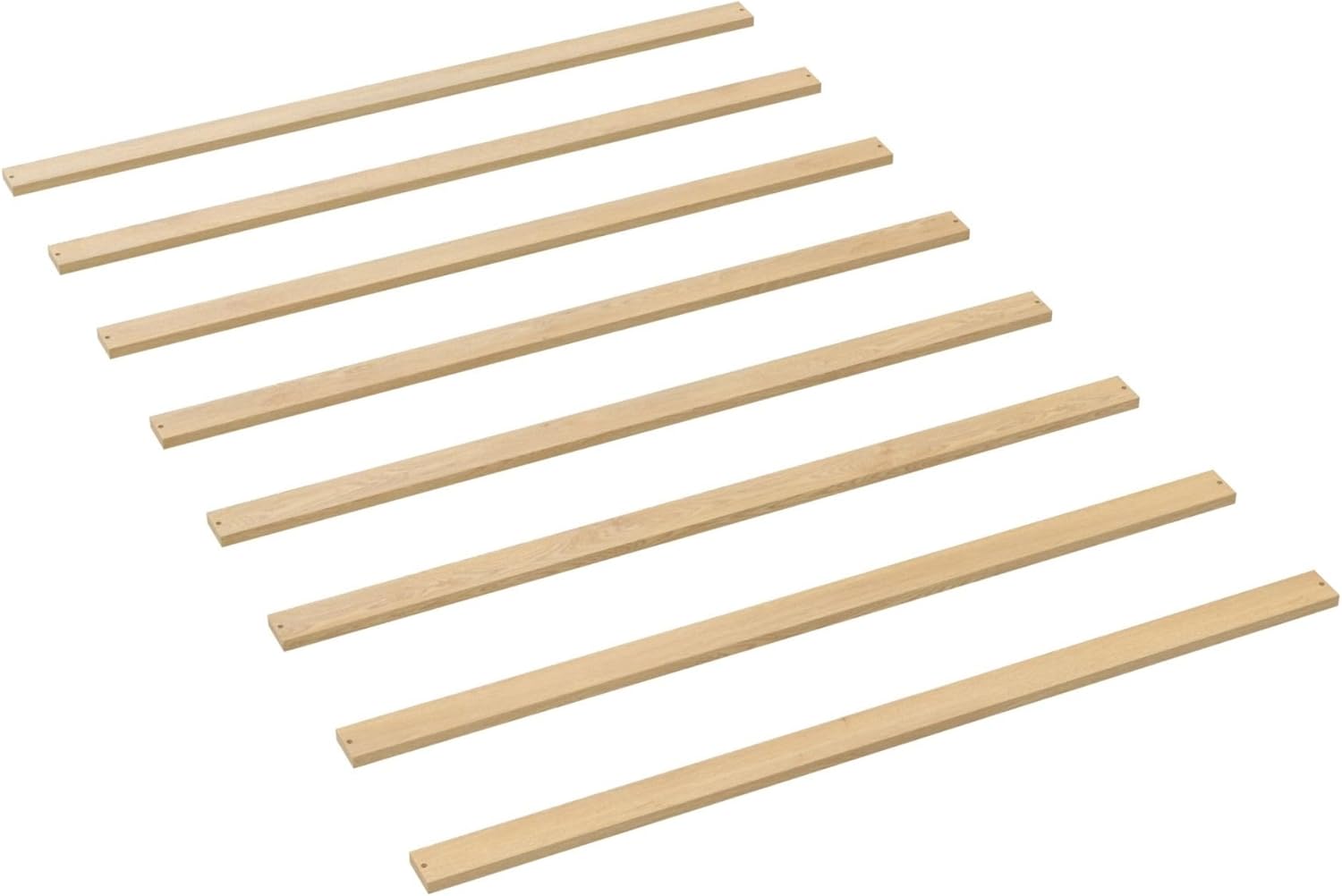
Flat solid slats — usually pine, sometimes poplar or beech. Cheap, simple, stiff. They sit in a ledger or on a cleat and they are what most wooden bed frames use. Replaceable individually, which is their real advantage.
Sprung (bentwood) slats — laminated beech, curved upward, held in rubber or plastic holders. They flex, which makes the bed feel softer and extends mattress life. Correct orientation is bow upward, always; fitted upside down they load the holders in the wrong direction and both slat and holder fail. The holders are a wear part and are sold separately.
Bunkie board — a thin panel, usually 40 to 50 mm, that sits on top of existing slats to spread load. The right answer when the frame’s slat spacing is wrong and cannot be changed, and the wrong answer if the slats themselves are broken, because a board does not fix a missing beam.
Fitting replacements properly
- Do not glue or screw solid slats down rigidly at both ends. They need to be able to move slightly, and a fixed slat transfers load into the rail instead of along itself.
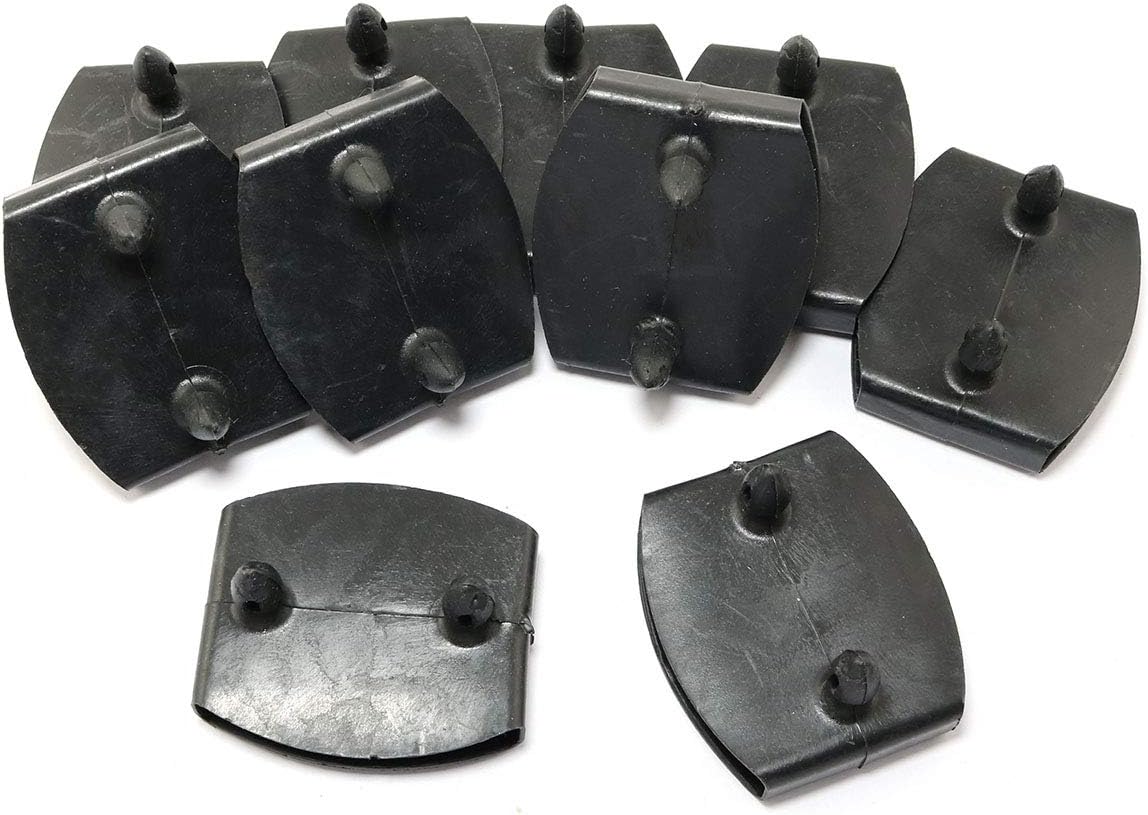
- Use slat holders if the frame has them. They centre the slat, stop it walking sideways, and put plastic between wood and wood — which is why beds with holders squeak less. Standard sizes are 55 × 9 mm and 70 mm for the common European frames.
- Check orientation on sprung slats: bow up, and the holder’s tab toward the frame.
- Space by measurement, not by eye. Cut a spacer block to your chosen gap and use it between every pair. Eyeballing produces gaps that vary by 20 mm, and the mattress finds the widest one.
- Add a fabric slat tape or webbing if the frame used one. It keeps the spacing without fixing the slats.
What you need for a slat job
- Replacement wooden slats Sized by bed; check interior width first On Amazon →
- Full-size slat set / bunkie board When the whole platform needs replacing On Amazon →
- Slat holders, 70 mm The wear part on sprung-slat frames On Amazon →
- Slat centre caps, 55 x 9 mm End and centre caps for European frames On Amazon →
- Tape measure and a spacer block Spacing by measurement beats spacing by eye
What to buy
Measure the interior width first. Buy slats if one has broken, holders and caps if the slats are sound but walking sideways.

Why the slat broke
Worth diagnosing, because a replacement in the same conditions has the same future.
- Spacing too wide. Fewer slats each carrying more load. The most common cause on budget frames.
- Slats too thin. 12 mm slats exist and should not. Under 19 mm, plan on replacement rather than repair.
- No centre support. A full-width span on a queen or king. Fit a centre leg — see our guide to bed frame centre support legs.
- A knot in the wrong place. A knot at mid-span in a pine slat is a hinge. This is genuinely a materials defect and worth replacing before it breaks.
- Heavy mattress, unchanged frame. Swapping an innerspring for a thick latex or hybrid mattress can add 30 kg or more. The frame that coped for years may not cope now.
And if the frame is also making noise, the slats are the second thing to check, not the first — see wooden bed frame squeaking for the order.
Questions we get asked
Can I use plywood instead of slats?
You can, and it works structurally, but it stops the mattress breathing. Foam and latex mattresses shed moisture downward, and a solid panel traps it — which over a couple of years means mould on the underside of the mattress. If you use plywood, drill ventilation holes, or use a bunkie board designed with gaps.
What thickness slats should I buy?
19 mm (3/4 in) minimum for solid wood, 22 to 25 mm if the span is over a metre and there is no centre support. Sprung laminated slats can be thinner — 8 to 10 mm — because the lamination and the curve do the work. Never mix the two types in one frame.
Do slats need to be a specific wood?
No, but density helps. Pine is standard and fine at the right thickness and spacing. Poplar and beech are stiffer for the same section. Avoid anything with large knots at mid-span, whatever the species. There is a hardness and stiffness comparison on our wood types hub.
My mattress warranty mentions slat spacing. Does that really get enforced?
Frequently, yes — it is one of the easiest claims for a manufacturer to reject, because the evidence is visible in a photograph of your bed. If the warranty specifies a maximum gap, meeting it costs a few extra slats and removes the argument entirely.
Should the slats be screwed to the frame?
Solid slats: no, or at most one screw at one end so it cannot walk, leaving the other end free. Sprung slats: never — the holders do that job. Screwing both ends of a solid slat down makes it a structural member of the frame, which it was not designed to be.