Tall wood dressers — Where the height stops being useful
The Wooden Stars is a participant in the Amazon Services LLC Associates Program. We may earn a commission when you buy through links on our site, at no extra cost to you.

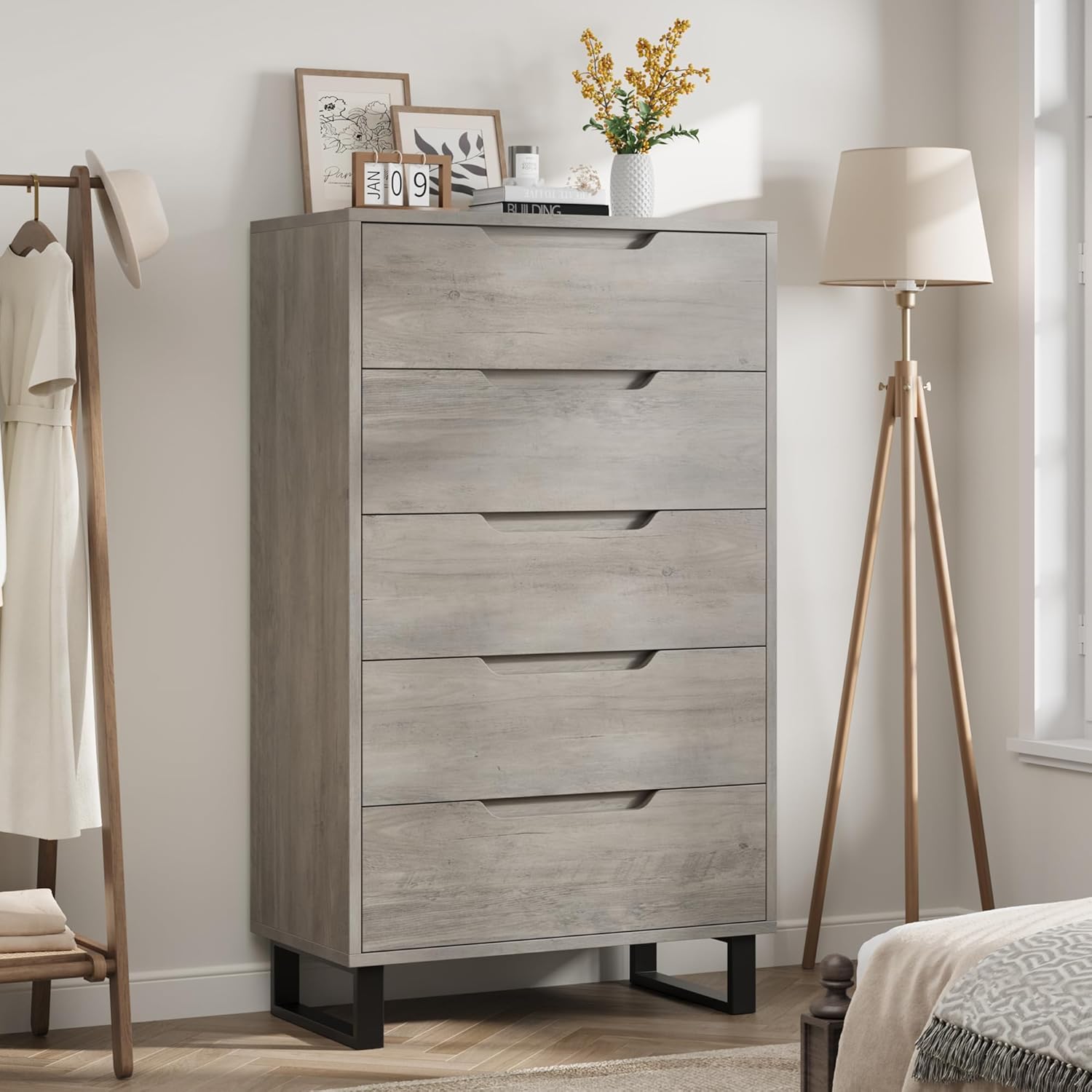
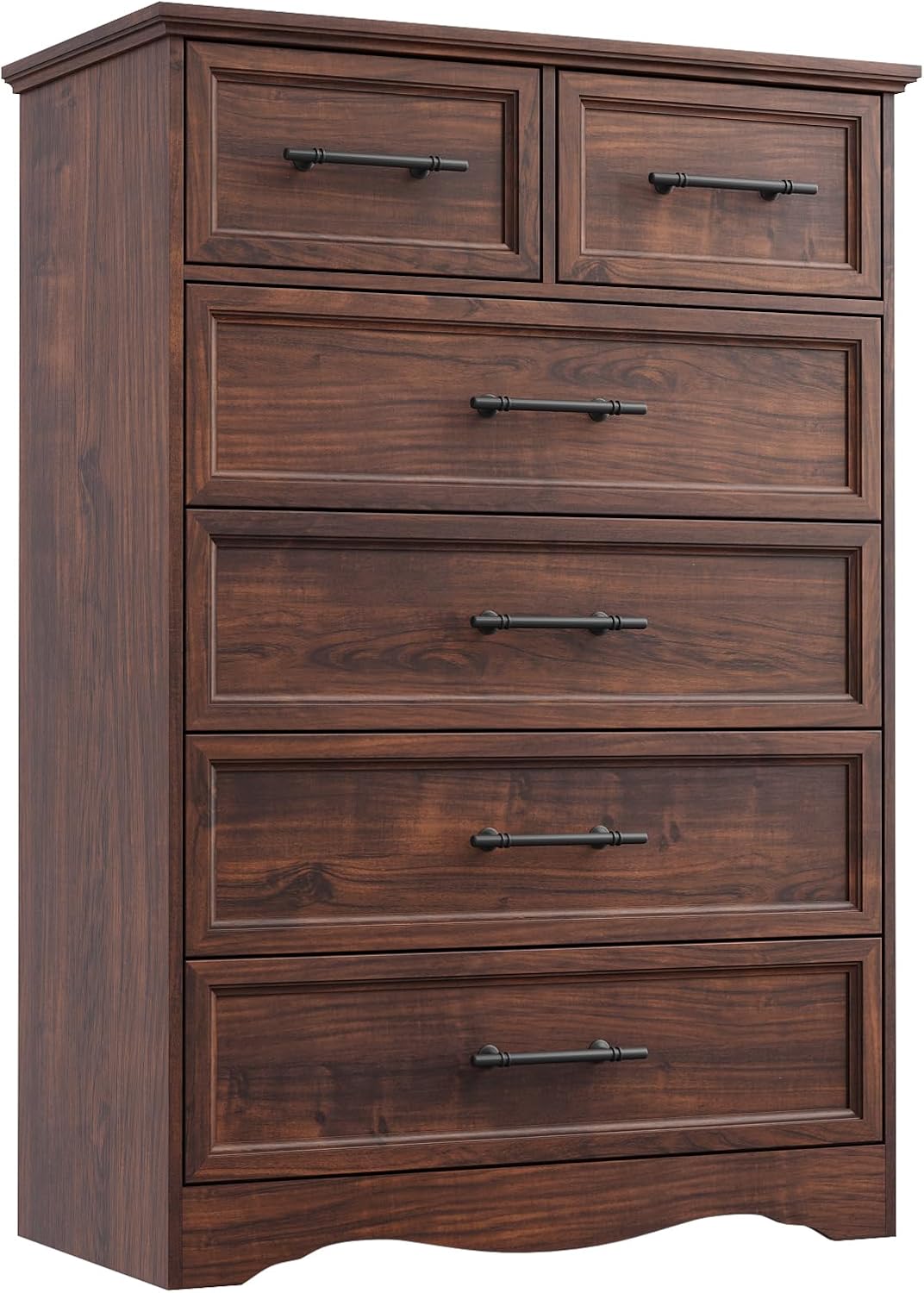
A tall dresser — properly a chest of drawers, or a highboy — trades footprint for height. It gives you the same drawer volume in about two thirds of the floor space, which is why it exists and why small bedrooms are full of them.
It also puts the top drawer above chest height and the whole mass of the thing on a narrow base. Both of those have consequences, and one of them is a safety issue rather than an inconvenience.
Tall dressers run 40 to 55 inches high and 30 to 40 wide, against a standard dresser’s 30 to 36 high and 50 to 65 wide. The height buys floor space and costs you two things: the top drawer is above eye level for many people — you cannot see into it, only feel — and the piece is far more prone to tipping, because a loaded open drawer puts the centre of gravity outside a narrow base. Anchoring to a stud is not optional. Do it the day it is assembled, with the supplied strap or a bought kit.
The trade, in numbers
| Measure | Tall chest | Standard dresser |
|---|---|---|
| Height | 40 to 55 in | 30 to 36 in |
| Width | 30 to 40 in | 50 to 65 in |
| Floor area | About 4 to 5 sq ft | About 7 to 9 sq ft |
| Drawers | 5 to 7 | 6 to 9 |
| Top drawer height | 45 to 52 in | 28 to 34 in |
| Tipping risk | High | Moderate |
Roughly a third less floor for a similar amount of storage. In a bedroom where a bed and a wardrobe have already taken the walls, that is the whole argument.
The top drawer problem
On a 52-inch chest the top drawer opening sits around 48 inches from the floor. For someone five foot four, that is chin height: you cannot see into it, you can only reach in and feel.
Two practical consequences, neither serious but both worth planning for.
Put the things you identify by touch up there. Socks, underwear, belts. Not the drawer where you keep six similar black t-shirts.
Loading the top drawer raises the centre of gravity. Heavy items — jeans, jumpers, anything dense — belong in the bottom drawers, which is also where they are easiest to lift out. This is good practice on any dresser and matters far more on a tall one.
Tipping, and why this is the serious part
A tall chest with a loaded top drawer open has its centre of gravity out in front of a narrow base. Add a child pulling on the drawer, or climbing it like a ladder, and it goes over. Furniture tip-overs are a well-documented cause of serious and fatal injuries to young children, and tall narrow chests are the worst offenders in the category.
Three things reduce it, and only the first is sufficient on its own.
- Anchor it to the wall, into a stud. Most chests ship with a strap; if yours did not, an anti-tip kit costs very little. Use a stud finder — an anchor in drywall alone will pull out under exactly the load you are guarding against.
- Load the bottom drawers heaviest. It lowers the centre of gravity and it is free.
- Prefer an interlock if the design offers one. Some chests only allow one drawer open at a time. This is a genuine safety feature, not a gimmick, and it is worth choosing on.
Do the anchoring on assembly day. The single most common version of this accident happens to furniture that was going to be anchored later.
What height does to the construction
A tall narrow case racks more easily than a wide low one, because it is a taller lever on a smaller base. Three details matter more than they would on a standard dresser.
The back panel. It is what stops the case twisting into a parallelogram. A back fixed all the way round, in a rebate, is much better than one tacked on at the corners. On a tall chest this is the difference between solid and wobbly.
Dust panels between drawers. Thin horizontal panels dividing each drawer bay. They add stiffness across the case at every level, and they are a reliable sign of careful construction.
A plinth or a base frame rather than four small feet. It spreads the load and widens the effective footprint slightly, both of which help.
The usual dresser checks still apply
Height changes the emphasis, not the fundamentals.
- Drawer boxes: dovetails are the benchmark; dowels are acceptable; staples into particleboard are not.
- Drawer bottoms: captured in a groove on all four sides, not pinned underneath.
- Runners: full-extension steel slides give access to the whole drawer, which matters more on a drawer you cannot see into.
- Case sides: solid timber or plywood where the runners bolt. Particleboard strips, the drawer racks, and on a tall chest a racking drawer is more noticeable.
The full list is in wood dressers, and reading a listing for construction is covered in solid wood dressers and what “all wood” actually means.
Where to put it
Two clearances to check.
In front: about 36 inches, so a drawer can open fully with somebody standing at it. On a tall chest the drawers are often deeper front-to-back than a standard dresser’s, so this can be more than you expect.
Above: if the chest is 55 inches tall, anything on top of it — a lamp, a plant, a mirror — is at head height and within reach of the same open drawer that might tip it. Keep the top clear or keep it light.
A tall chest also works where a standard dresser cannot: beside a door, in an alcove, in the leftover strip of wall between a window and a corner. That flexibility is the other half of why the format exists.
Buy these with it
- Furniture anti-tip kit Not optional on a tall chest; fit it on assembly day
- Stud finder An anchor in drywall alone pulls out under the load it guards against
- Drawer organisers Essential in a top drawer you can only reach into by feel
- Paste wax For wooden runners; a tall chest’s drawers get used hardest at the bottom
What to buy


For the wide low alternative and the construction checks in full, see wood dressers. To read a listing for material, solid wood dressers; and for one species specifically, walnut dressers.
Questions we get asked
How tall is a tall dresser?
Usually 40 to 55 inches, against 30 to 36 for a standard dresser. Width drops to 30 to 40 inches from 50 to 65.
Are tall dressers more likely to tip over?
Yes, considerably. A loaded open top drawer puts the centre of gravity outside a narrow base. Anchoring into a stud is essential.
Do I really need to anchor a dresser to the wall?
Yes. Tip-overs cause serious injuries to children, and a tall narrow chest is the highest-risk shape. Fit the anchor the day it is assembled.
What should go in the bottom drawers?
The heaviest items. It lowers the centre of gravity, and they are the easiest drawers to lift things out of.
Is a tall chest better than a dresser for a small room?
For floor space, yes — about a third less for similar storage. The costs are the unreachable top drawer and the tipping risk.
What is a drawer interlock?
A mechanism that only allows one drawer open at a time, so the centre of gravity never moves as far forward. A genuine safety feature worth choosing on.