Upholstered vs wood dining chairs — The spill test
The Wooden Stars is a participant in the Amazon Services LLC Associates Program. We may earn a commission when you buy through links on our site, at no extra cost to you.
Upholstered vs wood dining chairs is decided by one question: does anyone eat at this table who is going to spill on it?
Upholstery buys about an hour of extra comfort. It costs you the ability to wipe the seat, at the one piece of furniture in the house where food is guaranteed.
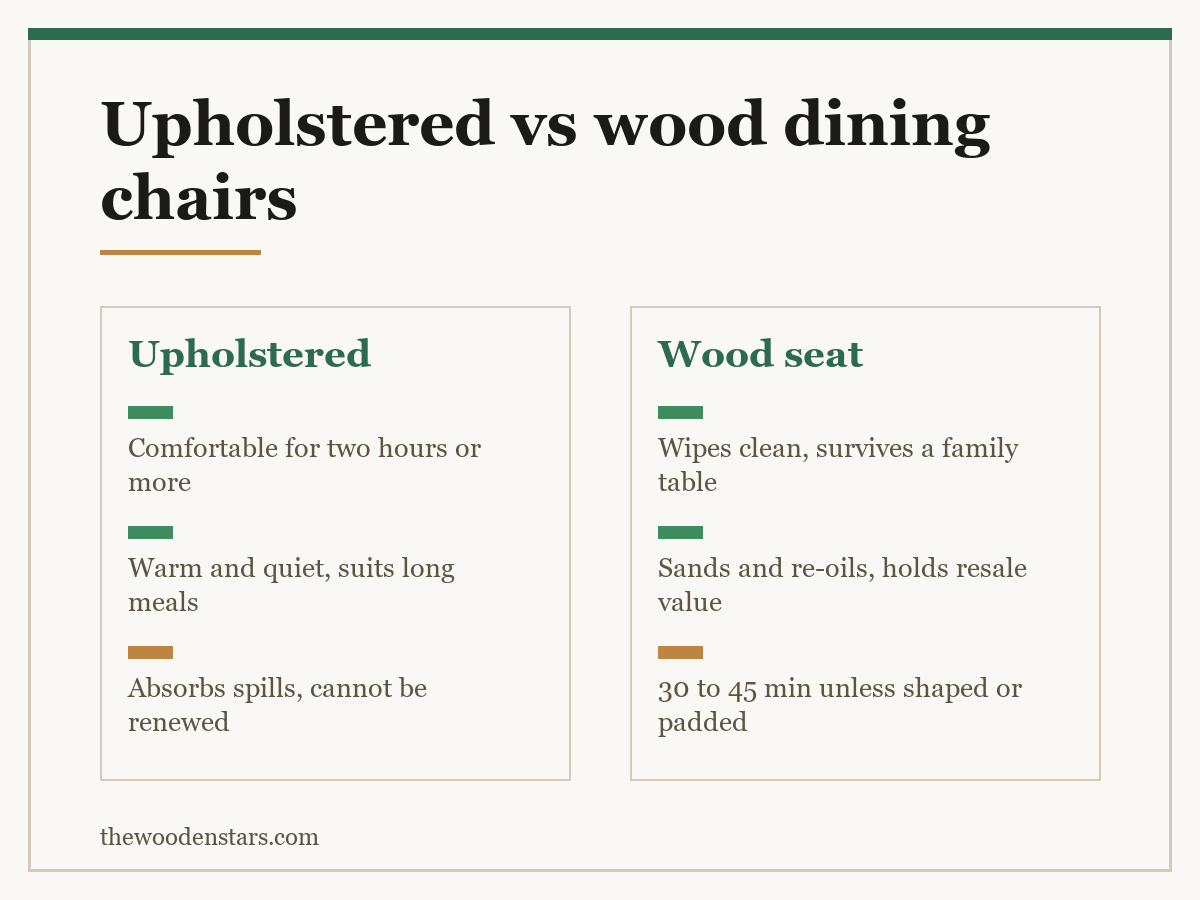
A wood seat wipes clean in seconds, survives twenty years, can be sanded and refinished, and is comfortable for roughly 30 to 45 minutes before you want a cushion. An upholstered seat is comfortable for two hours or more, is warmer and quieter, and costs 30 to 60% more — but fabric absorbs everything spilled at a dining table, and a seat that cannot be wiped usually gets replaced long before the frame does. The practical middle: a shaped wood seat with a washable tie-on pad, or upholstery in performance fabric or faux leather rather than linen or boucle.
Upholstered vs wood dining chairs: what each costs
- Comfort: 30 to 45 minutes on bare timber against two hours or more upholstered.
- Cleaning: a wipe against a stain-removal project.
- Lifespan of the seat: timber outlives the frame; fabric rarely does.
- Price: upholstery adds 30 to 60%.
- Warmth and noise: upholstery wins both, noticeably on a tiled floor in winter.
The asymmetry matters more than the list suggests. A tired timber seat can be sanded and re-oiled at home in an afternoon — the finishes are covered in best finish for a solid wood table top. A fabric seat that has absorbed a bowl of soup is finished, and reupholstering six chairs costs most of what six new chairs cost.
| Measure | Upholstered | Wood seat |
|---|---|---|
| Comfortable for | Two hours or more | 30 to 45 min |
| Cleaning | Stain removal | A wipe |
| Warm and quiet | Yes | No |
| Seat depth | 17 to 20 in | 16 to 18 in |
| Weight each | 14 to 22 lb | 10 to 16 lb |
| Renewable at home | No | Yes, sand and re-oil |
| Price | 30 to 60% more | Baseline |
The spill problem, stated honestly
A dining chair sits where food is eaten, usually by whoever in the household is least careful.
Three things reach the seat: spills, grease carried on clothing, and daily abrasion from people sliding in and out. Fabric takes all three; timber takes none of them.
If you want upholstery anyway — and there are good reasons to — choose the material for the job:
- Faux leather or vinyl. Wipes like timber, warmer to sit on, and the sensible choice with young children. It cracks eventually at the fold lines, typically after 5 to 8 years.
- Performance fabric. Solution-dyed acrylic or a stated stain-resistant finish. Handles spills far better than a plain cotton or linen weave, and it is worth asking for the rub count — 30,000 double rubs or more for a dining chair.
- Removable, washable covers. The single best feature in the category, and the whole argument in slipcovered against upholstered dining chairs.
What to avoid at a dining table: linen, boucle, velvet and anything pale and untreated. They are lovely on an accent chair in a room where nobody eats.
What a wood seat gets right
It ages with the frame. Same material, same rate, refinished at the same time — and the species decides how it dents, per the wood hardness scale and best wood for furniture.
Shaped beats flat, by a lot. A saddle or scooped seat is dramatically more comfortable than a flat board and costs almost nothing extra to make. If you are buying timber, buy shaped — it closes most of the comfort gap on its own.
It is lighter, by 3 to 6 lb a chair, which matters when six of them get moved for cleaning.
A pad closes the rest of the gap. A tie-on washable cushion gives upholstered comfort with a wipeable seat underneath, for a fraction of the price. For most households with a table that gets used daily, this is simply the right answer.
Second-hand value holds. Solid timber dining chairs have a resale market. Worn upholstered ones do not.
Which to buy
Buy wood if there are children, the table is used daily for meals, or you want the chairs to last as long as the table. Buy shaped rather than flat, and add pads.
Buy upholstered if the table is used mainly for long dinners with adults, the room is cold or echoey, or the dining room doubles as a place people sit and talk for hours. Choose performance fabric or faux leather.
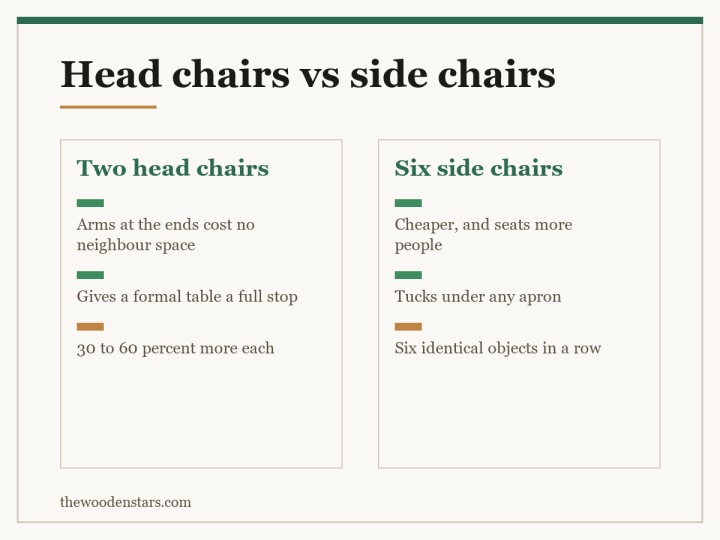
Mix them, which is what a lot of well-set-up rooms do: upholstered armchairs at the two ends where people linger, wooden side chairs down the long sides where they do not. That arrangement is covered in head chairs against side chairs.
Whichever way it goes, the money belongs in the frame. The seat is the cheap part to change and the joints are not — how much weight a dining chair can hold and how to reglue a loose joint. And check the material claim, per engineered wood against hardwood.
Either seat
- Seat pads for dining chairs Upholstered comfort with a wipeable seat underneath
- Fabric protector spray Buys a performance weave another two or three years
- Danish oil or hardwax oil Renews a tired timber seat in an afternoon
- Felt furniture pads Six chairs moved three times a day is what marks a floor
What to buy


For sizing, see how tall a dining chair should be, how wide a dining chair is and how deep a dining chair seat is. For the washable option, slipcovered against upholstered.
Questions we get asked
Are upholstered or wood dining chairs better?
Wood if people eat at the table daily or there are children. Upholstered if the table is for long adult dinners.
How long is a wooden seat comfortable?
Thirty to 45 minutes flat, and considerably longer if it is shaped or has a pad.
What fabric survives a dining table?
Faux leather, vinyl or a performance weave rated 30,000 double rubs or more. Avoid linen, boucle and velvet.
Can upholstered chairs be recovered?
Yes, but reupholstering six usually costs about what six new chairs cost.
What is the cheapest way to make a wood chair comfortable?
A tie-on washable pad. You keep the wipeable seat underneath.
Is a shaped wooden seat much better than a flat one?
Yes, and it costs little extra to make. If you are buying timber, buy shaped.