How deep is a standard dresser? Eighteen inches
The Wooden Stars is a participant in the Amazon Services LLC Associates Program. We may earn a commission when you buy through links on our site, at no extra cost to you.
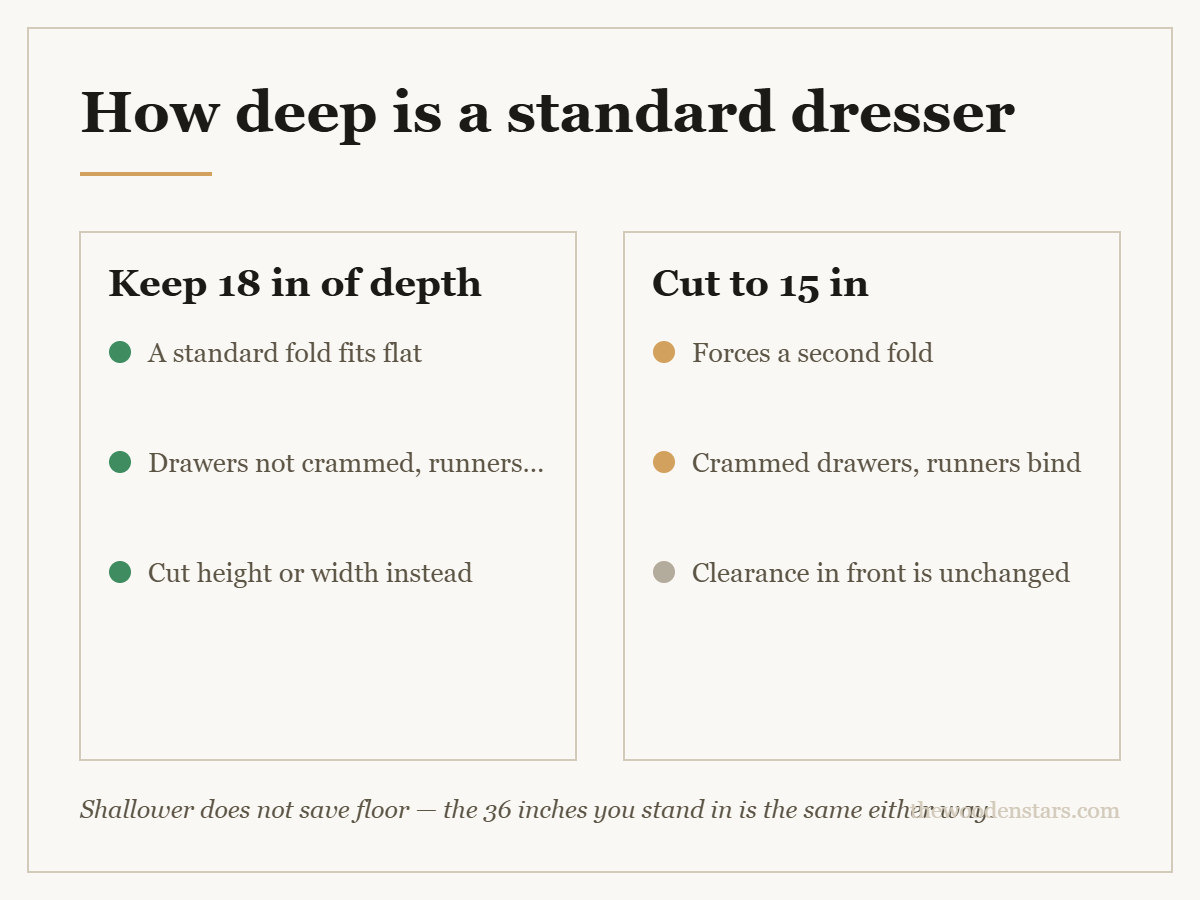
How deep is a standard dresser? Between 16 and 20 inches, with 18 the figure most makers settle on — and it is the dimension that decides whether the room still works.
Depth is also the one measurement people shrink when a room is tight, which is usually the wrong move.
A standard dresser is 18 inches deep, with the range running 16 to 20. Internally that gives about 15 inches, which takes a folded jumper or a pair of jeans laid flat without cramming. Below 16 inches you can no longer fold clothes to a normal size, so the drawer holds less than its width suggests. The number that matters more than the dresser’s own depth is the clearance in front: an open drawer projects 14 to 18 inches, and you need to stand there, so allow 36 inches of floor in front of it.
How deep is a standard dresser, and what fits at each depth
External depth minus the back panel and drawer construction leaves roughly 3 inches less inside.
- 16 inches external, 13 internal: T-shirts and underwear. A folded jumper has to be folded again.
- 18 inches, 15 internal: the sweet spot. A standard fold — jumpers, jeans, sweatshirts — fits flat.
- 20 inches, 17 internal: bulky knitwear and folded bed linen.
- Over 22 inches: rare, and the back of the drawer becomes a place things are forgotten.
A standard clothing fold is about 12 to 14 inches on the long side. That is where the 18-inch convention comes from — it is not arbitrary.
| Dimension | Standard | Range |
|---|---|---|
| Depth | 18 in | 16 to 20 in |
| Height, wide dresser | 30 to 36 in | 28 to 40 in |
| Height, tall chest | 42 to 56 in | 40 to 60 in |
| Width, wide dresser | 52 to 64 in | 36 to 72 in |
| Drawer projection open | 14 to 18 in | — |
| Clearance needed in front | 36 in | 30 in absolute minimum |
The clearance in front, which matters more than the depth
This is the measurement people forget, and it is the one that makes a bedroom uncomfortable.
Open a drawer and it projects 14 to 18 inches — nearly the full internal depth on full-extension runners. Then you have to stand in front of it, which is another 18 to 24.
So the working figure is 36 inches of clear floor in front of the dresser. Thirty is survivable. Below that you open the drawer, step sideways, and reach in at an angle.
In a room where the dresser faces the bed, that 36 inches has to exist between the two — which is often what actually rules out a wider dresser. The bedroom arithmetic is in how much space around a bed.
Why shrinking the depth is the wrong first move
In a small bedroom the instinct is to buy a shallower dresser. It is the worst of the three dimensions to cut.
Depth is where the capacity is. Losing 2 inches of depth on a 60-inch dresser removes about 10% of the volume and — more importantly — pushes clothes past the point where a normal fold fits, so the drawers get crammed and the runners suffer.
Height is the free dimension. A tall chest at 48 inches holds the same clothes as a wide dresser in half the floor area. The trade is the top drawer’s height and the tipping risk — both covered in tall wood dressers.
Width is the negotiable one. Narrower drawers hold less per drawer but fold normally, which depth does not.
The full ordering is in small dressers for a small bedroom.
What the depth does to the drawer itself
Deeper drawers are heavier when loaded, and that lands on the runners.
- Full-extension runners bring the whole drawer out, which is the only way an 18-inch drawer’s back is usable. Three-quarter runners hide the last 4 inches permanently.
- Load rating. A loaded 18-inch drawer of jumpers is 25 to 40 lb. Runners rated 75 lb are fine; unrated stapled channels are not.
- Wooden runners on traditional pieces work indefinitely and just want wax when they bind — dresser drawers not sliding.
- Drawer box construction. Dovetailed or dowelled sides survive; stapled butt joints open at the front corners, which is where the handle pulls.
Material terms are in what “all wood” actually means and solid wood dressers.
One more depth: what stands on top
An 18-inch top holds a lamp, a tray and a mirror leaned against the wall. It does not hold a television of any size safely — the base is too shallow and the load sits high.
If a TV is going on it, you want a purpose-made unit at 16 to 18 inches with the weight low, plus a strap. See how tall a TV stand should be.
And whatever goes on top, a dresser over 30 inches tall wants an anti-tip kit. An open 18-inch drawer is a lever, and a child standing on it is the exact scenario the kits exist for.
Making the depth work
- Full-extension drawer runners The only way the back of an 18-inch drawer gets used
- Drawer dividers Stops a deep drawer becoming one heap
- Furniture anti-tip strap An open drawer is a lever, and children climb them
- Paste wax Frees wooden runners that have started to bind
What to buy
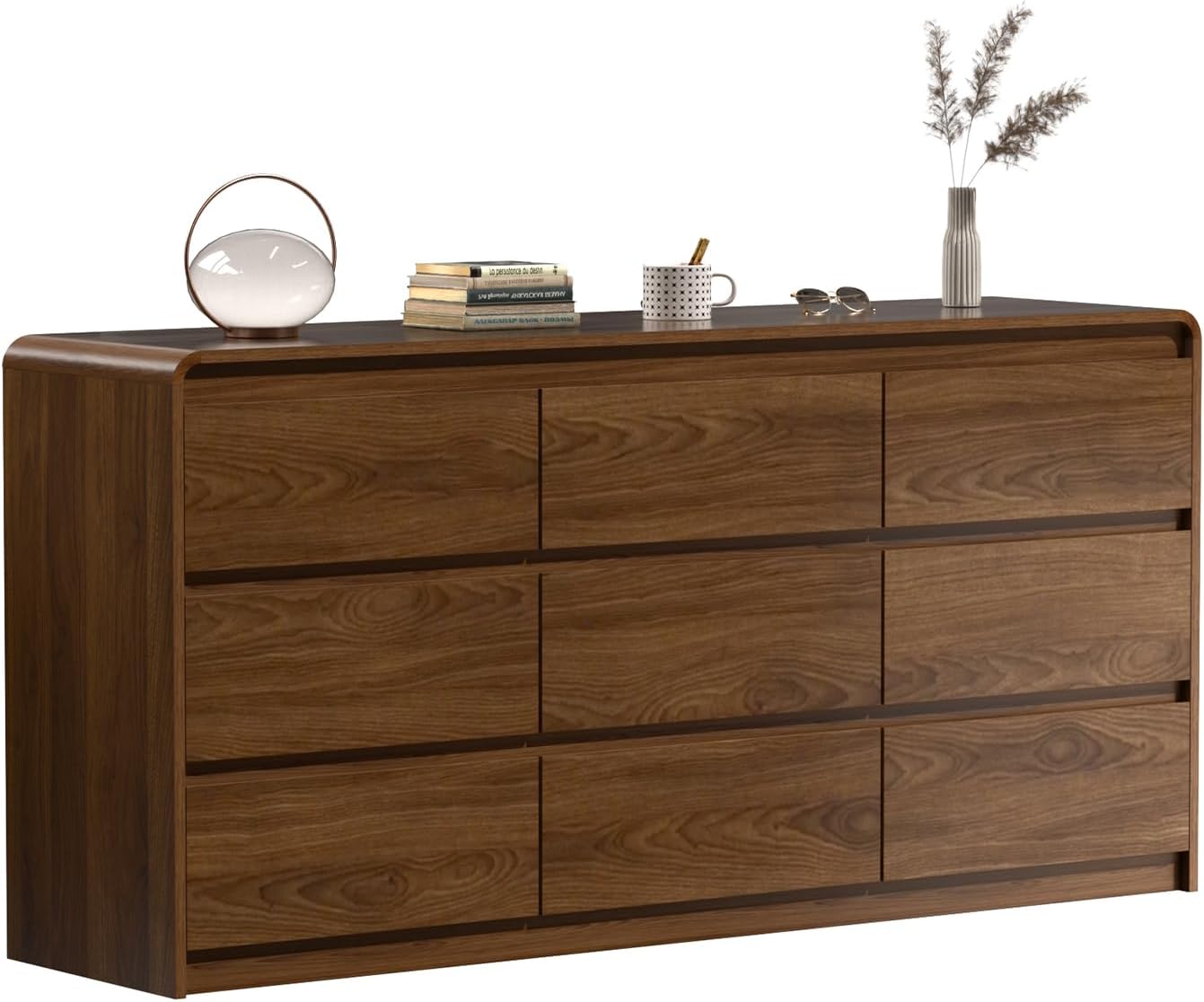


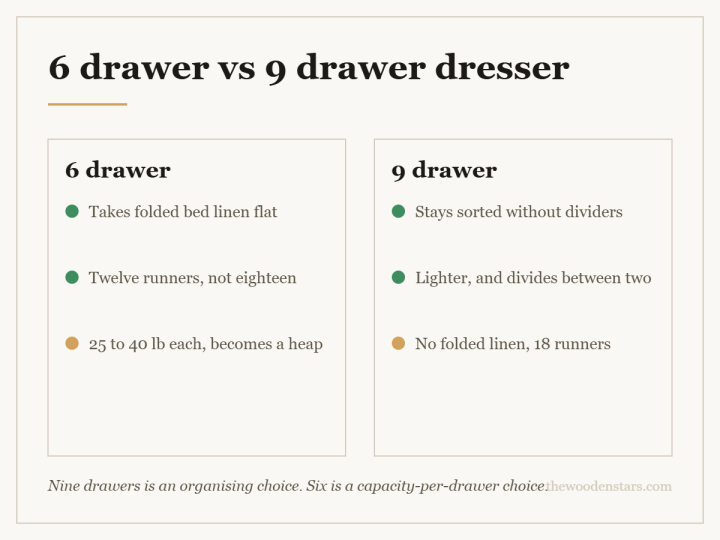
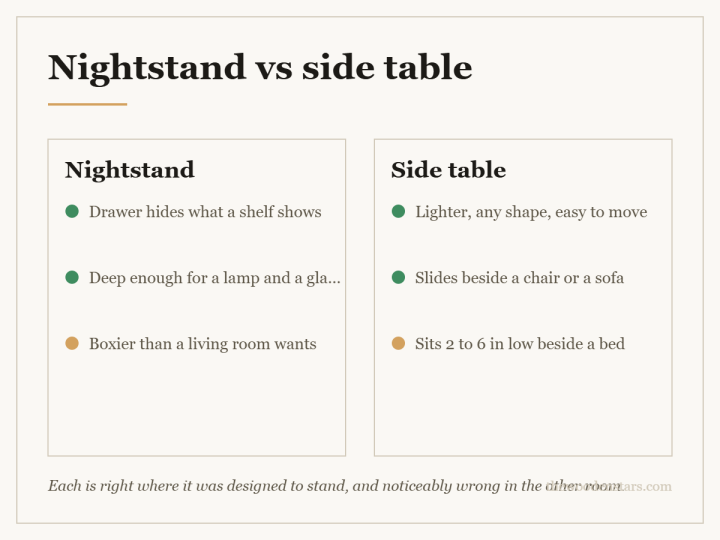
For dressers by shape, see tall wood dressers, small dressers and solid wood dressers. For drawer count, 6 drawer against 9 drawer. For the naming, chest of drawers against dresser and armoire against dresser.
Questions we get asked
How deep is a standard dresser?
Eighteen inches, with the usual range running 16 to 20. Internally that leaves about 15 inches.
Why 18 inches specifically?
Because a standard clothing fold is 12 to 14 inches on the long side, and 15 inches of interior takes that flat without cramming.
How much space do I need in front of a dresser?
Thirty-six inches. The drawer projects 14 to 18 when open, and you have to stand in front of it.
Is a shallower dresser a good way to save space?
No — it is the worst dimension to cut. You lose capacity and the fold no longer fits. Cut height or width instead.
How deep are the drawers inside?
About 3 inches less than the external depth, once the back panel and drawer box are accounted for.
Can I put a TV on an 18-inch dresser?
Not safely. The base is too shallow for a screen’s foot span and the load sits high. Use a purpose-made stand.