Best Finish for a Solid Wood Table Top: Oil, Hard Wax Oil or Film
The Wooden Stars is a participant in the Amazon Services LLC Associates Program. We may earn a commission when you buy through links on our site, at no extra cost to you.
A dining table top takes more abuse than any other wooden surface in a house: heat, standing water, cutlery, cleaning products and children, often all in the same meal. The finish is the only thing between all of that and the wood, and the choice of finish matters more than the species does.
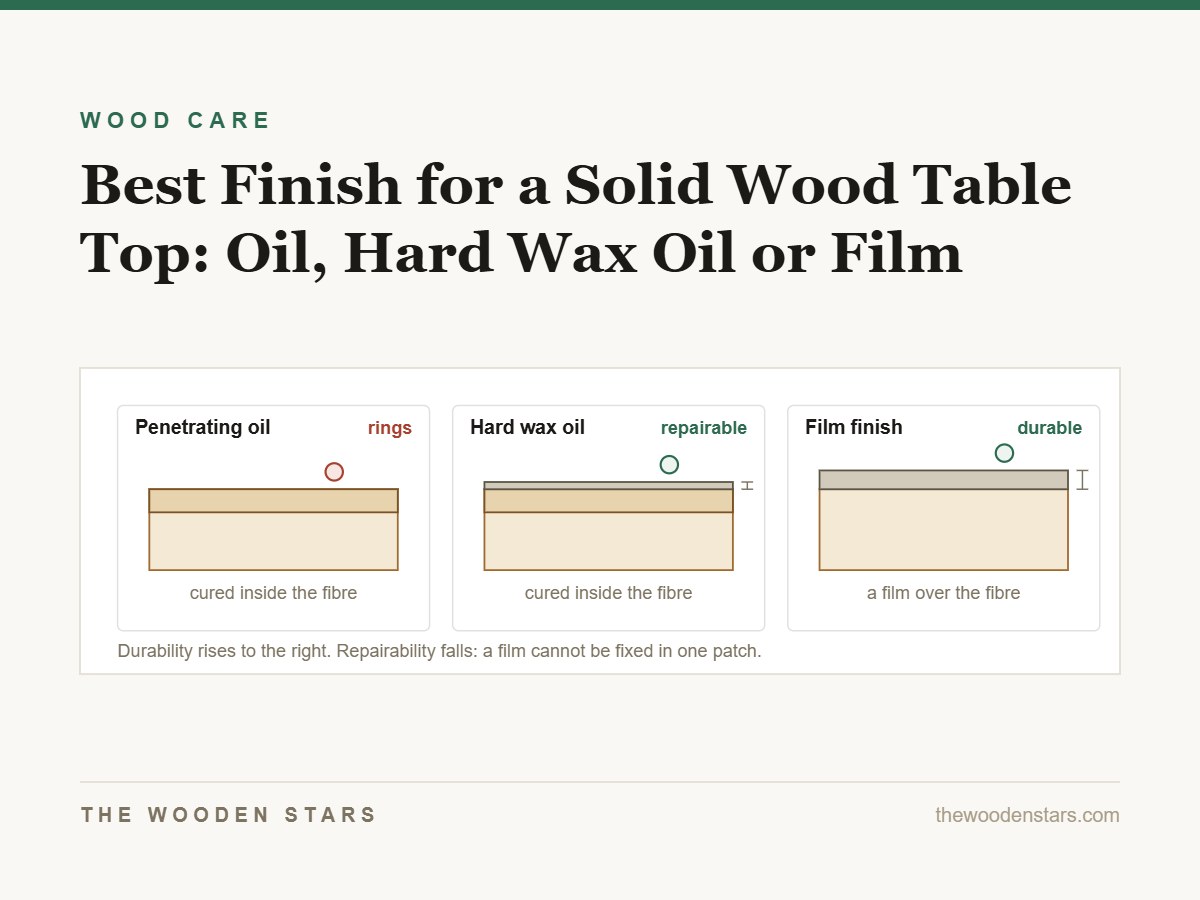
There are three families, they fail in three different ways, and the right one depends far more on how you want to repair it than on how you want it to look on day one.
For a table that will be used hard and repaired rarely, use a film finish — an oil-based or water-based polyurethane topcoat. For a table you want to look and feel like wood and are willing to re-coat every few years, use a hard wax oil. Use a penetrating oil only if you accept water rings as part of the look. Hard wax oil is the best compromise for most solid wood dining tables: it spot-repairs without stripping.
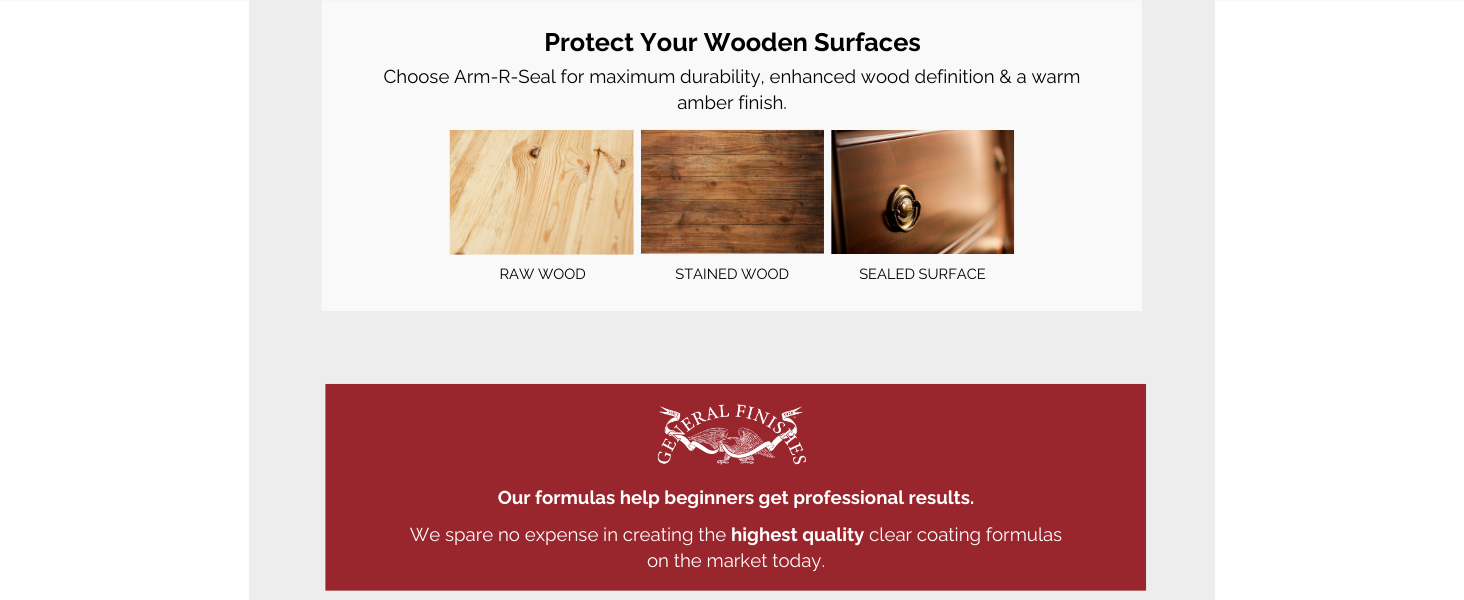
Start here: a wiping oil-based topcoat is the durable default, and the one to choose if the table has to survive years of no attention.

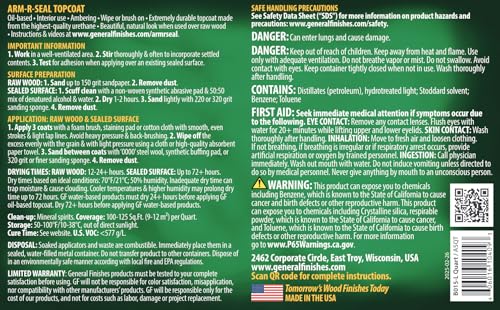
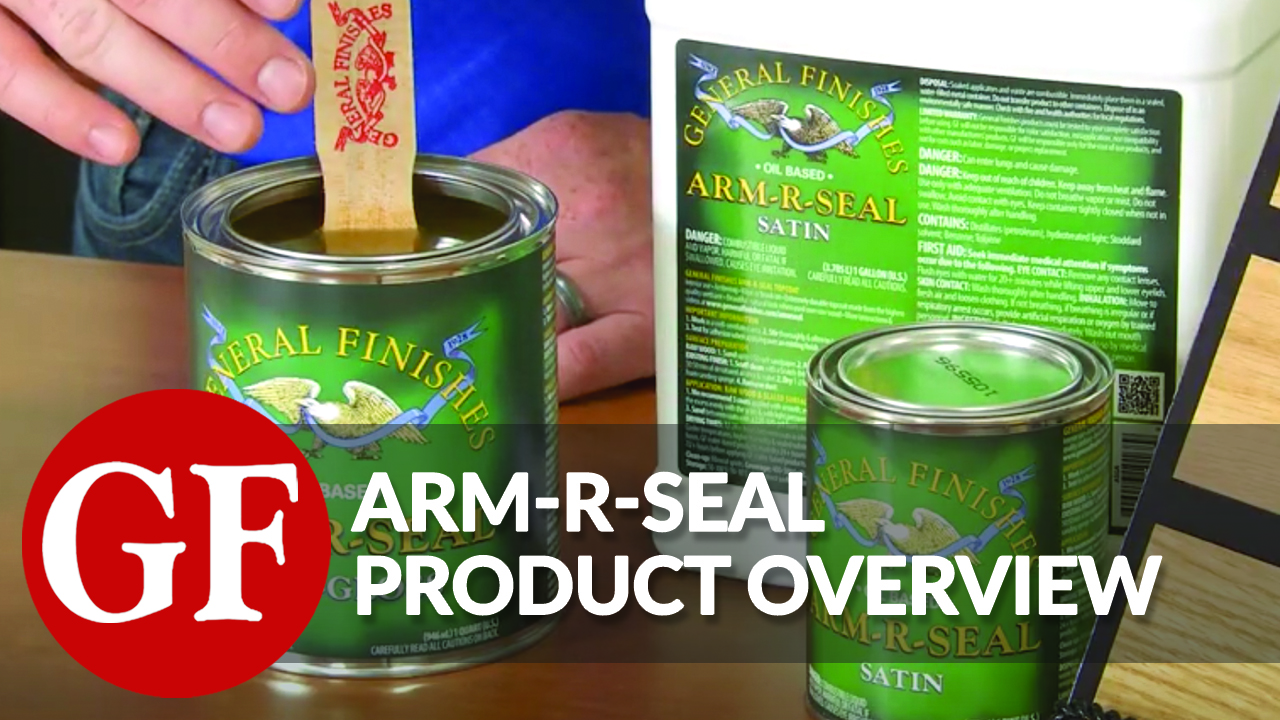
Prime General Finishes Arm-R-Seal Oil Based Topcoat, 1 Quart, Satin




The three families
| Property | Penetrating oil | Hard wax oil | Film finish |
|---|---|---|---|
| Sits where | In the wood | In and just on the wood | On top of the wood |
| Water resistance | Low | Good | Excellent |
| Heat resistance | Low | Moderate | Good |
| Feel | Bare wood | Close to bare wood | Slight plastic feel |
| Spot-repairable | Yes, trivially | Yes, sand and re-oil the patch | No, blends badly |
| Full re-coat needed | Every 6–12 months | Every 2–5 years | Every 10+ years |
| Shows wear as | Dry, pale patches | Dull patches | Scratches in the film |
| Application difficulty | Easy | Easy, but thin coats matter | Hardest — dust and brush marks show |
The row that decides most real purchases is spot-repairable. A film finish is the most durable option and the worst to repair: when it does get damaged, you cannot fix one square inch — the repair shows as a ring of different sheen, so you sand the whole top and start again. A hard wax oil is less bulletproof and repairs in twenty minutes with a sanding sponge and a rag.
Penetrating oil: honest, and high-maintenance
Danish oil, teak oil and pure tung oil soak into the wood and cure inside it. There is no film, so there is nothing to scratch, chip or peel — wear shows as the wood drying out rather than as damage. The look is the closest to bare wood you can get while still having any protection at all.
On a dining table the drawback is specific: an oiled top will ring. Standing water on oiled wood leaves a mark, and while the mark sands and re-oils out easily, you will be doing that regularly. Choose oil if you like the ritual and the patina; do not choose it and then be annoyed about rings.
Tung oil deserves a note because it is genuinely different: real 100% tung oil is food-safe once cured and builds slowly to a soft sheen with meaningful water resistance, but it takes many thin coats over weeks. Most products labelled “tung oil finish” are varnish with a little tung oil in them.
Hard wax oil: the modern default
Hard wax oils — Osmo Polyx being the reference product — are a hybrid: oils that penetrate plus waxes that cure into a very thin surface layer. You get near-bare-wood feel with water resistance close to a film finish, and repairability that no film finish can match.
Two application rules matter more than brand choice:
- Thin coats, wiped back. Hard wax oil applied thickly stays tacky for days and cures to an uneven sheen. Apply, spread, then wipe off almost all of it. Two thin coats beat one generous one every time.
- Finish both faces of a solid top. A top sealed on one side only takes up moisture unevenly and cups. This is the single most common cause of a warped table top and it is entirely preventable.
Maintenance is a cloth and a small amount of the same product on the worn area, once a year or two. That is the whole reason to choose it.
Film finish: maximum durability, minimum forgiveness
An oil-based wiping urethane such as Arm-R-Seal, or a water-based topcoat, builds a continuous film over the wood. Water sits on it and does nothing. Hot plates do very little. Cleaning products do very little. For a family table that has to survive a decade of daily use with no attention, this is the correct answer.
The trade-offs:
- Oil-based — ambers over time, which flatters oak and walnut and yellows maple and ash. Slower drying, so more dust risk, but more forgiving of brush marks.
- Water-based — stays clear, dries fast, no ambering. Less forgiving to apply, and on some woods it looks slightly cold because it does not warm the colour at all.
- Gel topcoat — wipes on with a cloth, almost impossible to run or sag, builds slowly. The easiest film finish for a first-timer.
Whichever you pick, three to four thin coats with a light sand between beats two thick ones, and the last coat determines the sheen you live with.
One product from each family
- General Finishes Arm-R-Seal Oil-based wiping topcoat, the durable default On Amazon →
- Osmo Polyx hard wax oil Near-bare-wood feel, spot-repairable On Amazon →
- Danish oil Traditional oiled look, accepts that it will ring On Amazon →
- General Finishes High Performance Water-based, stays clear on pale woods On Amazon →
- Sanding sponges, 180 and 220 The finish is mostly preparation
What to buy
Pick by how you want to repair it later: a film finish for maximum durability, hard wax oil if you would rather fix one patch at a time.


Matching the finish to the species
Species does change the answer at the margins:
- White oak — takes everything well. Open grain hides the odd flaw, and oil-based finishes make the ray fleck pop.
- Walnut — an oil or hard wax oil deepens it beautifully; a water-based film can make it look flat and grey. If you want a film, use oil-based.
- Maple, birch, ash — pale and close-grained, so ambering shows. Water-based if you want to keep them pale.
- Acacia and mango — wide colour variation board to board. A film finish freezes that variation; an oil emphasises it. Decide which you actually like before committing.
- Reclaimed pine — soft, so it dents whatever you put on it. Hard wax oil, because you will be repairing dents and want to blend the finish.
The species comparison on our wood types hub covers hardness and stability in more detail, and both feed into this choice.
Questions we get asked
Which finish is genuinely food-safe?
All of these are food-safe once fully cured — the solvents that make them hazardous have evaporated by then. Cure is not the same as dry: allow a week or more before a table sees heavy food contact, and longer for oil-based products. If you want a finish that is food-safe while curing too, that is pure tung oil or a hard wax oil rated for toys and worktops.
Can I put hard wax oil over an existing polyurethane top?
No. Hard wax oil needs to penetrate, and polyurethane stops it — it will sit on top, stay soft and eventually rub off. Going from film to oil means sanding back to bare wood. Going from oil to film is possible but needs the surface degreased and scuff-sanded, and adhesion is never as good as on bare wood.
How many coats does a dining table need?
Hard wax oil: two thin coats, three on end grain. Film finish: three to four. Penetrating oil: as many as the wood will take until it stops absorbing, typically three to five, then re-oil annually. In every case the top gets more coats than the base, because the top is what gets used.
Do I really have to finish the underside?
On a solid wood top, yes. Moisture moves through unfinished wood far faster than through finished wood, so a top sealed on one face only takes up and gives off moisture unevenly and cups — always with the unfinished face becoming convex. One coat underneath is enough; it does not need to look pretty.
What about a butcher block or slab top?
Same rules, with more urgency about the underside because thick slabs have more force behind their movement. Mineral oil is the traditional choice for a chopping surface but offers almost no protection for a table; for a desk or dining slab, hard wax oil is the better answer. Our guide to mounting a butcher block desktop covers the fastening side, which matters just as much.