Wooden Desk Legs: Desk Height Is Not Table Height
The Wooden Stars is a participant in the Amazon Services LLC Associates Program. We may earn a commission when you buy through links on our site, at no extra cost to you.
A desk is not a low dining table, and desk legs are not short table legs. The height is different, the clearances underneath are different, and the top is usually either much thinner or much thicker than a dining top — all three change which leg works.
Buy dining-height legs for a desk and you get a surface you cannot type at comfortably. It is a 30 mm mistake that you feel in your shoulders within a week.
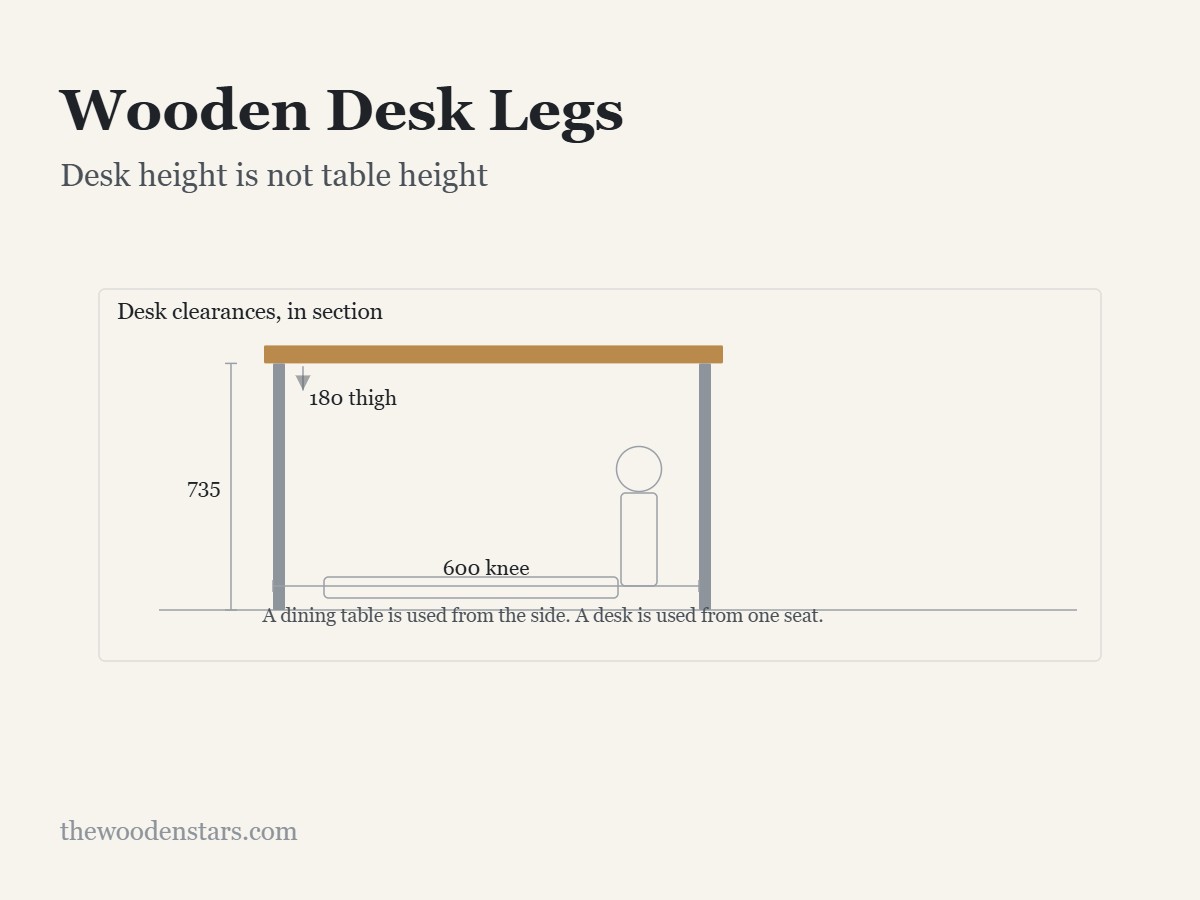
Aim for a finished desk height of 720–750 mm, which is 10 to 30 mm lower than a dining table. Subtract the top thickness to get the leg length. Then check two clearances that dining tables never need: at least 600 mm of knee depth front to back, and enough width between the legs for your chair arms to pass — usually 1100 mm or more between leg centres. If the top is a thick slab, use a plate that allows the timber to move; if it is thin, use a plate rather than an insert.

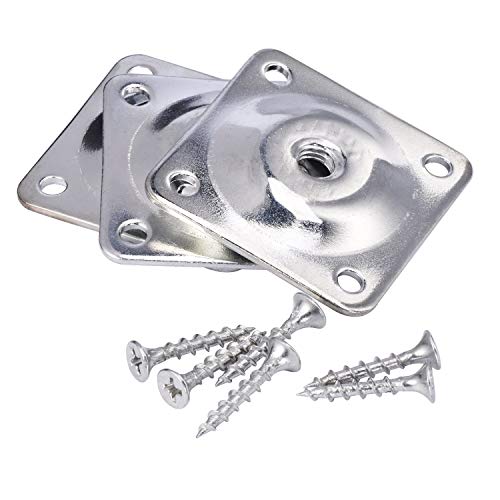
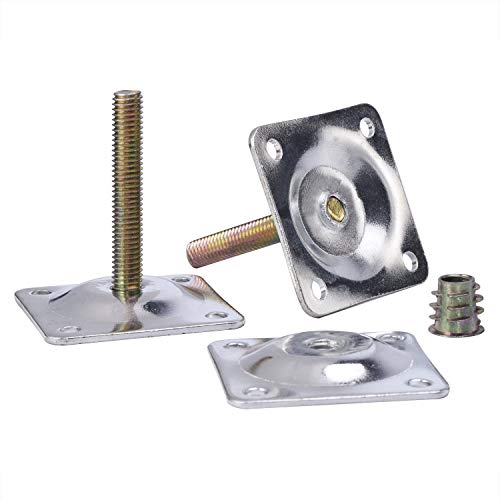
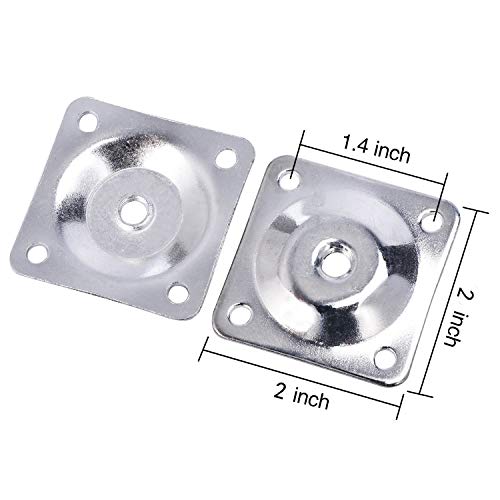
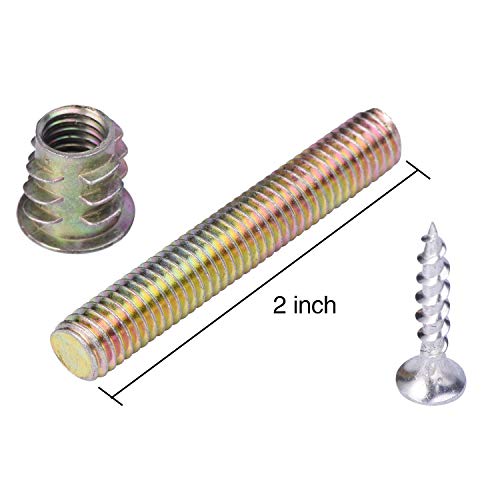
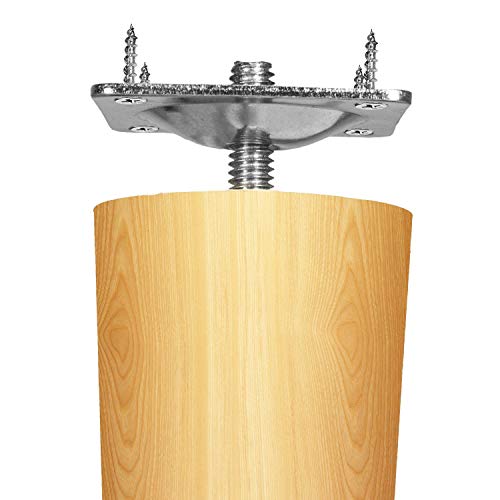
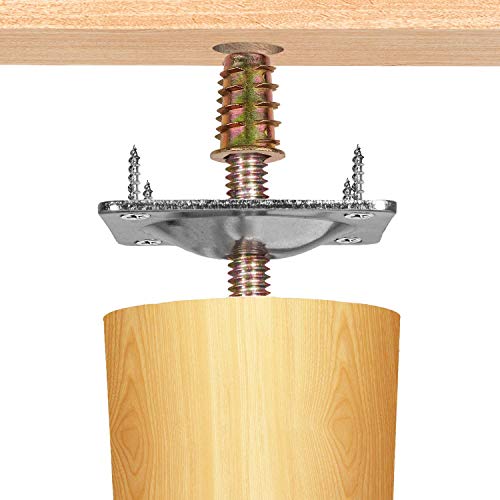
Prime Maricome 4PCS Leg Mounting Plates with Screws for Sofa Couches Tables Furniture Legs Brackets Hardware Attachment Plates Brackets M8 T-Plates


As an Amazon Associate we earn from qualifying purchases. Product prices and availability are accurate as of the date/time indicated.
Start here: get the fixing right before the leg style. On a thin top a plate is the only safe option, and on a slab it has to let the timber move.
Desk height, and why it is lower
A dining table is sized for eating with your forearms angled down. A desk is sized for typing with your forearms level, which puts the surface at roughly elbow height when seated. For most adults that is 720–750 mm rather than the 730–760 mm of a dining table.
| User height | Finished desk height | With a 25 mm top | With a 40 mm slab |
|---|---|---|---|
| Under 1.60 m | 700–715 mm | 675–690 mm | 660–675 mm |
| 1.60–1.75 m | 720–735 mm | 695–710 mm | 680–695 mm |
| 1.75–1.85 m | 735–750 mm | 710–725 mm | 695–710 mm |
| Over 1.85 m | 750–765 mm | 725–740 mm | 710–725 mm |
If more than one person uses the desk, size it for the taller one and raise the chair for the shorter — a footrest solves a chair that is too high, and nothing solves a desk that is too high.
The general rules for leg length, thread and fixing are the same across every table in the house, and they are set out in our guide to table legs. What follows is only what changes for a desk.
The two clearances a dining table never needs
Legs that fit a dining table can still make a bad desk, because a desk is used from one side, sitting close in.
- Knee depth. 600 mm from the front edge to anything solid behind — a stretcher, a modesty panel, the back legs. Splayed legs are the usual culprit here: they look elegant and put a rail exactly where your shins go.
- Chair-arm width. Measure your chair across the arms and add 100 mm. If the legs sit inboard of the top by very much, an armchair will not tuck under.
- Thigh clearance. At least 180 mm between the top of your thigh and the underside of the desk. This is the one that a thick slab plus an apron quietly eats.
An A-frame or trestle keeps the middle clear and is usually kinder to knees than four corner legs with an apron. A pedestal desk is the opposite: maximum storage, minimum legroom.
Thin top or thick slab: two different problems
A thin top, 18 to 25 mm
There is not enough material for a threaded insert to hold reliably, especially in board. Use a mounting plate with at least four screws and short, fat screws that stay well clear of the top face. Measure twice: a screw through the working surface of a desk is the one repair you will look at every day.
Thin tops also flex, and a desk gets leaned on. Adding a stretcher between the legs, or a rail along the back edge, stops the whole thing feeling springy without costing knee room at the front.
A slab or butcher block, 38 mm and up
Strength stops being the problem and wood movement becomes it. A 700 mm wide solid slab changes width by several millimetres between a damp summer and a heated winter. Bolt it rigidly at four corners and it will either crack or pull the fixings.
The fix is to let it move: slotted holes in the mounting plates running across the grain, or figure-8 fasteners, tightened firm but not crushed. The full method, including which fastening systems are safe on a slab, is in our guide to mounting a butcher block desktop.
| Top | Fixing | Extra bracing | Watch out for |
|---|---|---|---|
| 18 mm board | Plate, 4–6 screws | Back rail or stretcher | Screw length through the face |
| 25 mm solid | Plate or insert | Optional | Insert must be in solid timber |
| 38 mm butcher block | Plate with slotted holes | Not needed | Seasonal movement across the grain |
| 50 mm slab | Plate with slots, or figure-8 | Not needed | Weight: two people to lift |
| Hollow-core or veneered board | Plate, into a solid rail added underneath | Rail required | Nothing to screw into |
Cable routing, decided before the legs go on
A desk has a requirement no dining table has: getting cables from the surface to the floor without them hanging in your knees. It is far easier to plan this while the top is upside down on trestles.
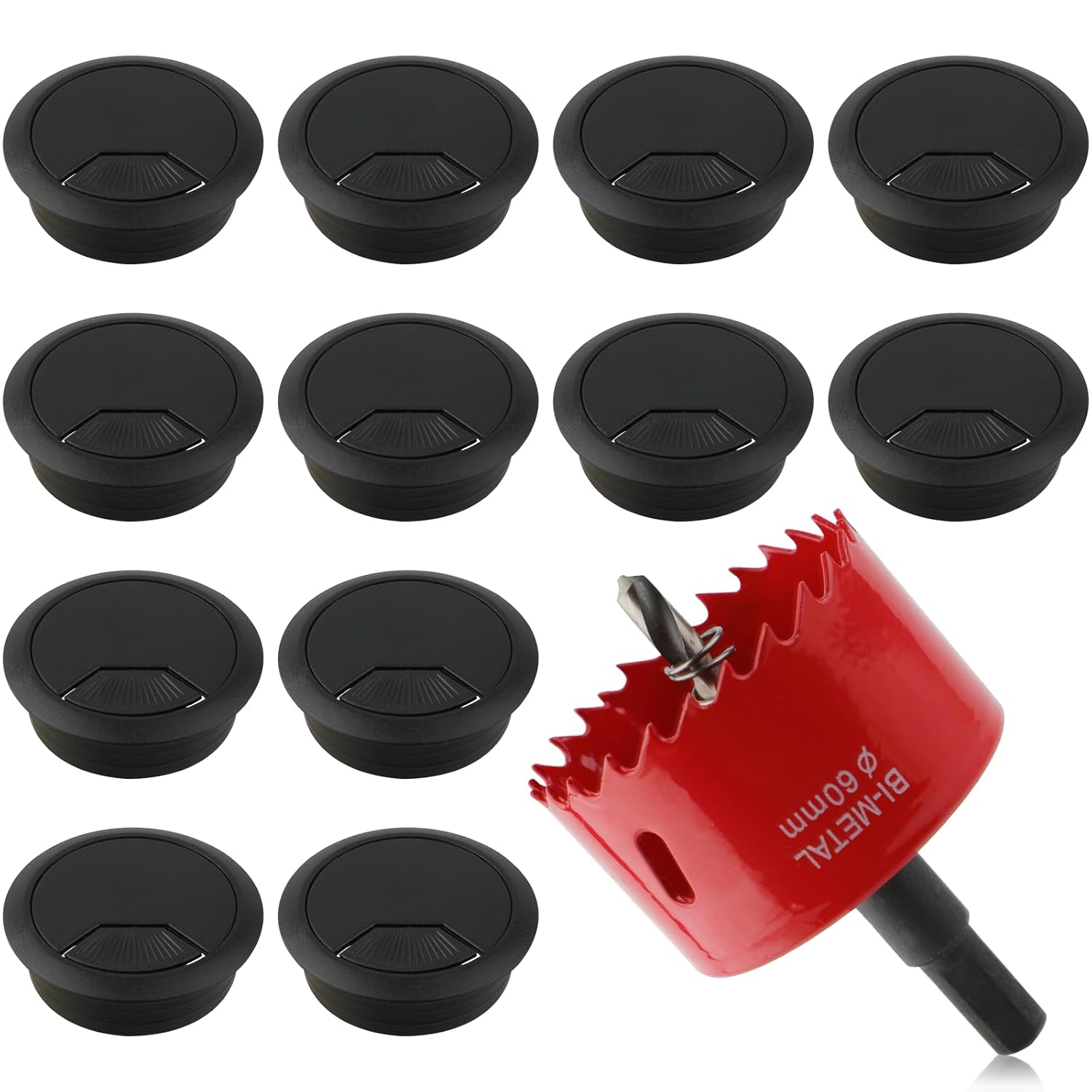
- Grommet position. Back edge, and offset to the side away from your chair. Cutting the hole is straightforward but permanent, and the sizes are covered in our guide to desk grommets.
- A tray or channel between the back legs keeps a power strip off the floor. Fit it while the desk is inverted; afterwards it is a job done lying on your back.
- Leave the back legs proud of the wall by 30–50 mm so plugs and cable have somewhere to sit.
What to buy
- Leg mounting plates, M8 The safe fixing on a thin top, and on a slab with slots filed in On Amazon →
- Figure 8 fasteners For a solid slab desktop that changes width with the seasons On Amazon →
- Desk grommets, 60 mm Plan the cable route while the top is still upside down On Amazon →
- Felt pads Stops a desk marking the floor when it is pushed back On Amazon →
- Under-desk cable tray Fit it while the top is upside down, not after
What to buy


Fitting, in the order that avoids the two common regrets
- Sit at a surface at the height you plan before you buy anything. A stack of books on an existing table for ten minutes is a better test than any table of numbers, including the one above.
- Mark the leg positions from the two long edges, and set them in from the front edge by 60–100 mm so your knees clear them.
- Plan the grommet and the cable tray now, with the top inverted.
- Fit the plates, checking screw length against the top thickness every time. Write the maximum length on a piece of tape stuck to the top.
- Stand it up, sit at it, and check the clearances with your actual chair before loading it with a monitor.
Questions we get asked
How tall should a desk be?
720–750 mm finished for most adults, which is slightly lower than a dining table. Elbow height when seated with your forearms level is the test that matters; the height charts are a starting point, not the answer.
Can I use dining table legs on a desk?
Physically yes, and they are usually 10–30 mm too long. Some legs can be trimmed from the bottom if they are straight and untapered; a tapered leg changes its profile if you cut it, and a leg with a fitted glide loses the glide. Cutting is easier than living with the wrong height.
How far apart should desk legs be?
At least 1100 mm between leg centres if you use a chair with arms, and set the front legs back 60–100 mm from the front edge. Check the actual chair rather than trusting the number, because chair arms vary far more than desks do.
Do I need a stretcher between the legs?
On an 18 mm board top, yes, or a rail along the back edge — the top alone is not stiff enough and the desk will feel springy when you lean. On a 38 mm slab, no: the top is the structure.
Will a solid wood desk top crack if I bolt the legs on tight?
It can, and it is the most common failure on a slab desk. Solid timber changes width with humidity, so at least one fixing point per plate needs a slot running across the grain to let it move. Rigid at all four corners is what splits tops.