A bar stool is the only seat in the house that has to be derived rather than chosen. Every other chair you can sit on in a shop and know. A stool depends on a worktop you did not bring with you, and get the height wrong by three inches and nothing about the stool can fix it.
This hub covers kitchen island and bar seating in solid wood: the heights, the spacing, the mechanisms, and the construction details that decide whether a stool is still tight in ten years.
Start with one measurement
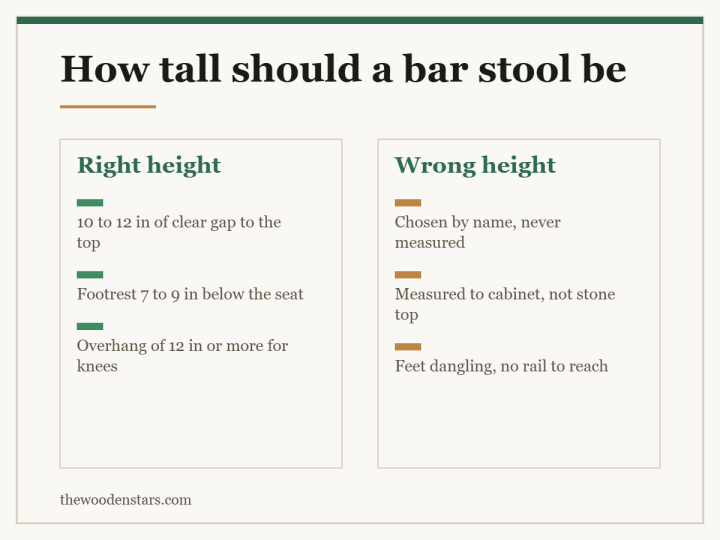
Floor to the top of the finished worktop — not the cabinet, not the underside. Then subtract 10 to 12 inches. That is your seat height, and it produces the whole category:
Dining table at 28 to 30 inches → an 18-inch seat. That is a chair, not a stool.
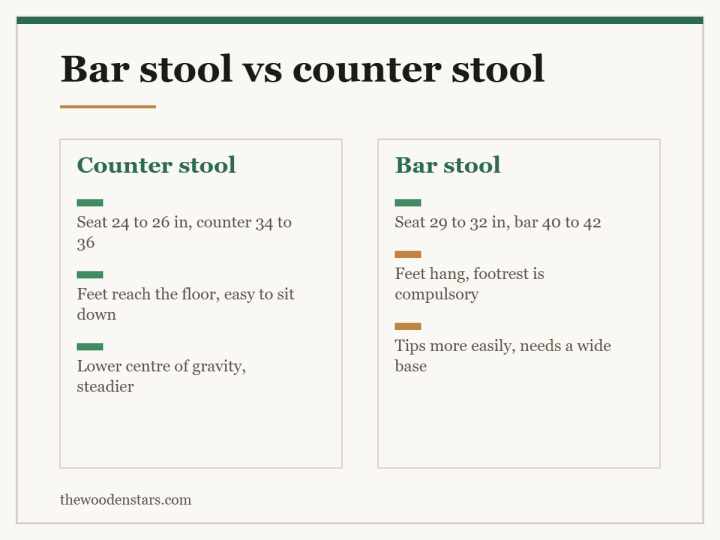
Kitchen counter at 34 to 36 → a 24 to 26-inch counter stool.
Raised bar or two-tier island at 40 to 42 → a 29 to 32-inch bar stool.
Tall or commercial surface at 45 to 47 → a 33 to 36-inch extra-tall stool.
Two mistakes account for most returns. Measuring to the cabinet rather than the stone, which loses you 1.25 to 2 inches. And measuring the prep side of a two-tier island rather than the side people sit at, which loses you six.
Then check the overhang
A seat needs somewhere for knees to go. Twelve inches of worktop overhang is the workable minimum; 15 is comfortable. Under about 10, people sit sideways all evening and the seat quietly stops being used — and no stool, at any price, fixes that.
This is why seat counts disappoint so often. A 10-foot island with a 6-inch lip has no seating positions at all, however long it is, while a 5-foot peninsula with a 15-inch overhang comfortably takes two.
How many fit, and how far apart
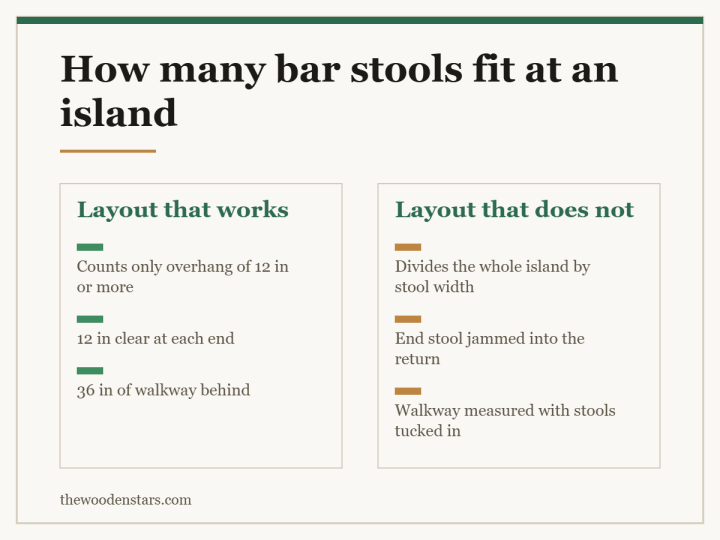
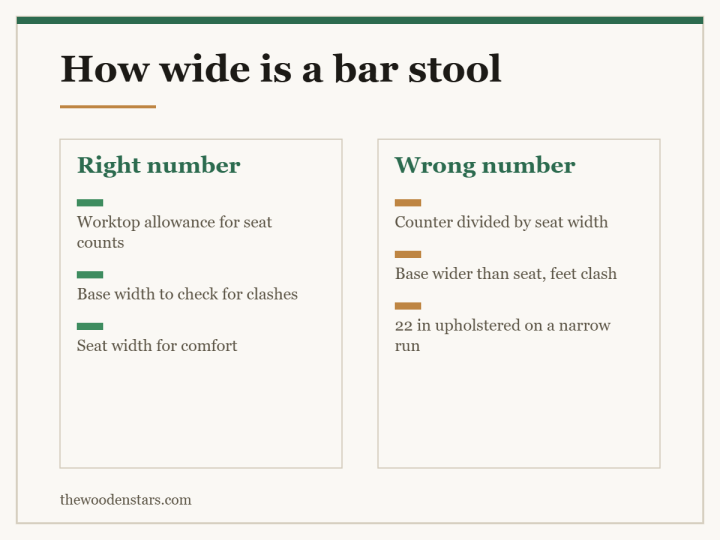
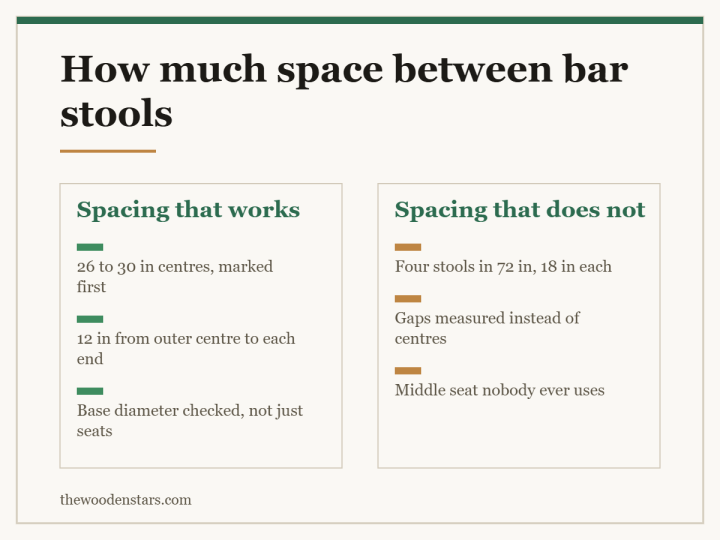
Allow 26 to 30 inches of worktop per stool, measured centre to centre rather than as gaps between seats — centres stay correct whichever stools you end up buying.
Count only the length that overhangs properly, take 12 inches off each end so nobody is jammed against a return, then divide. An 8-foot island with a full-length overhang gives 96 inches, less 24 for the ends, divided by 26: three stools, not four.
Behind them, keep 36 inches of walkway, or 42 to 48 if it is the main route through the kitchen. Measure that with the stools pulled out, because stools with backs rarely tuck fully under.
The features that are not decoration
The footrest. Above about 27 inches of seat, feet no longer reach the floor and the rail carries both legs. It wants to sit 7 to 9 inches below the seat. A bar stool without one is uncomfortable within twenty minutes.
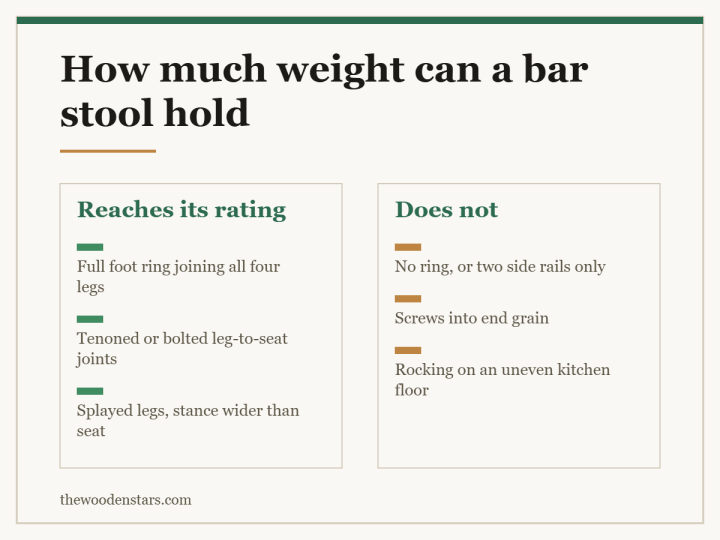
The foot ring as structure. The same rail that rests your feet is what ties four legs into one braced frame. Without a full ring, the legs rack independently every time someone shifts, and within two or three years the stool has a wobble no amount of tightening cures.
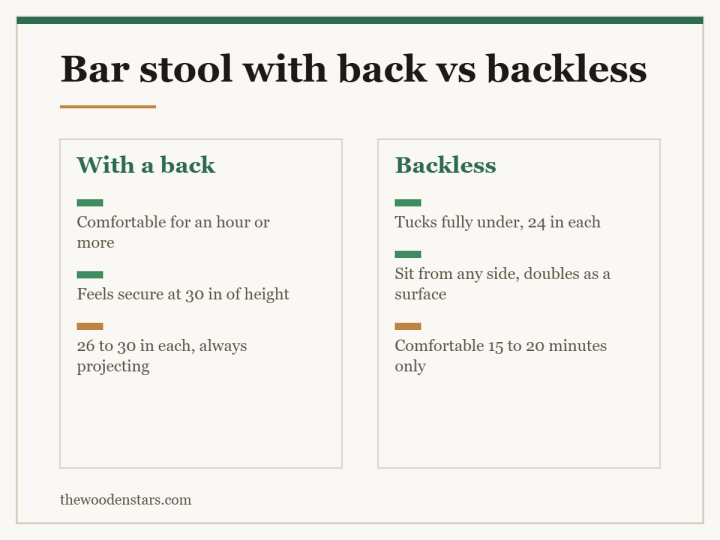
A back, or not. Backs buy sitting time — an hour or more against 15 to 20 minutes — and they matter more as the stool gets taller, because at 30 inches there is nothing behind you. They cost 6 to 10 inches of permanent projection into the walkway, because the back fouls the worktop edge and the stool never tucks fully in.
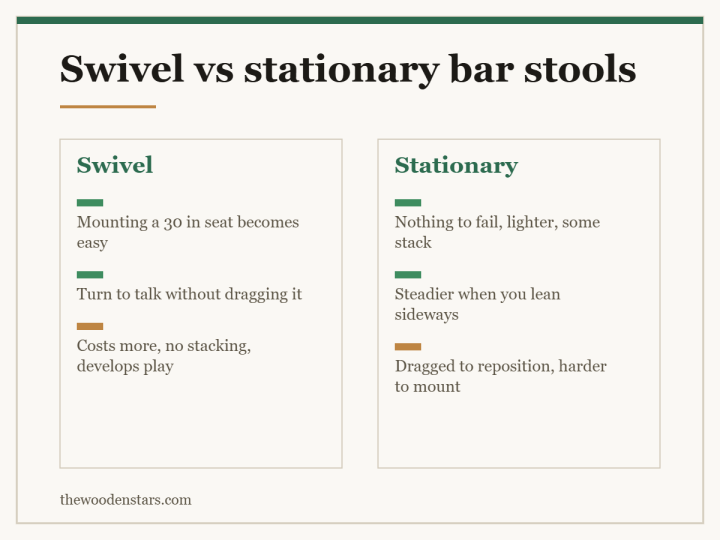
A swivel. Sold as a novelty, bought as an accessibility feature. At bar height, turning the seat is far easier than climbing on and twisting, and that is the difference between a seat an older guest uses and one they avoid.
What decides how long a stool lasts
Stools take more abuse than dining chairs, because people push off the seat to stand and drag them sideways rather than lifting them. Three things carry that load:
The leg-to-seat joint. A round tenon into a socket, or a bolt with a visible nut. Screws into end grain is the version that loosens.
A full foot ring, welded on metal or tenoned on timber — not two rails on opposite sides, which brace one axis and leave the other free.
Splayed legs. A stance wider at the floor than the seat is what stops a tall stool tipping.
Published load ratings run 250 to 500 lb, and they are static figures. Mounting a 30-inch stool puts two to three times body weight through half the frame for a moment, so rate for roughly double the heaviest regular user.
Timber, metal, and what fails
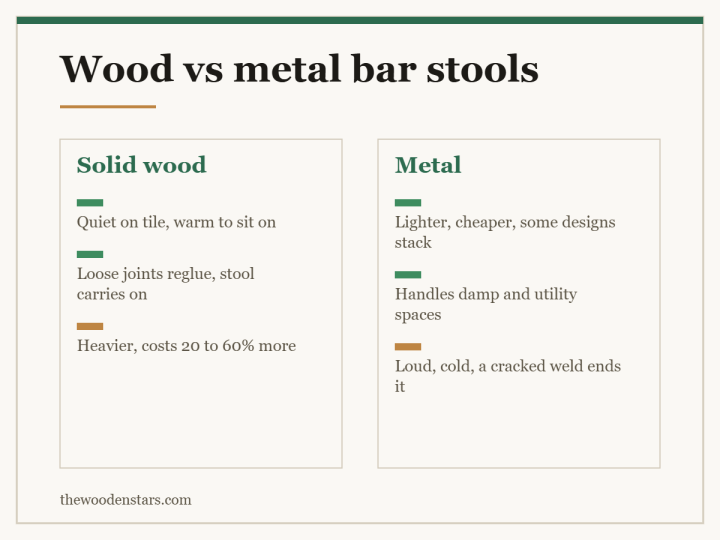
The strongest argument for solid wood here is not looks, it is repair. A timber stool fails by loosening at a joint, and glue with a clamp restores it — a well-made one can go round that loop three or four times across two decades. A welded steel stool fails by cracking at a weld, which needs welding gear, and the economics rarely work on a stool.
Timber is also quieter on tile, warmer to sit on in an unheated kitchen, and it ages at the same rate as the seat above it. Metal is lighter, cheaper at the same strength, better in damp, and the sensible choice below about $80 a stool, where the timber alternative is softwood and staples.
Seats
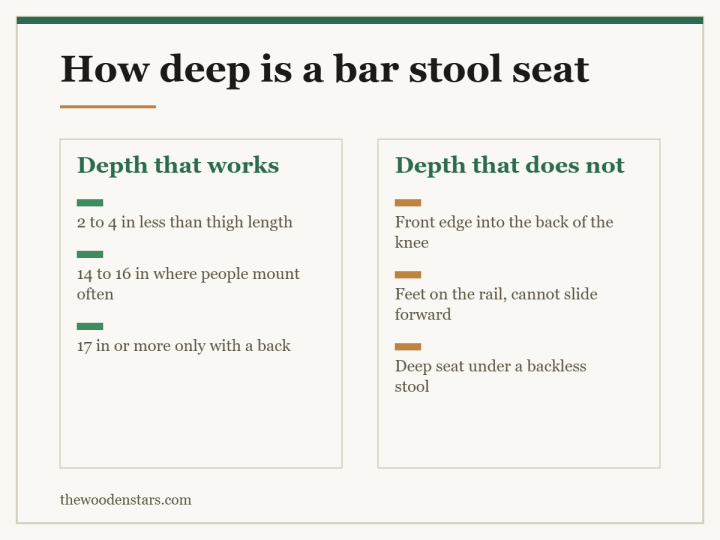
Timber seats run 13 to 17 inches deep, upholstered ones 17 to 19 — shallower than a dining chair, deliberately, because you mount and dismount a stool many times a day and every inch is another inch to clear.
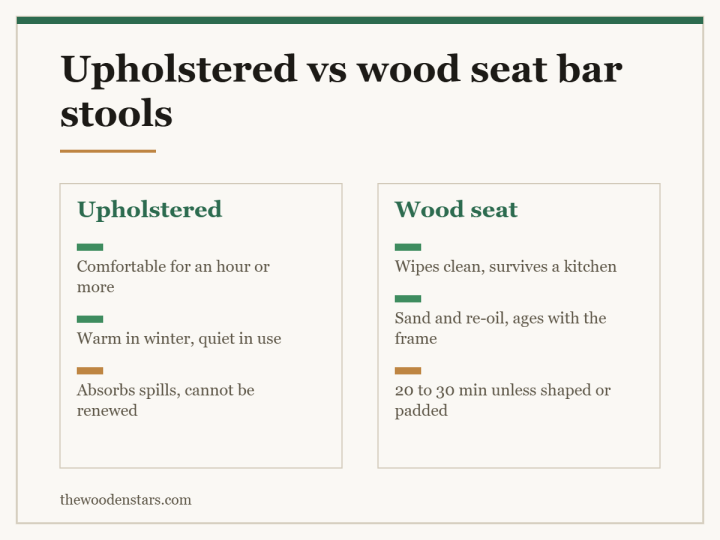
Upholstery buys about forty minutes of extra comfort and costs you the ability to wipe the seat, which at a counter where food is eaten is a real trade. For most kitchens the answer is a shaped timber seat with a washable tie-on pad: a saddle or scooped seat closes most of the comfort gap on its own, and the pad closes the rest without giving up a surface you can clean in seconds.