One nightstand vs two — When symmetry is not worth it
The Wooden Stars is a participant in the Amazon Services LLC Associates Program. We may earn a commission when you buy through links on our site, at no extra cost to you.
One nightstand vs two is usually presented as a symmetry question. It is actually a question about who sleeps in the bed and what the other side of the room is doing.
Two matching nightstands is the default for a reason. It is not always the right answer.
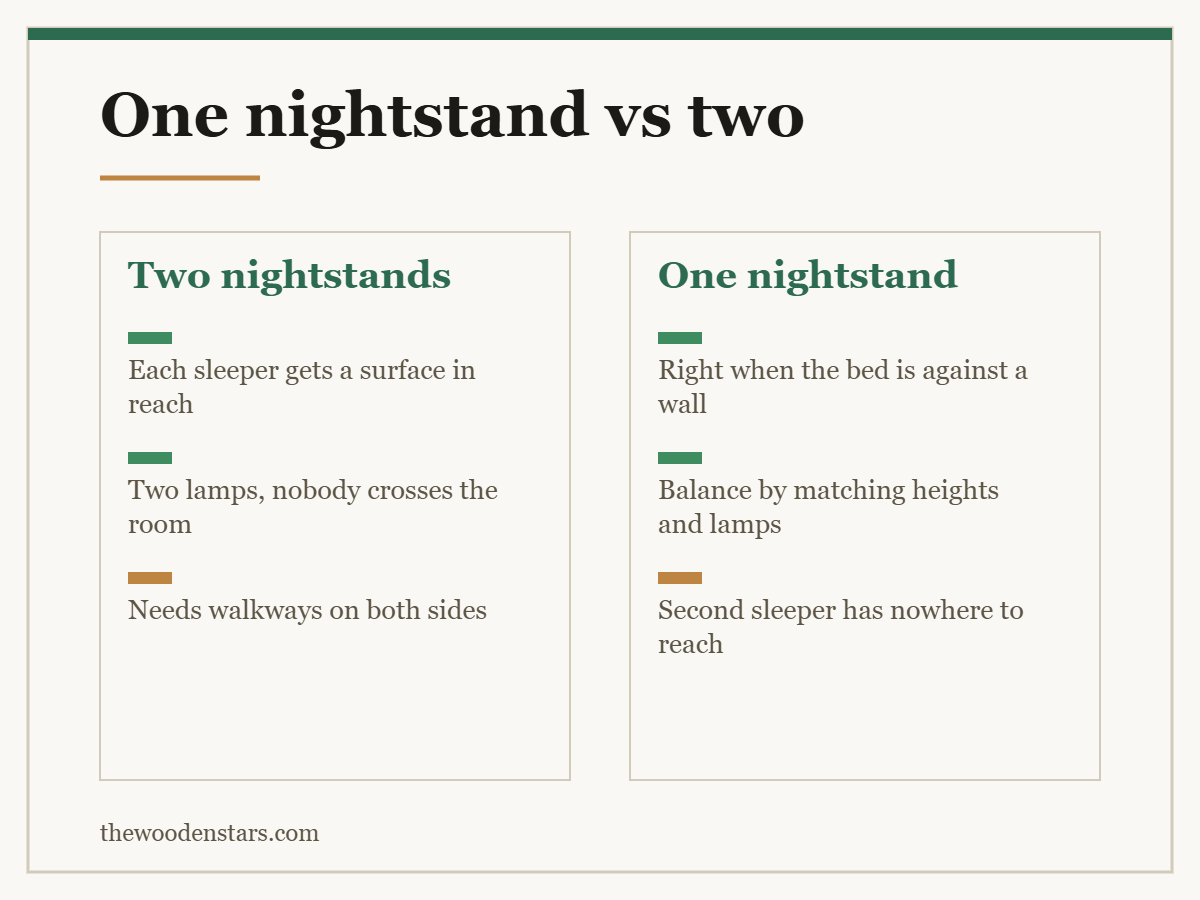
Buy two if two people sleep in the bed — each person needs a surface within reach, and a shared one across a 60-inch mattress is not within reach of anybody. Buy one if the bed is against a wall on one side, if the room cannot give 24 inches of walkway on both sides, if one sleeper uses a wardrobe or a chest on their side instead, or if the bed is a twin. Symmetry is worth less than it looks: the eye reads tops being level far more strongly than it reads a matched pair, so one nightstand plus a chest of the same height works.
One nightstand vs two: when two is not optional
The functional case for two is simple and it is about reach.
Lying on your side, an arm reaches about 24 to 28 inches beyond the mattress edge. Across a queen that is 60 inches wide, a nightstand on your partner’s side is roughly 90 inches from your hand. A glass of water, a phone, a book and a lamp switch all have to be on your own side or they might as well be in another room.
So: two people, two nightstands, unless one of them genuinely uses something else on their side.
The other half of the case is the lamp. Two people reading at different times need two lights, and an overhead light that one person has to cross the room to switch off is a nightly irritation.
| Situation | Answer | Why |
|---|---|---|
| Two sleepers, room on both sides | Two | Each needs a surface in reach |
| Bed against a wall one side | One | No usable second position |
| Twin or single bed | One | Only one sleeper |
| Under 24 in of walkway one side | One | Walkway matters more |
| One sleeper uses a chest instead | One | Function already covered |
| Small room, queen bed | One, narrow | Gap and walkway first |
When one is the better buy
The bed is against a wall. Common in small bedrooms and in children’s rooms. There is no second position, and forcing one makes the bed hard to get into.
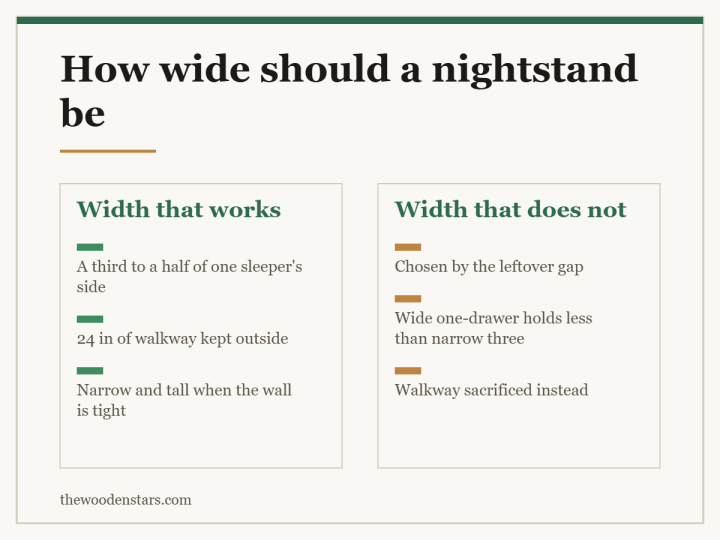
The walkway does not exist. You need 24 inches beside a nightstand to walk past, 30 if a wardrobe door opens there. A second nightstand that reduces the walkway to 15 inches has made the room worse, not better.
One side already has something. A chest of drawers, a dressing table or a wardrobe on one side does the nightstand’s job if the height is close. Matching it with a nightstand on the other side is the normal arrangement in older houses.
One person sleeps there. Obvious, and worth saying, because people buy pairs out of habit.
The budget is fixed. One good solid-wood nightstand beats two cheap ones. This is the same trade as everywhere else in furniture — best wood for furniture and engineered wood against hardwood.
The symmetry argument, tested
Matched pairs look calm, and in a large bedroom with a bed centred on a wall they are hard to beat.
But the symmetry the eye actually reads is the tops being level, not the units being identical. A nightstand on one side and a low chest of the same height on the other reads as balanced, particularly if the lamps match. Two different-width units at the same height read as deliberate; two identical units at different heights do not.
Three ways to get balance without a matched pair:
- Match the height, vary the width. The strongest single move — sizing in how wide a nightstand should be.
- Match the lamps. Identical lamps on different furniture reads as a pair.
- Match the timber tone rather than the piece. Two walnut-toned items of different design look intentional.
Buying one, or buying two later
If you buy one now and might add a second, buy from a range that has been in production a while rather than a seasonal line. Bedroom ranges get discontinued within two or three years, and the mismatch you end up with is usually a slightly different timber tone, which shows more than a different shape would.
If you buy two, buy them together. Same batch means same colour. Timber from the same species varies enough between batches to be visible side by side.
Either way, get the height right first. The top should be level with the top of the mattress give or take 2 inches — tall mattresses have made most standard nightstands too short, as covered in nightstand height. And leave the gap to the frame, per how far a nightstand should be from the bed.
One practical detail that decides this more often than aesthetics: the sockets. If only one side of the bed has a socket, a second nightstand there means a lamp cable crossing the room or a trailing extension under the bed. Check where the power is before committing to a pair, and if the second side has none, a battery or rechargeable lamp on a narrow table is a cleaner answer than wiring round the problem.
For one or two
- Matching bedside lamps The cheapest way to make two different units read as a pair
- Tape measure Walkway first, then the nightstand width that is left
- Anti-tip furniture straps For narrow tall units, especially in children’s rooms
- Furniture levellers Keeps two tops level when the floor is not
What to buy


For sizing, see how wide a nightstand should be and nightstand height. For alternatives, nightstand against side table and credenza against dresser.
Questions we get asked
Do I need one nightstand or two?
Two if two people sleep in the bed and the room can give 24 inches of walkway on both sides. One otherwise.
Can two people share one nightstand?
Not really. Across a queen, your partner’s nightstand is about 90 inches from your hand.
Do they have to match?
No. Match the height so the tops are level, and match the lamps. The widths can differ.
What if the bed is against a wall?
One nightstand. Forcing a second position makes the bed harder to get into.
One good one or two cheap ones?
One good one, particularly if the second side already has a chest or a wardrobe doing the job.
Can I add the second one later?
Yes, but buy from an established range. Timber tone varies between batches and shows side by side.