How tall should a patio table be? 28 to 30 inches
The Wooden Stars is a participant in the Amazon Services LLC Associates Program. We may earn a commission when you buy through links on our site, at no extra cost to you.
How tall should a patio table be? 28 to 30 inches for dining — the same as indoors — and the number only changes when the seating does.
Outdoor furniture is sold in three heights that look similar in photographs and are not interchangeable. Buying a table and chairs separately is where this goes wrong.
Standard patio dining height is 28 to 30 inches, paired with chairs seating at 17 to 19. Counter height is 34 to 36 with 24 to 26-inch stools. Bar height is 40 to 42 with 29 to 30-inch stools. The constant across all three is 10 to 12 inches of clearance between the seat and the underside of the tabletop — check that figure, not the table height, when mixing pieces. A conversation-set coffee table is a different animal entirely at 16 to 20 inches, and you cannot eat a plated meal at one.
How tall should a patio table be: the three heights
- Dining, 28 to 30 inches. Chairs at 17 to 19. The default, and right for almost every garden.
- Counter, 34 to 36 inches. Stools at 24 to 26. Puts seated people at eye level with someone standing at an outdoor kitchen or a bar counter.
- Bar, 40 to 42 inches. Stools at 29 to 30. Perching height, for a small terrace or against a rail.
Note that patio tables run an inch or so lower than indoor dining tables at the same nominal height, because outdoor chairs often have thicker seat cushions. If a set comes as a set, this has been handled.
It has not been handled if you bought the table and chairs separately — which outdoors is common, because people replace chairs more often than tables.
| Type | Table | Seat | Gap |
|---|---|---|---|
| Dining | 28 to 30 in | 17 to 19 in | 10 to 12 in |
| Counter | 34 to 36 in | 24 to 26 in | 10 to 12 in |
| Bar | 40 to 42 in | 29 to 30 in | 10 to 12 in |
| Conversation, coffee table | 16 to 20 in | 15 to 18 in | Not for eating |
| Side table | 22 to 26 in | Matches chair arm | — |
The gap is the number to check, not the height
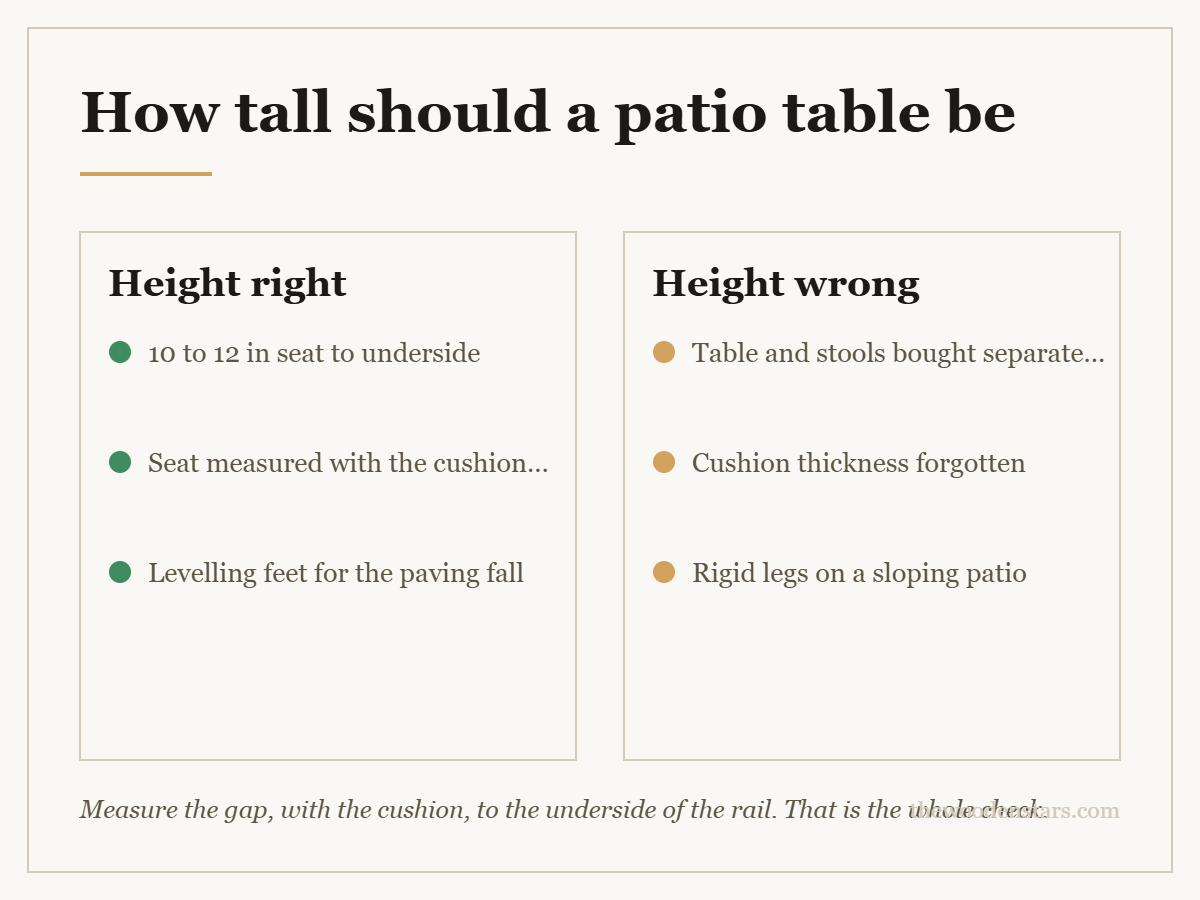
Ten to 12 inches between the top of the seat and the underside of the tabletop. Less than 10 and your thighs press; more than 12 and you reach up to eat.
Two outdoor-specific things eat into it:
Cushions. A 2-inch seat cushion raises an 18-inch seat to 20 and turns a comfortable 11-inch gap into 9. Measure the seat with the cushion on, because that is how you will use it.
The apron or frame under the top. Outdoor tables often have a deep rail under the top for stiffness. Measure to the underside of that rail, not to the tabletop — it is what your knees meet.
The indoor version of the same comparison is in counter height against standard dining table.
What the paving does to the number
This is the outdoor twist. A patio is laid with a drainage fall, usually 1 in 60 to 1 in 80 away from the house.
Across a 40-inch-wide table that is about half an inch of difference from one side to the other — not enough to notice at the tabletop, but enough that a table with rigid legs rocks on three of four feet. Every outdoor table wants levelling feet or adjustable glides, and most do not come with them. See levelling feet and glides, and if it already rocks, how to fix a wobbly table.
On grass or gravel it is worse: the legs sink unevenly and keep sinking. Wide foot caps spread the load; small hard feet do not.
When counter or bar height is right outdoors
An outdoor kitchen or a bar counter. Counter height puts seated people at eye level with whoever is cooking, which is the point.
A small terrace with a view. Bar height lifts you over a railing or a hedge. On a balcony this can be the difference between looking at a wall and looking at the view.
A narrow space. Stools tuck fully under a tall table, so a bar table against a wall takes very little floor between uses.
Against that: tall seating excludes young children and anyone with knee or hip trouble, and it is uncomfortable for a long meal unless the stools have footrails. Outdoors, add that stools are easier to blow over and harder to climb onto on uneven paving. The trade is worked through in patio bar set against patio dining set.
The low table, which is a different product
A conversation-set coffee table sits at 16 to 20 inches, matched to deep lounge seating at 15 to 18. You cannot eat a plated meal at it, and people who buy one expecting to are the most common category of outdoor-furniture regret.
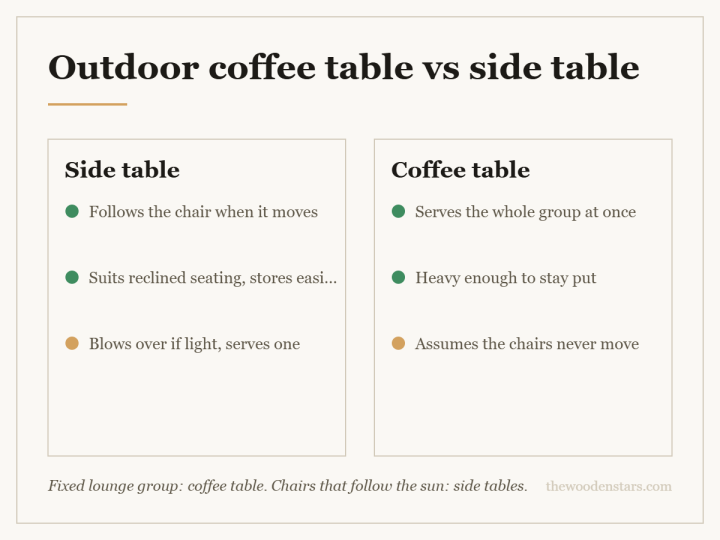
Its height rule is the indoor one: within a couple of inches of the seat height of the sofa or chairs it serves. Detail in outdoor coffee table against side table and dining set against conversation set.
Getting the height to work
- Levelling feet and glides Every patio slopes, and every rigid table rocks on it
- Furniture foot caps Spreads load so legs do not sink into grass or gravel
- Seat pads for outdoor chairs Raise the seat two inches, so check the gap first
- Tape measure Measure to the underside of the apron, not the tabletop
What to buy


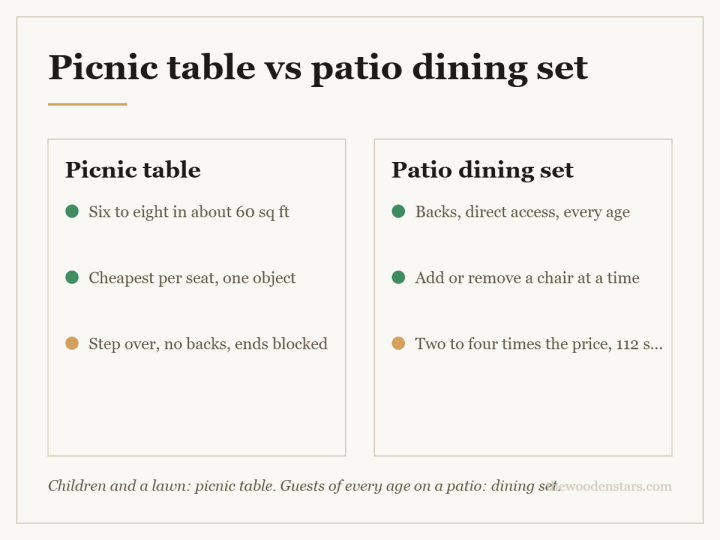
For sizing, see what size patio table for 6 and what size patio table for 4. For clearance, how much space around a patio table. For shape, round against rectangular. For tall seating, patio bar set against patio dining set.
Questions we get asked
How tall should a patio table be?
Twenty-eight to 30 inches for dining, with chairs seating at 17 to 19. Counter height is 34 to 36 and bar height 40 to 42.
What is the gap between seat and table?
Ten to 12 inches, at every height. That is the number to check when mixing a table and chairs bought separately.
Do cushions change it?
Yes. A 2-inch cushion turns an 18-inch seat into 20 and an 11-inch gap into 9. Measure the seat as you will use it.
Should I measure to the tabletop?
No — to the underside of the apron or frame, which is what your knees meet. Outdoor tables often have a deep stiffening rail.
Why does my patio table rock?
Paving is laid with a drainage fall of about 1 in 60. Levelling feet are the fix, and most tables do not come with them.
Can I eat at a conversation-set coffee table?
Drinks and snacks, yes. At 16 to 20 inches a plated meal means leaning forward for the whole meal.