What size patio table for 6? Sixty to 72 inches
The Wooden Stars is a participant in the Amazon Services LLC Associates Program. We may earn a commission when you buy through links on our site, at no extra cost to you.
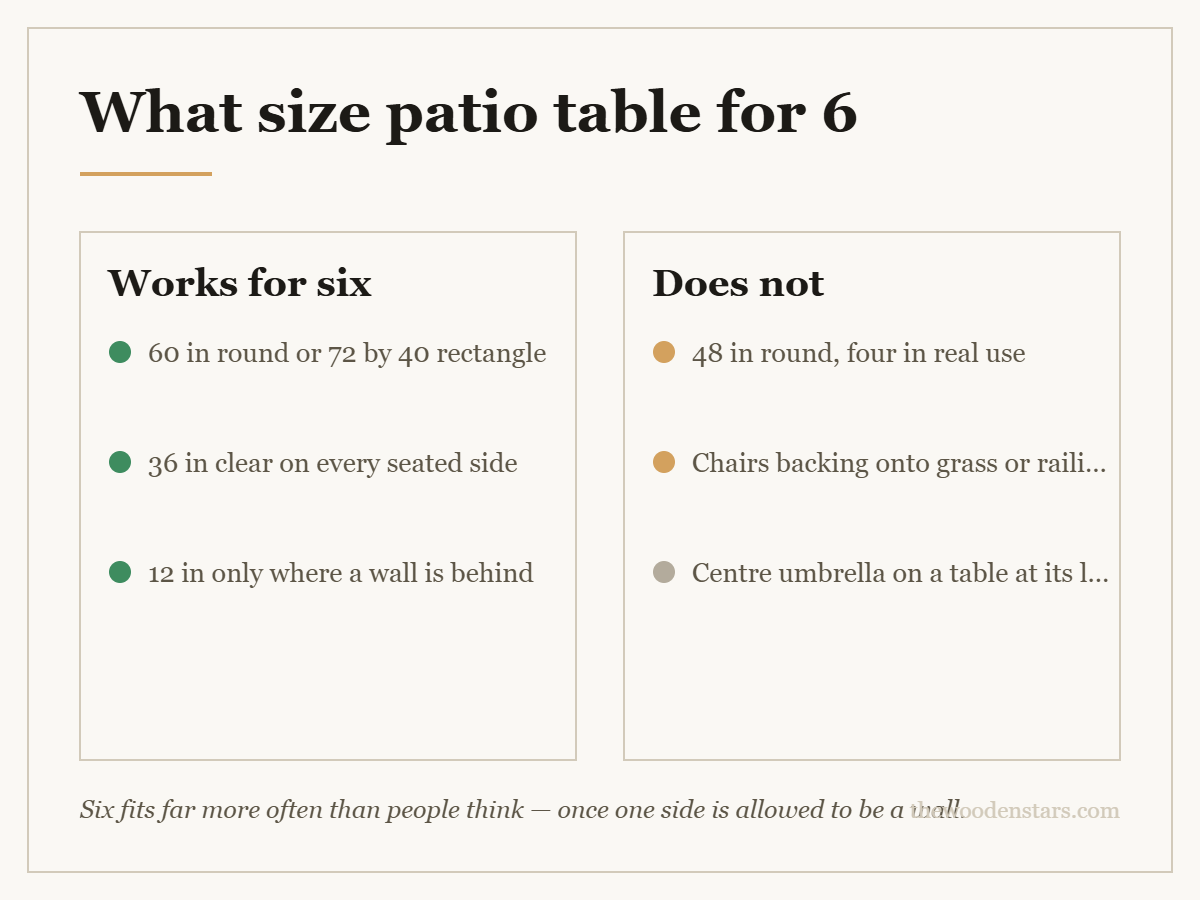
What size patio table for 6? A 60-inch round or a 72 × 40-inch rectangle — and the space you actually need is about 12 × 10 feet once the chairs can move.
The table is the easy half. The clearance around it is what decides whether six people can get up from a meal without asking each other to shuffle.
For six: a 60-inch round, a 72 × 40-inch rectangle, or a 60-inch square. Allow 24 inches of table edge per person — a 60-inch round gives 188 inches of circumference, which is six generous places. Then add 36 inches of clearance on every side people sit, so the round needs a 132-inch square of patio and the rectangle 144 × 112 inches. That is roughly 12 × 11 feet. If an umbrella goes through the middle, size up one step — the pole takes the serving area, not a seat, but it makes a 60-inch round feel like a 54.
What size patio table for 6: the two shapes that work
Six is the size where shape starts to matter, because a rectangle and a circle reach it by different routes.
- 60-inch round. Circumference 188 inches ÷ 24 = seven places, so six with room to spare. Everyone can see everyone. Needs a square-ish patio.
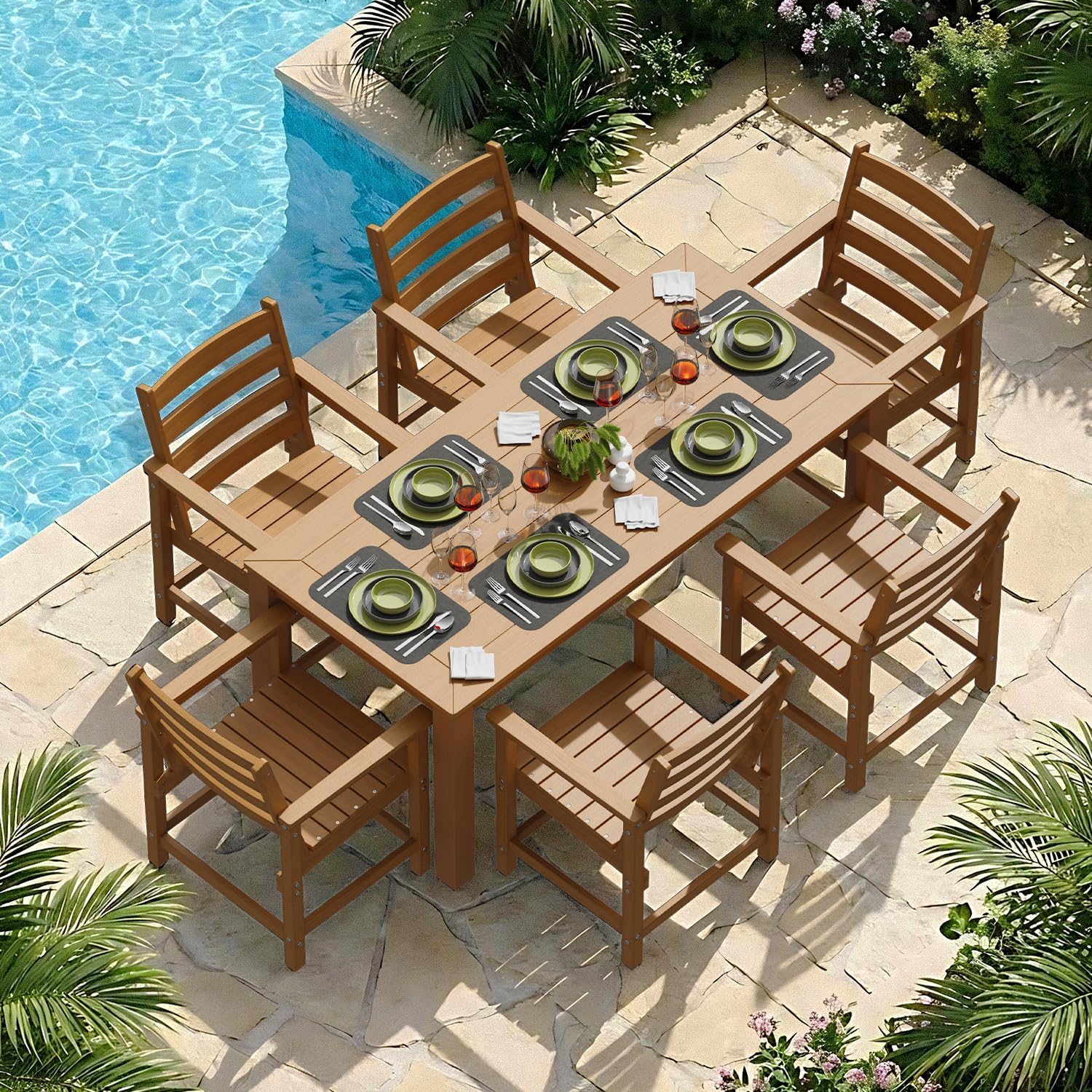
- 72 × 40-inch rectangle. Three per long side, and the two ends spare or used at a push. Fits along a wall or a narrow deck.
- 60-inch square. Rare but excellent for six — 240 inches of edge, two per side, and it suits a square patio better than a circle does at this size.
- 84 × 40-inch rectangle. Six with real elbow room, or eight when needed.
What does not work for six is a 48-inch round. It gives 151 inches — six places on paper, four in practice once serving dishes are on it, because a circle loses usable edge fast when the middle is occupied.
| Table | Edge available | Patio needed |
|---|---|---|
| 60 in round | 188 in | 132 × 132 in |
| 60 in square | 240 in | 132 × 132 in |
| 72 × 40 in | 224 in | 144 × 112 in |
| 84 × 40 in | 248 in | 156 × 112 in |
| 48 in round | 151 in | Six on paper, four in use |
The clearance, which is where patios fail
Thirty-six inches behind every chair. That is 24 for the chair to push back and 12 for the person to stand in.
Outdoors there are three things that eat it and are easy to miss:
- The railing or the edge of the paving. Measure to the railing, not the deck boards. Chairs do not hang over grass comfortably — the back legs sink.
- The barbecue, the planters, the steps. All of them take from the same 36 inches.
- The door swing. A French door opening outward takes 30 inches of a side, and it is always the side people walk through.
Where a side is against a wall or a fence and nobody sits there, 12 inches is enough. That single allowance is often what makes six fit. The full method is in how much space around a patio table.
The umbrella changes the answer
A centre pole does not remove a seat — it removes the middle of the table, which is where the serving dishes go.
On a 60-inch round that is noticeable: you lose roughly a 10-inch circle at the centre, and six plates plus a salad bowl suddenly compete. In practice a 60-inch round with an umbrella seats six people but serves like a 54.
Two ways round it:
Size up to a 66 or 72-inch round, which puts the serving area back.
Use a cantilever umbrella standing beside the table. It costs floor — the base is 24 to 30 inches square and heavy — but it leaves the whole table usable and shades a rectangle properly, which a centre umbrella does not. See patio table with umbrella hole or without.
Extending tables, if six is occasional
If the usual number is four and six happens six times a year, an extending table is the honest answer outdoors as well as in.
What to check specifically outside:
- Where the leaf lives. Indoors it goes in a cupboard. Outdoors there is rarely a cupboard, and a timber leaf left in a shed cups if the shed is damp. Self-storing leaves that fold into the table are worth paying for.
- The mechanism gets weather. Steel runners rust. Look for stainless or aluminium, and expect to work them a few times each spring.
- The joint shows. Two timber halves that have weathered separately will not match perfectly, and the seam collects water.
The indoor version of the same decision is in extendable dining tables.
The other numbers, while you are measuring
Table height 28 to 30 inches with 17 to 19-inch chairs — how tall a patio table should be.
Width 36 inches minimum on a rectangle, so two places face each other with serving space down the middle. Forty is better outdoors, because platters and a bottle take more room than a plated indoor meal.
Named timber and stainless fixings. Oil content, not hardness, predicts how long it lasts outside: best wood to use outside. If it is acacia, plan on oiling each spring — is acacia good for outdoor furniture.
Setting up a six-seat patio
- Levelling feet and glides Paving is laid with a fall, so a six-seat table will rock
- Cantilever umbrella base Shades a rectangle properly and leaves the table whole
- Teak or hardwood oil One afternoon each spring on acacia or eucalyptus
- Table cover Cheaper than a top that sat under leaf litter all winter
What to buy


For four seats, see what size patio table for 4. For the shape, round against rectangular patio tables. For seat counts generally, how many people fit at a patio dining table. For bench seating, outdoor bench against outdoor chairs.
Questions we get asked
What size patio table do I need for 6?
A 60-inch round, a 60-inch square or a 72 × 40-inch rectangle. Allow 24 inches of table edge per person.
How much patio does that need?
About 132 inches square for the round, or 144 × 112 for the rectangle, once 36 inches of clearance is added on every seated side.
Will a 48-inch round seat six?
On paper. In practice four, because a circle loses usable edge quickly once serving dishes take the middle.
Does an umbrella cost me a seat?
Not a seat — the serving area. A 60-inch round with a centre pole seats six but serves like a 54.
Can a side have less than 36 inches?
Yes, if it is against a wall or fence and nobody sits there. Twelve inches is enough, and that allowance often makes six fit.
Is an extending table worth it outdoors?
If six is occasional. Look for self-storing leaves and stainless runners — a leaf stored in a damp shed cups.