How deep is an outdoor sofa? 30 to 38 inches
The Wooden Stars is a participant in the Amazon Services LLC Associates Program. We may earn a commission when you buy through links on our site, at no extra cost to you.
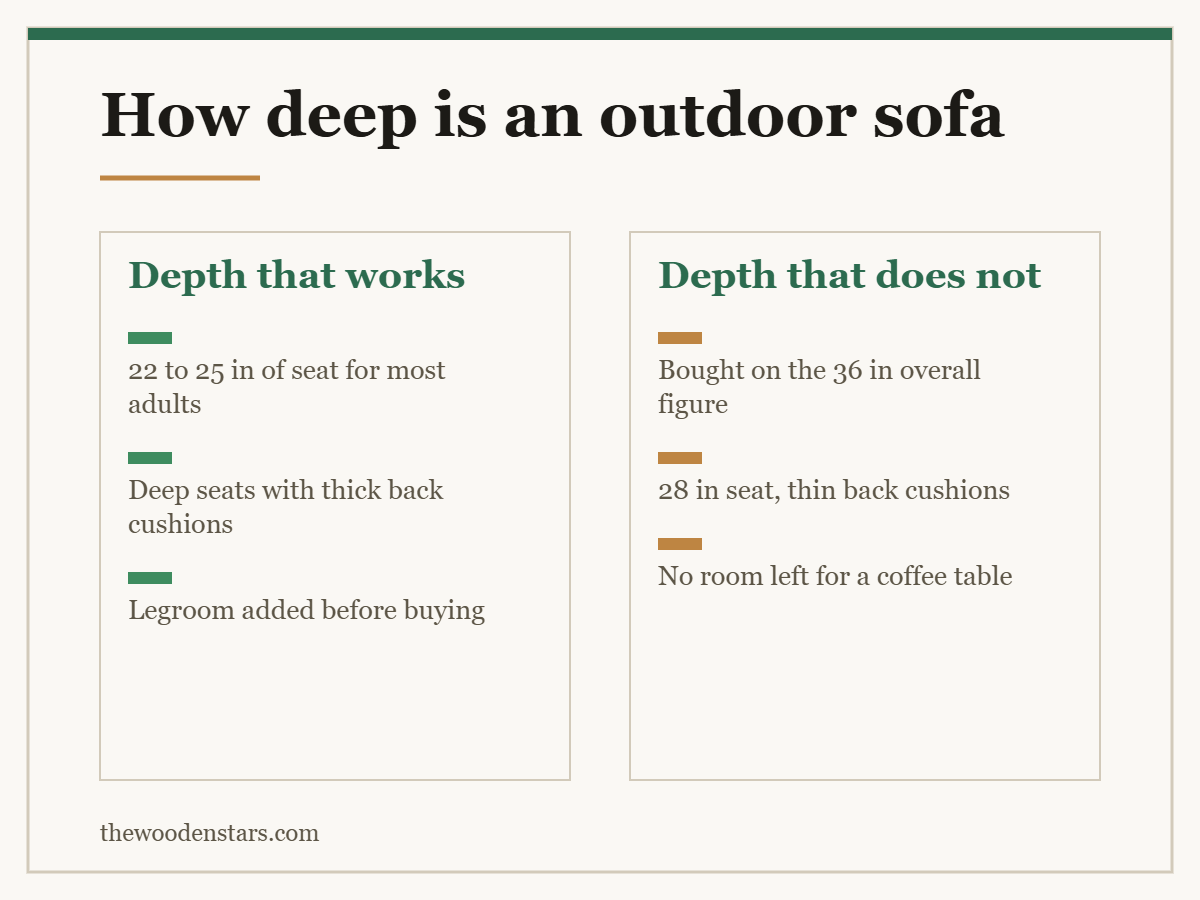
How deep is an outdoor sofa? 30 to 38 inches overall — but the figure that decides whether it is comfortable is the seat depth, which is only 21 to 28, and listings mix the two up constantly.
Buying on overall depth is how people end up with a sofa that fits the terrace and does not fit them.
There are three depths. Overall depth is 30 to 38 inches, front edge to the back of the frame — use it for fitting the space. Seat depth is 21 to 28, from the front edge to the back cushion — use it for comfort. Working depth is overall plus 18 to 24 inches of legroom in front. A deep-seat outdoor sofa is 26 to 28 inches of seat, meant for lounging with your legs up; a standard one is 21 to 24 and better for sitting upright. Seat depth over 24 needs back cushions or most people cannot reach the backrest. Shorter sitters should treat 22 to 23 inches as the target.
How deep is an outdoor sofa: the three numbers
Write all three down before you buy.
- Overall depth, 30 to 38 inches. The full footprint, including the back frame and any overhanging cushion. This is what you chalk on the paving.
- Seat depth, 21 to 28 inches. From the front edge of the seat cushion to the face of the back cushion. This is what your legs experience.
- Working depth, overall plus 18 to 24. Nobody sits with their feet under the sofa. Add the legroom, and add it again if a coffee table goes in front.
The gap between the first two is the thickness of the back cushions and frame, usually 8 to 12 inches — which is a lot, and it is where the confusion comes from. A sofa listed at 36 inches deep can have anywhere between 22 and 28 inches of seat depending on how thick its back is.
| Type | Overall | Seat depth | Suits |
|---|---|---|---|
| Bistro or balcony loveseat | 28 to 32 in | 20 to 22 in | Upright sitting, small spaces |
| Standard outdoor sofa | 32 to 35 in | 22 to 24 in | Most people, most patios |
| Deep-seat lounge | 35 to 38 in | 26 to 28 in | Lounging with legs up |
| Sectional module | 33 to 36 in | 24 to 26 in | Corner layouts |
| Daybed | 48 to 60 in | Full depth | Lying down |
Why deep seats are not automatically better
Deep-seat sofas photograph beautifully and the listings use words like “sink-in”. What they do not say is that a 28-inch seat is too deep to sit upright on for most adults.
The arithmetic is simple. From the back of your knee to your lower back is about 18 to 22 inches on most adults. If the seat is 28 inches deep, there is 6 to 10 inches of unused cushion behind you, and you either perch on the front edge with no back support or slide back until your feet leave the ground.
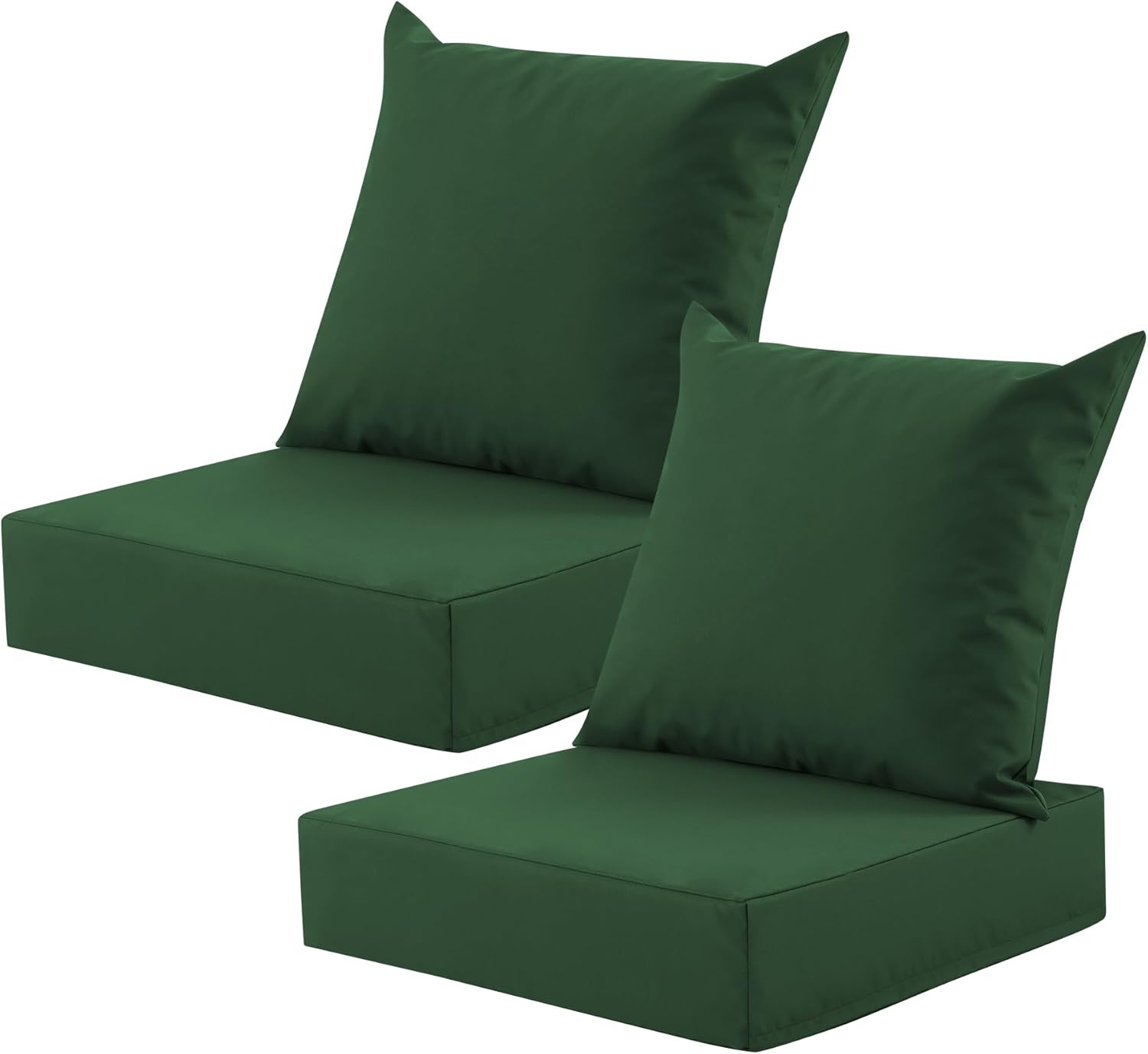
Deep seats work when they come with substantial back cushions that take up the extra 4 to 6 inches. Take those cushions away — and outdoor cushions get taken indoors, rained on, and eventually not replaced — and the sofa becomes unsittable. That is a real risk with outdoor furniture in a way it is not indoors.
So: deep seat plus good back cushions is a lounging sofa. Deep seat with thin cushions is a mistake. The cushion question itself is in sling against cushion patio chairs.
Matching depth to who sits on it
Under about 5 ft 5 in: target 21 to 23 inches of seat. Anything deeper and the front edge catches behind the knee, which cuts circulation on a long evening.
5 ft 5 in to 6 ft: 22 to 25 inches is the broad comfort band.
Over 6 ft: 25 to 28 is genuinely more comfortable, and a standard 22-inch seat will feel perched.
Older users: shallower is better, and so is a firmer cushion. Getting out of a deep, soft seat is much harder than getting into it — the same standing-up problem covered in patio chair with arms against armless.
If the household spans those bands, 23 to 24 inches plus a couple of lumbar cushions serves everyone; the cushions let the tall person lose them and the shorter person keep them.
What depth does to the patio
Depth is the dimension that eats terraces, because it applies to every side of a seating group.
A three-piece conversation group — sofa plus two chairs round a coffee table — with 36-inch-deep pieces and 18 inches of legroom needs roughly 12 feet across before you add any walkway. Drop to 32-inch pieces and it is 11. That foot is often the difference between a group that works and one you edge round.
Three practical moves when depth is tight:
- Put the sofa against a wall. Its overall depth then costs nothing behind, exactly as a bench does at a dining table — outdoor bench against outdoor chairs.
- Use a narrower coffee table. Eighteen inches of legroom is the minimum, and a 20-inch-deep table between two 32-inch sofas is workable.
- Consider separate chairs instead of a sectional. The depth is similar but the arrangement is flexible — patio sectional against separate chairs.
For the whole-layout version of this sum, see how big a patio sectional should be and how much space around a patio table.
Getting the depth right
- Tape measure Seat depth is front edge to the face of the back cushion
- Outdoor lumbar cushions Four inches of back cushion turns a deep seat usable
- Acrylic outdoor cushion covers Deep seats depend on cushions surviving the season
- Outdoor furniture cover A deep sofa holds water in the seat if left uncovered
What to buy


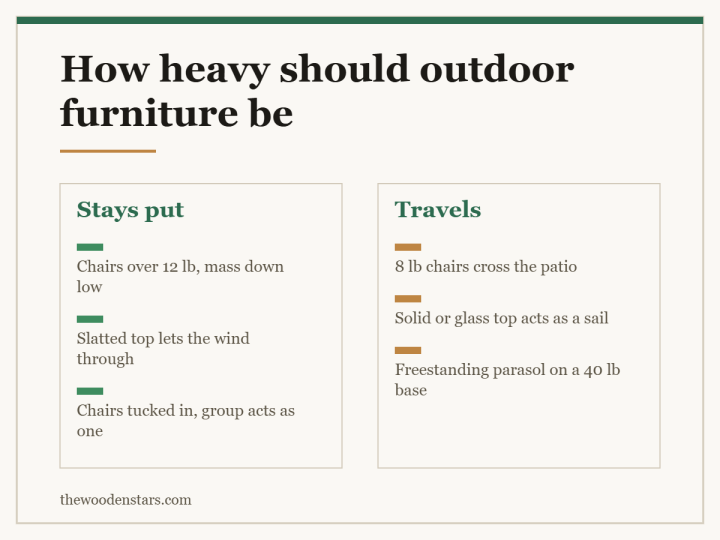
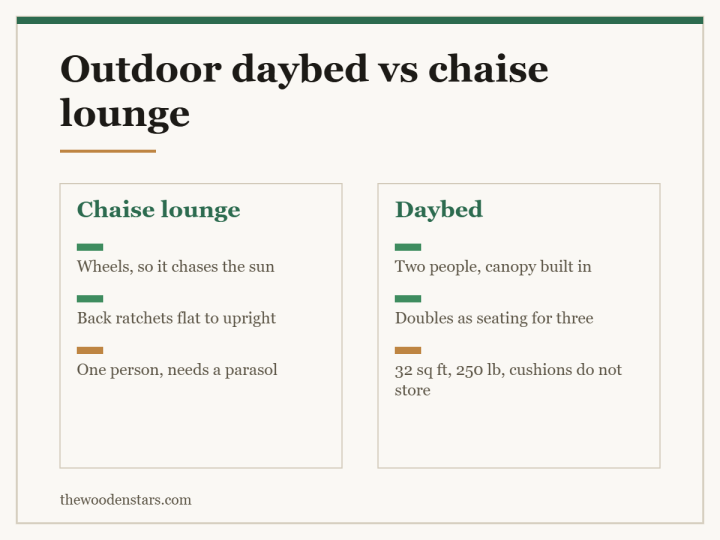
For layout, see how big a patio sectional should be and sectional against separate chairs. For the sofa-or-loveseat question, outdoor sofa against loveseat. For lying down, outdoor daybed against chaise lounge.
Questions we get asked
How deep is an outdoor sofa?
Thirty to 38 inches overall, with a seat depth of 21 to 28. The seat figure is the one that decides comfort.
What is a good seat depth?
Twenty-two to 25 inches suits most adults. Under 5 ft 5 in, aim for 21 to 23; over 6 ft, 25 to 28.
Why is the overall depth so much bigger than the seat?
The back cushions and frame take 8 to 12 inches. That is why a 36-inch sofa can have 22 or 28 inches of seat.
Are deep-seat sofas more comfortable?
Only with thick back cushions. Knee to lower back is 18 to 22 inches, so a bare 28-inch seat leaves you unable to reach the backrest.
How much space do I need in front?
Eighteen to 24 inches of legroom, and more if a coffee table goes there.
How much patio does a conversation group need?
About 12 feet across with 36-inch-deep pieces, or 11 with 32-inch ones, before any walkway.