How far should a dining chair be from the table?
The Wooden Stars is a participant in the Amazon Services LLC Associates Program. We may earn a commission when you buy through links on our site, at no extra cost to you.
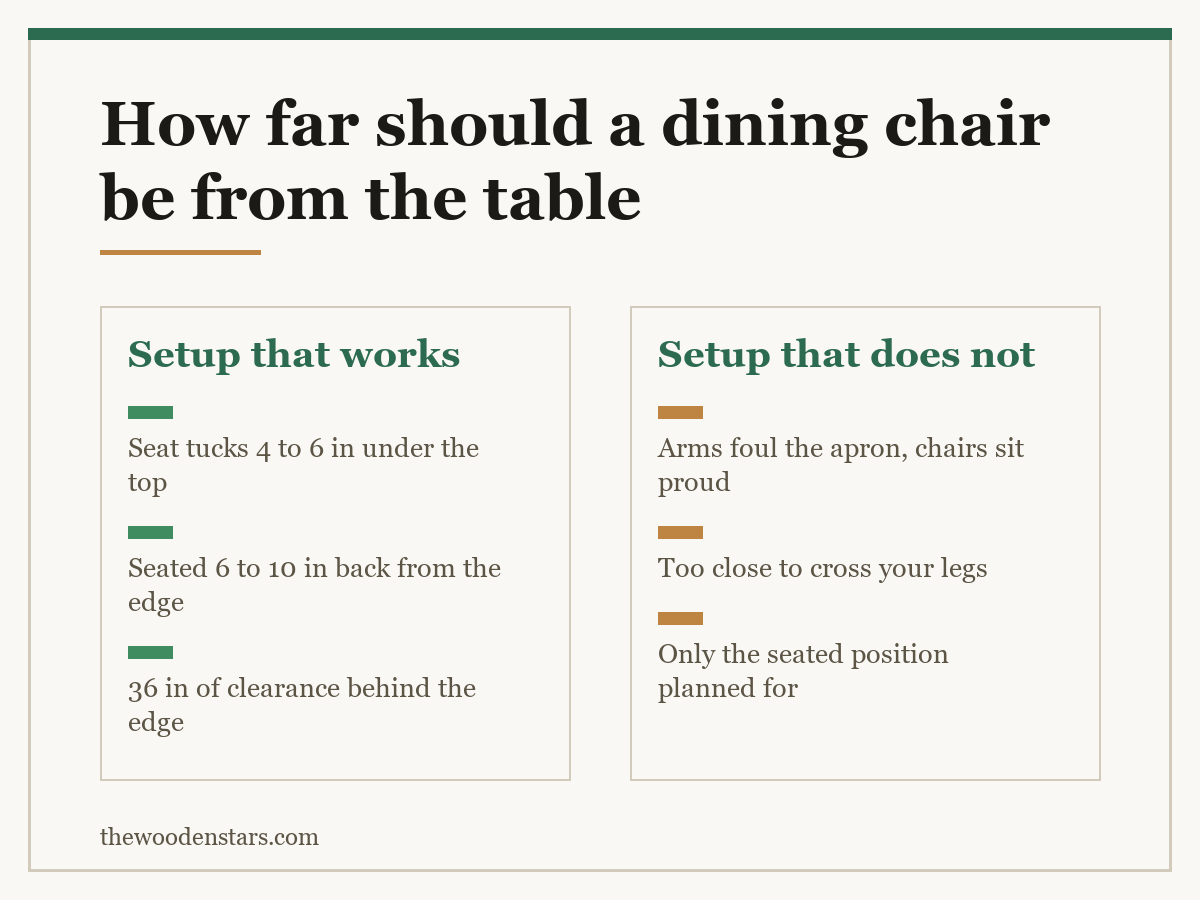
How far should a dining chair be from the table? Tucked in, the seat front should sit 4 to 6 inches under the tabletop edge. Seated, you want 6 to 10 inches between your stomach and the table.
Two different distances, and people quote the wrong one at each other constantly.
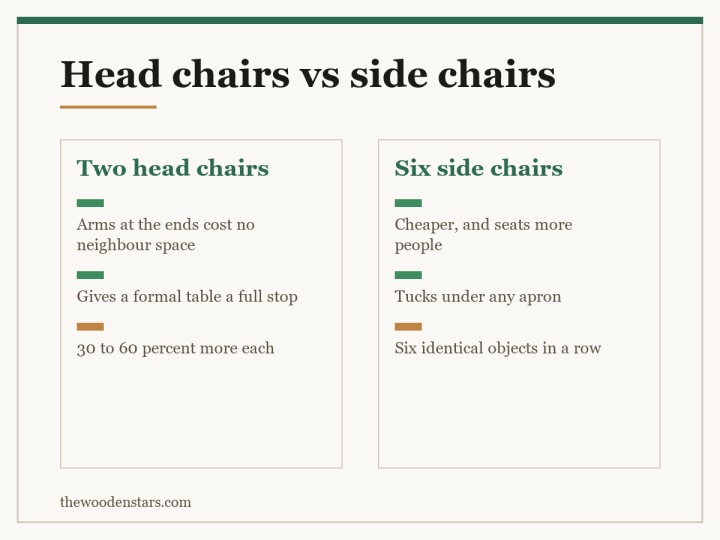
There are three figures. Tucked in: the seat slides 4 to 6 inches under the top, so the chair back sits roughly flush with the table edge. In use: the chair front is 6 to 10 inches back from the edge — close enough to reach your plate without leaning. Pushed back to stand: 18 to 24 inches of travel, which is why the room needs 36 inches of total clearance behind the table edge. What stops a chair tucking in is almost never the seat — it is the apron or the arms.
How far should a dining chair be from the table, in each state
- Tucked in and unused. Seat front 4 to 6 inches under the top. The chair back should finish roughly level with the table edge — that is what makes a set room look tidy rather than half-pushed-in.
- Seated and eating. Chair front 6 to 10 inches back from the edge. Any closer and the table edge presses your forearms; any further and you lean forward to reach.
- Pushed back to stand. 18 to 24 inches of travel from the seated position.
Total floor the room has to give behind the table edge: 36 inches, and 42 to 48 if anyone walks behind a seated person. That figure and how it interacts with the room is in how much space around a dining table.
| State | Distance | Measured from | Note |
|---|---|---|---|
| Tucked in | 4 to 6 in under | Tabletop edge | Chair back level with the edge |
| Seated, eating | 6 to 10 in back | Tabletop edge | Forearms clear the edge |
| Pushed back | 18 to 24 in | Seated position | Enough to stand |
| Total clearance | 36 in | Table edge to wall | 42 to 48 with a walkway |
| Armchair, tucked | 0 to 3 in under | Tabletop edge | Arms usually stop it |
What stops a chair tucking in
It is almost never the seat. Three culprits, in order of frequency.
The apron. A 3 to 4-inch rail under the tabletop drops the underside to 25 or 26 inches. Anything on the chair taller than that — an arm, a high seat with a cushion, a shaped back rail — stops the chair short. Measure floor to apron underside, not to the tabletop; that check runs through how tall a dining chair should be.
The arms. Arm height is typically 24 to 27 inches, which is right at the apron. This is why armchairs so often sit permanently proud — dining chair with arms against without.
The legs. A table leg set in from the corner blocks the chair at that position even when the apron clears. Pedestal and trestle tables avoid both this and the apron problem, which is the strongest practical argument for them.
If a chair will not tuck, the honest consequence is that its overall depth stays in the walkway all day. On a tight floor plan that is 6 to 10 inches you thought you had.
The seated distance, and why it is not personal preference
Six to 10 inches between the front of the chair and the table edge puts your forearms on the table without the edge digging into them, and puts your plate within reach without leaning.
Closer than 6 and you cannot cross your legs or shift position. Further than 10 and you lean forward for every mouthful, which is the posture that makes a long dinner tiring.
Two things shift the number:
A deep seat pushes you back. A 20-inch seat seats you further from the edge than a 16-inch one at the same chair position, which is one reason deep chairs feel wrong at shallow tables — how deep a dining chair seat is.
A table overhang pulls you in. A top that overhangs its apron by 2 to 3 inches lets you sit closer, because your knees go under the overhang rather than meeting the rail.
Checking it before you buy
- Floor to apron underside on the table. This is the gatekeeper measurement.
- Chair arm height, or seat height plus cushion if there are no arms. It must clear the apron by at least an inch.
- Overall chair depth, which is what sits in the room when the chair will not tuck.
- Table leg positions. Legs set in from the corners block specific seats, and you cannot fix that later.
- Tape it out. Mark 36 inches behind the table edge on the floor and walk it for a day before ordering six chairs.
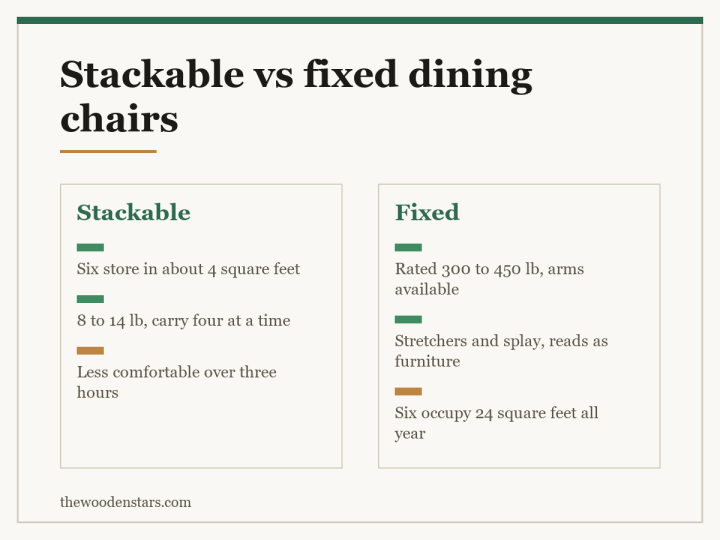
Where it all has to fit in a small room, the alternatives are a bench that pushes flat against a wall, per dining bench against chairs, or chairs that store away — stackable against fixed dining chairs.
One practical note about rugs. A dining rug has to extend at least 24 inches past the table edge on every side, and 30 is better, so that the back legs stay on the rug when a chair is pushed out. Chairs that drop off the rug edge catch, tip slightly, and wear a line into the pile at exactly the point where each person sits. On a 72 × 36-inch table that means a rug of at least 120 × 84 inches, which is larger than most people assume.
Measuring it out
- Tape measure Floor to apron underside decides whether anything tucks in
- Painter’s tape Mark 36 inches behind the table edge and live with it a day
- Felt furniture pads A chair pushed in and out three times a day marks a floor
- Furniture levellers An unlevel chair catches the apron on one side only
What to buy


For the chair dimensions, see how tall a dining chair should be and how deep a dining chair seat is. For the room, how much space around a dining table.
Questions we get asked
How far should a dining chair be from the table?
Tucked in, the seat sits 4 to 6 inches under the top. Seated, the chair front is 6 to 10 inches back from the edge.
How much room to push back and stand?
Eighteen to 24 inches of travel, inside a total clearance of 36 inches behind the table edge.
Why will my chairs not tuck in?
The apron, the arms, or a table leg set in from the corner. Measure floor to apron underside first.
Should the chair back be level with the table edge?
Roughly, yes. That is what a properly tucked set looks like.
How close should I sit while eating?
Six to 10 inches from the edge. Closer and you cannot shift position; further and you lean for every mouthful.
Which tables tuck chairs best?
Pedestal and trestle tables, because they have no apron and no corner legs in the way.