How to anchor a bookcase to a wall — Find the stud
The Wooden Stars is a participant in the Amazon Services LLC Associates Program. We may earn a commission when you buy through links on our site, at no extra cost to you.
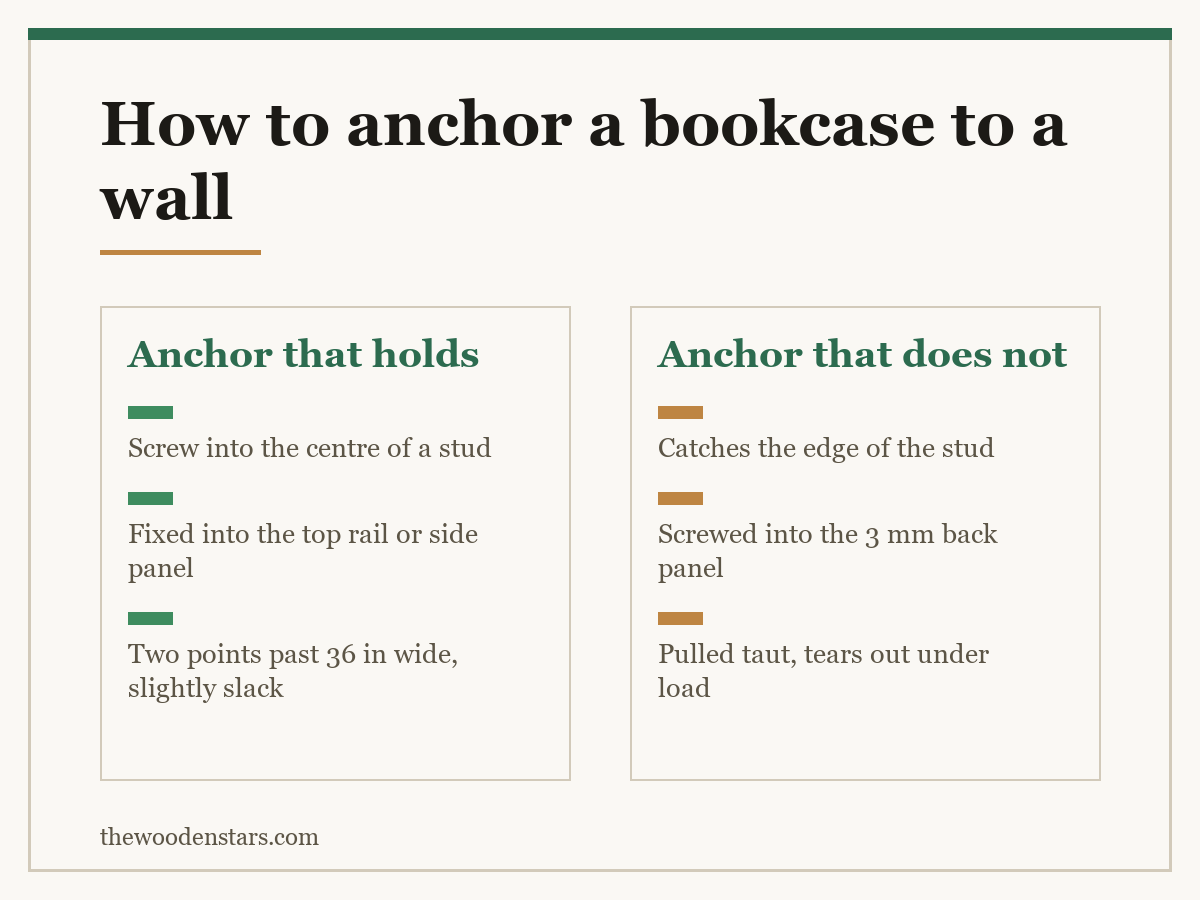
How to anchor a bookcase to a wall: find the stud, screw a strap or an L-bracket into it, and fix the other end into the bookcase’s top rail — not the thin back panel.
The fixing is easy. Everything that goes wrong goes wrong at one of those two ends.
Use a stud finder to locate timber studs, usually at 16-inch centres. Fix an anti-tip strap or a metal L-bracket into the centre of a stud with a 2.5-inch wood screw, and into the bookcase’s top rail or a side panel — never the 3 mm back panel, which pulls out under load. Use two anchors on anything over 36 inches wide. On masonry, drill and plug rather than using plasterboard fixings. Anchor anything over 48 inches tall, and everything in a room a child uses. Load the heaviest books on the bottom shelves — that does more for stability than the anchor does.
How to anchor a bookcase to a wall, step by step
- Empty the bookcase and stand it in its final position, flat against the wall and level.
- Find the studs. A stud finder is the reliable route; tapping works but produces false readings near pipes and noggins. Mark the centre, not the edge.
- Mark the bookcase side. The fixing point must land on the top rail or a side panel, both of which are structural. The back panel is not.
- Screw into the stud with a 2.5-inch wood screw through the strap or bracket. Pre-drill a 3 mm pilot hole if the timber is old and dry.
- Screw into the bookcase with a shorter screw — 0.75 inch into a 0.75-inch panel, so it does not come through the face.
- Leave the strap slightly slack. Taut straps tear out; the strap is there to stop a topple, not to hold the unit upright.
- Repeat at a second stud if the bookcase is over 36 inches wide.
| Wall | Fixing | Screw | Holds |
|---|---|---|---|
| Timber stud | Wood screw into stud centre | 2.5 in | Full load |
| Brick or block | Plug and screw | 2.5 in into plug | Full load |
| Plasterboard only | Toggle or butterfly | Rated 50 lb plus | Partial |
| Dot-and-dab plasterboard | Long plug into the block behind | 3.5 in | Full load |
| Metal stud | Metal-stud toggle | As rated | Partial |
The two ends people get wrong
The wall end: hitting the stud edge rather than the centre. A stud is 1.5 inches wide. A screw catching the last few millimetres feels tight when driven and pulls out under load. Mark the stud’s two edges and aim for the middle.
Where there is no stud in a useful position, plasterboard toggles rated for 50 lb or more are a partial answer — better than nothing, not as good as timber. Never use the small plastic plugs that come in the box with flat-pack furniture for an anti-tip fixing.
The furniture end: screwing into the back panel. This is the most common mistake and it defeats the whole exercise. That panel is 3 to 6 mm and stapled in; a screw into it tears straight through when a loaded case leans.
Fix into the top rail, a side panel, or a solid horizontal member. If the bookcase genuinely has nothing solid at the top — some very cheap units do not — screw a batten across the back first and anchor to that.
The same distinction applies to any tall carcass, which is why the kits are interchangeable — anti-tip kits for dressers.
When anchoring is not optional
Over 48 inches tall. Above that the leverage available to anyone pulling on a shelf exceeds what the footprint resists.
Any room a child uses, regardless of height. Shelves are climbable in a way drawers are not — a child’s foot on the second shelf applies force at exactly the worst point.
Anything on carpet. A thick carpet lets the front feet sink, tilting the unit forward before anything else happens.
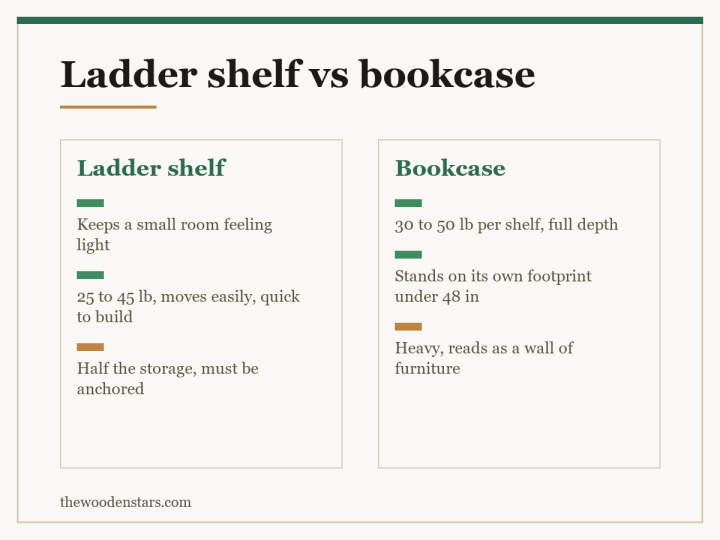
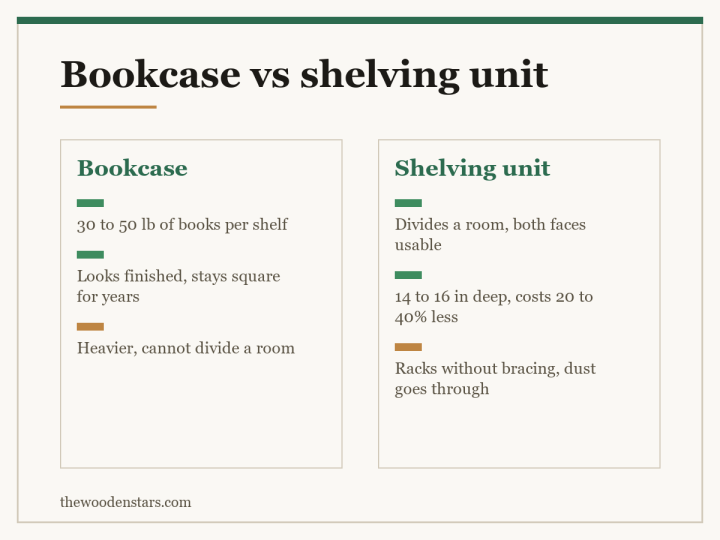
Units without a back panel. A shelving unit has no racking resistance of its own, so the wall provides it — bookcase against shelving unit.
Anything top-heavy. Which is a loading problem first: heavy books belong on the bottom shelves. That single habit does more for stability than the anchor, and the anchor is what catches the case when the habit fails — how tall a bookcase should be.
Anchoring without drilling the wall
Renting, or the wall is tiled or plastered in a way you would rather not disturb? Three options, in order of how well they work.
Anchor to the floor instead. An L-bracket from the bookcase base into a joist resists forward tipping directly, and the hole is hidden.
Ceiling-tension poles or a batten wedged between the bookcase top and the ceiling stop forward rotation. Effective and reversible; unattractive unless boxed in.
Weight low and depth. Not an anchor, but a 16-inch-deep case with the bottom two shelves loaded heavy resists tipping far better than a 10-inch one with books on top. If you can only do one thing, do this.
What does not work: adhesive strips, furniture wedges alone, or relying on the case being heavy. Weight helps only if it is low, and a loaded case is exactly what you do not want falling.
Once it is secured, the other failure to watch is the shelf itself — how to fix a sagging bookshelf and shelf pins and supports sizes.
Doing it properly
- Stud finder The single tool that decides whether the fixing works
- Anti-tip furniture straps Two per case over 36 inches wide
- Wall plugs and screws For brick or block, where plasterboard fixings do not apply
- Spirit level An out-of-plumb case leans on its anchor permanently
What to buy
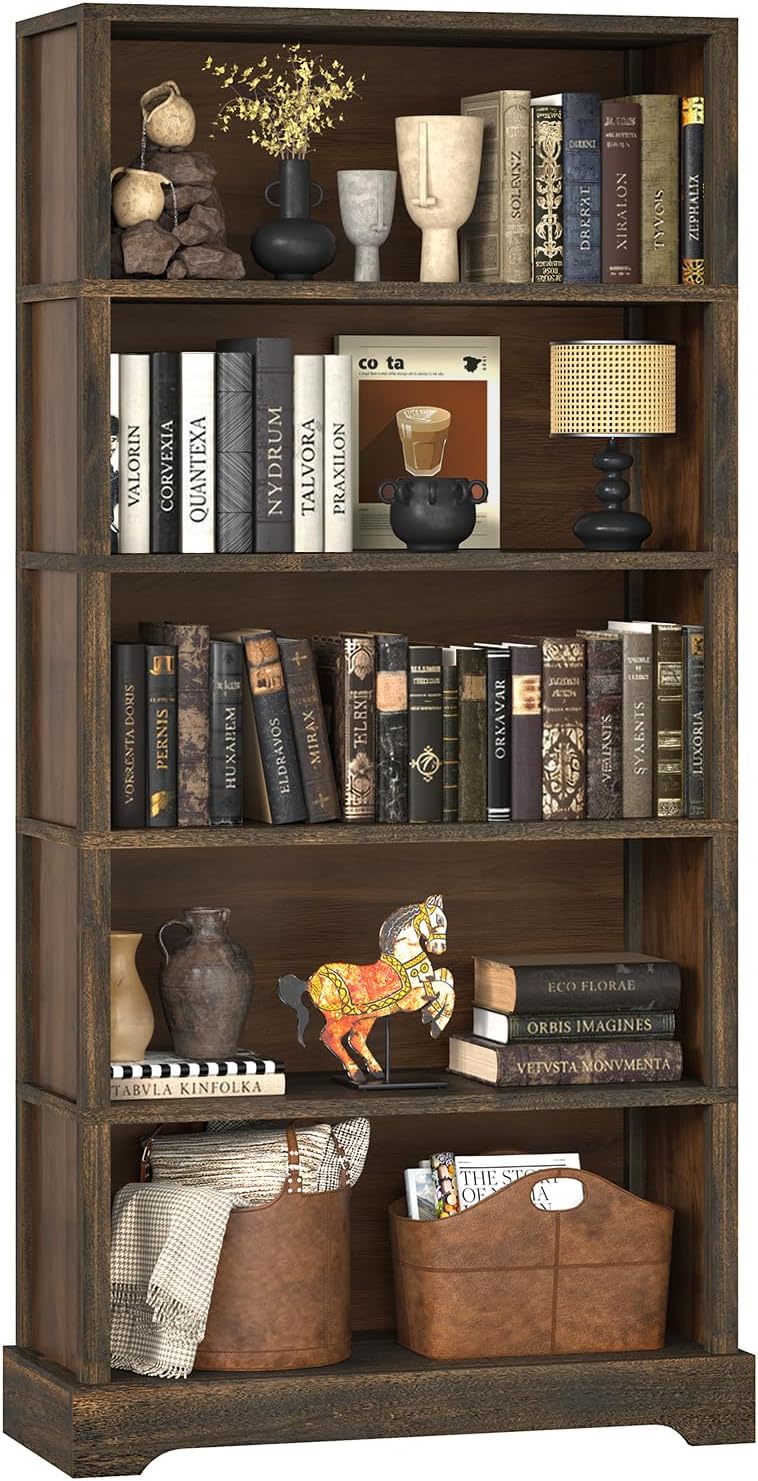


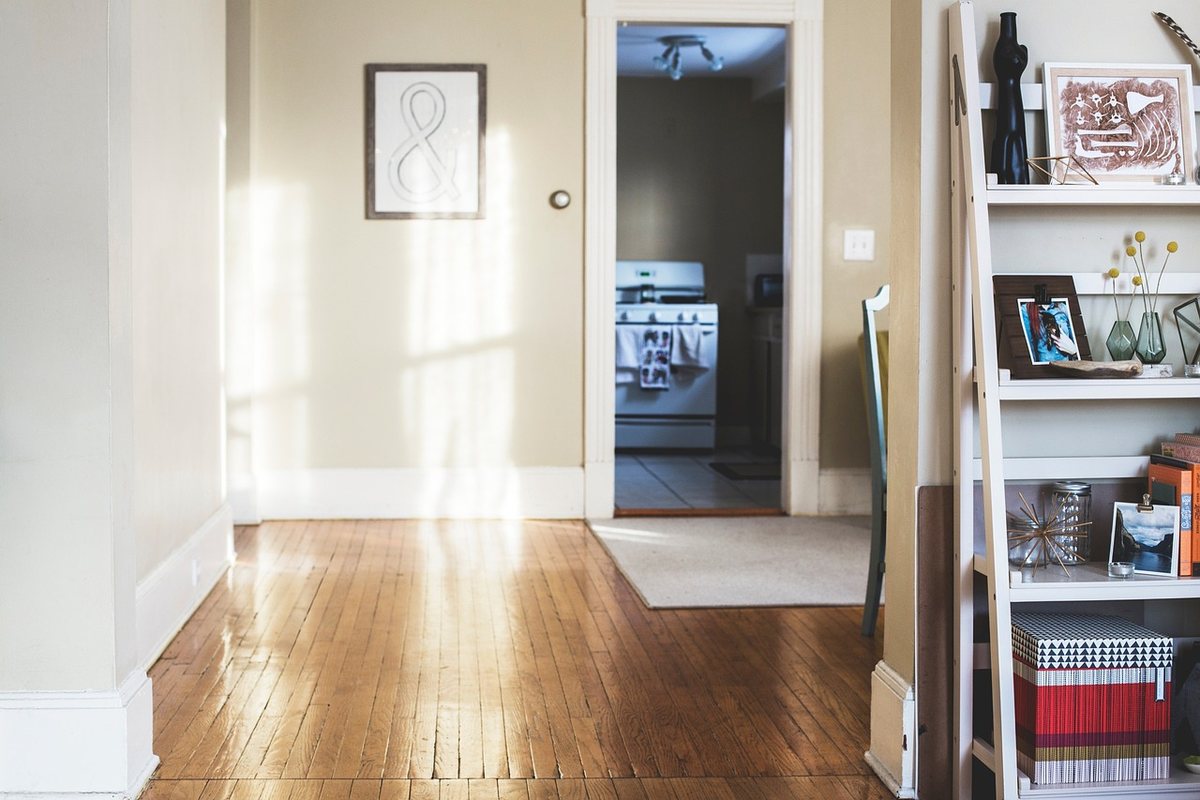
For sizing and stability, see how tall a bookcase should be and bookcase against shelving unit. For the same job on a chest, anti-tip kits for dressers.
Questions we get asked
How do I anchor a bookcase to a wall?
Screw a strap or L-bracket into the centre of a stud, and into the bookcase’s top rail — not the back panel. Two anchors past 36 inches wide.
Why not screw into the back panel?
It is 3 to 6 mm and stapled in. A screw tears straight through when a loaded case leans.
What if I cannot find a stud?
Use plasterboard toggles rated for 50 lb or more. Better than nothing, not as good as timber.
Should the strap be tight?
Slightly slack. It is there to stop a topple, not to hold the case upright, and a taut strap tears out.
When must I anchor?
Over 48 inches tall, in any room a child uses, on carpet, and for any unit without a back panel.
Can I anchor without drilling the wall?
Fix an L-bracket from the base into a floor joist, or use a ceiling-tension pole. Adhesive strips do not work.