Wood vs resin patio furniture — Twenty years or five
The Wooden Stars is a participant in the Amazon Services LLC Associates Program. We may earn a commission when you buy through links on our site, at no extra cost to you.
Wood vs resin patio furniture is a choice between something you maintain and something you replace — and the honest arithmetic is that the cheap option is often the expensive one.
Resin covers several quite different materials sold under one word, and the gap between the best and worst of them is larger than the gap between resin and timber.
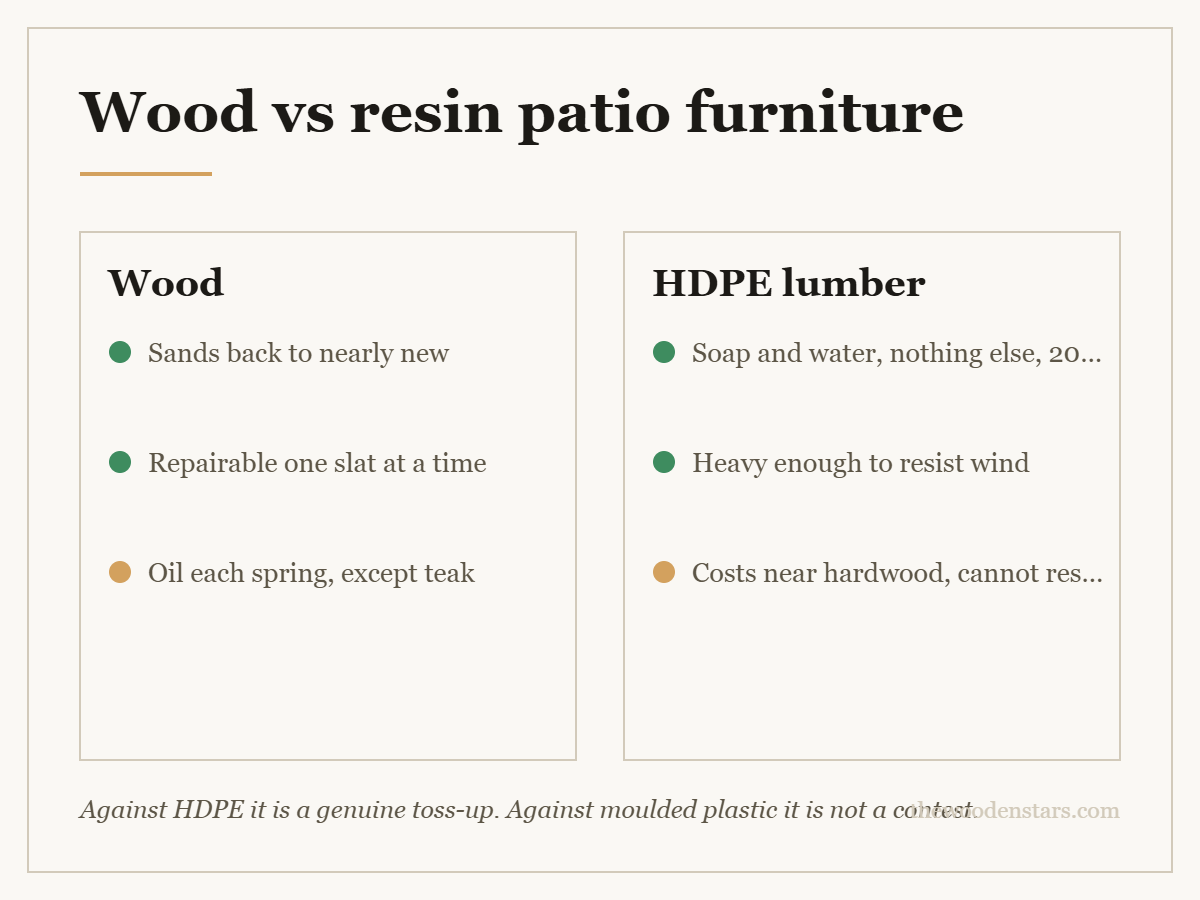
“Resin” spans three things. Moulded plastic (polypropylene) is the cheap stacking chair — three to seven years before it goes brittle and cracks, and it cannot be repaired. Resin wicker is PE strands over an aluminium frame — five to fifteen years, and the frame outlives the weave. HDPE lumber (recycled plastic boards, the Adirondack-chair material) is the good one: 20 years or more, no maintenance, heavy enough not to blow away. Wood lasts 15 to 40 years and is repairable indefinitely, but wants oiling each spring except teak. Against HDPE it is a close call; against moulded plastic it is not.
Wood vs resin patio furniture: three different plastics
Separating these is most of the work, because listings call all three “resin”.
Moulded polypropylene. The stacking chair sold in supermarkets. Light, cheap, and it degrades under UV — the plastic goes chalky, then brittle, then a leg snaps without warning while somebody is sitting on it. Three to seven years depending on sun. No repair is possible.
Resin wicker (PE rattan). Extruded polyethylene strands woven over an aluminium or steel frame. The better grades are UV-stabilised and last well; the cheap ones unravel and go brittle at the edges within a few seasons. When a strand breaks the whole panel is effectively unrepairable, though the frame is usually fine. Five to fifteen years.
HDPE lumber. Solid boards of recycled high-density polyethylene, cut and assembled like timber. This is what good Adirondack chairs are made of. It does not fade meaningfully, does not crack, needs nothing but soap and water, and it is heavy — a real advantage outdoors. Twenty years and up, and it is the only resin that genuinely competes with hardwood.
| Material | Life | Maintenance | Repairable |
|---|---|---|---|
| Moulded polypropylene | 3 to 7 yr | None possible | No |
| Resin wicker | 5 to 15 yr | Hose down | Frame only |
| HDPE lumber | 20 yr plus | Soap and water | Boards replaceable |
| Acacia or eucalyptus | 10 to 20 yr | Oil each spring | Yes, indefinitely |
| Teak | 25 to 40 yr | None required | Yes, indefinitely |
The cost arithmetic over ten years
This is where the comparison usually surprises people.
- Moulded plastic chairs at a low price, replaced twice in ten years, plus the disposal of the broken ones. The running cost is not the purchase, it is buying it three times.
- Acacia set, bought once, plus a bottle of oil and an afternoon each spring. At ten years it looks good and is worth reselling.
- HDPE set, bought once at a price close to hardwood, and nothing else ever.
- Teak set, bought once at a high price, and nothing else ever unless you want it to stay honey-coloured.
Moulded plastic only wins when the furniture is genuinely temporary — a rental, a first flat, a space you will rethink in two years. It is a legitimate choice for that, and a poor one for a garden you intend to keep.
What wood does that no resin does
It can be brought back. A grey, rough, ten-year-old acacia bench takes an hour with 120-grit and a coat of oil to look nearly new. Nothing in the resin family can be restored — faded HDPE stays faded (though it fades very little), and cracked polypropylene is finished.
It ages into something rather than out of something. Teak silvering to grey is a look people pay for. Polypropylene going chalky is not.
The repair is a normal household job. A split slat is replaced with a length of timber and four bolts. A cracked moulded chair is not repairable by anyone.
It feels like furniture. Subjective, and it is why the category exists.
Where resin is the right buy
Around a pool. Constant splashing, chlorine and wet bodies are hard on timber finishes, and HDPE does not care.
Coastal and very exposed sites. Salt air is punishing; HDPE and PE wicker on aluminium ignore it.
Where nobody will do the maintenance. An acacia set that never gets oiled will grey and check. If you know that is what will happen, HDPE delivers the ten-year result the timber was supposed to.
Adirondack chairs specifically. This is the one shape where HDPE has largely won — the wide flat boards suit the material, and the chairs are heavy enough to stay put. See adirondack chair against patio chair.
What to check, either way
- Resin: which resin. If the listing will not say HDPE or polypropylene, assume the cheaper one.
- Resin wicker: the frame. Aluminium outlasts steel, and the frame is what you are really buying.
- UV stabilisation, stated. Unstabilised PE degrades fast in strong sun.
- Wood: the species, named — best wood to use outside. And stainless fixings, because plain steel streaks rust down timber within a year.
- Weight, on both. Light furniture blows over, and this is the commonest complaint about moulded plastic.
Either material
- Teak or hardwood oil The annual job that keeps acacia and eucalyptus looking new
- Furniture foot caps Keeps timber legs out of standing water, where rot starts
- Outdoor furniture cover Extends the life of moulded plastic more than anything else
- Stainless replacement bolts Plain steel is what streaks rust down a timber frame
What to buy



For the metal comparison, see wood against metal patio furniture. For timber choice, best wood to use outside and acacia against teak. For chairs, adirondack chair against patio chair. For sets, dining set against conversation set.
Questions we get asked
Is wood or resin better for patio furniture?
Against HDPE lumber it is close — wood is repairable, HDPE is maintenance-free. Against moulded plastic, wood wins easily on life and cost over ten years.
What is the difference between the resins?
Moulded polypropylene lasts three to seven years and cannot be repaired. Resin wicker lasts five to fifteen. HDPE lumber lasts twenty-plus.
Does resin furniture fade?
Moulded plastic goes chalky and then brittle. HDPE fades very little. Unstabilised PE wicker degrades fastest of all in strong sun.
Which is cheaper over ten years?
Wood or HDPE. Moulded plastic is cheap to buy and usually bought three times in that period.
Can resin furniture be repaired?
HDPE boards can be replaced individually. Moulded plastic and broken wicker strands cannot be repaired at all.
When should I choose resin over wood?
Around a pool, on a coastal site, or when you know nobody is going to do the annual oiling.