What Is Engineered Wood, and When Is It Fine?
The Wooden Stars is a participant in the Amazon Services LLC Associates Program. We may earn a commission when you buy through links on our site, at no extra cost to you.
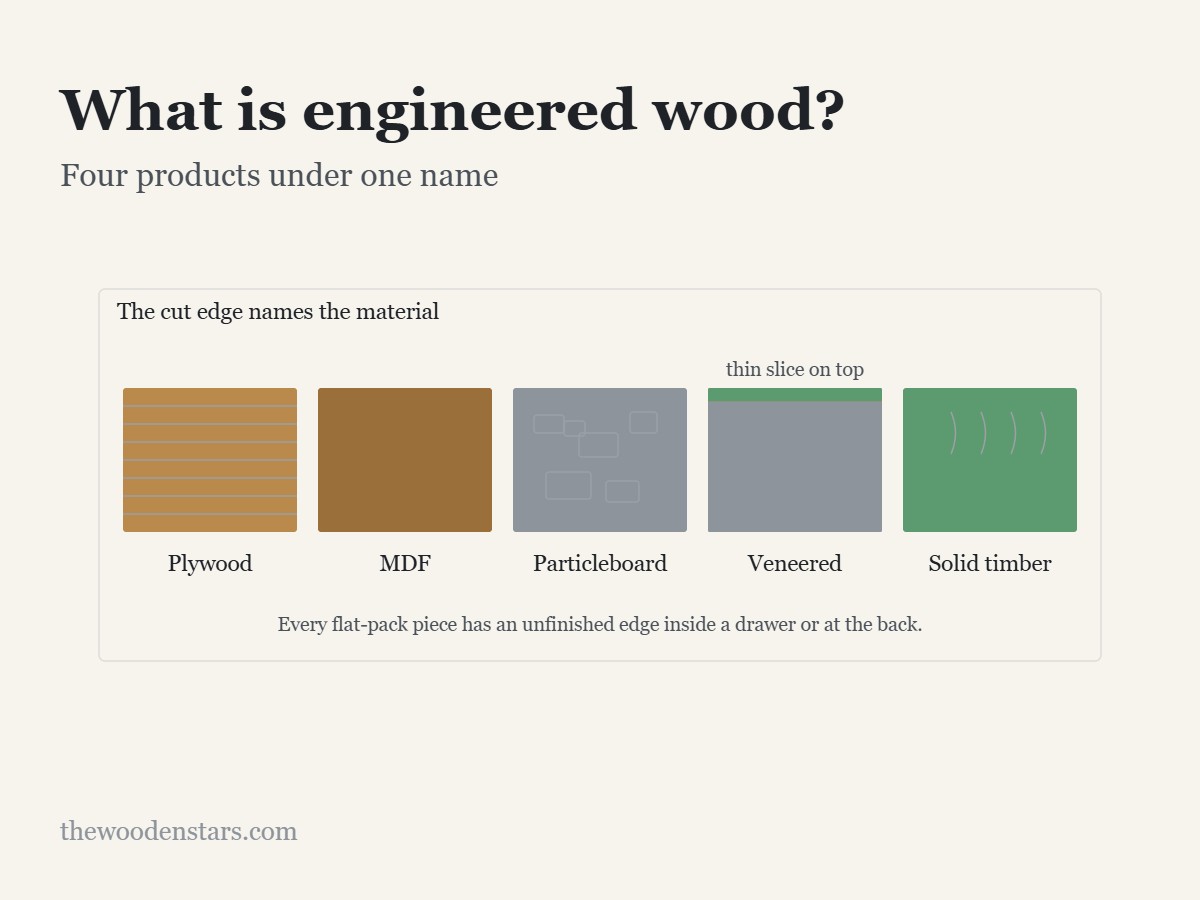
“Engineered wood” is not one material. It is a category covering four quite different products, and the gap between the best and the worst of them is larger than the gap between the best of them and solid timber.
That matters when you are reading a furniture listing, because the phrase is used to describe both a marine-grade plywood carcass and a sheet of glued sawdust with a photograph of oak printed on it.
Engineered wood means timber broken down and reassembled with adhesive. The four you will meet are plywood (thin veneers cross-laminated, the strongest), MDF (fine fibres pressed with resin, smooth and stable, hopeless with water), particleboard or chipboard (coarse chips, the cheapest and the weakest) and veneered board (any of the above with a thin slice of real timber on top). All four are dimensionally stable, which is their genuine advantage; none of them can be sanded back and refinished, which is the genuine cost.

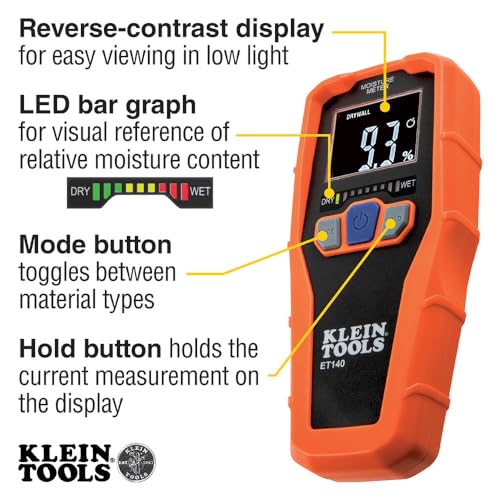
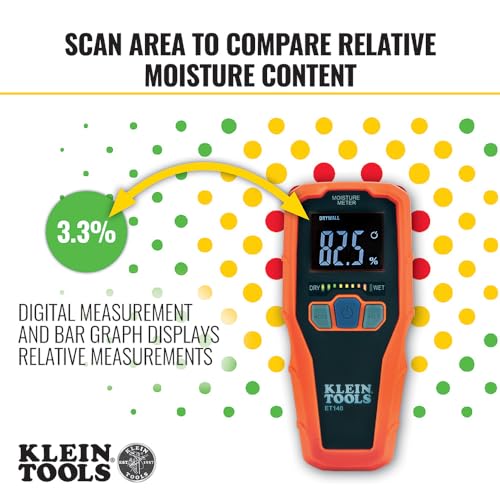
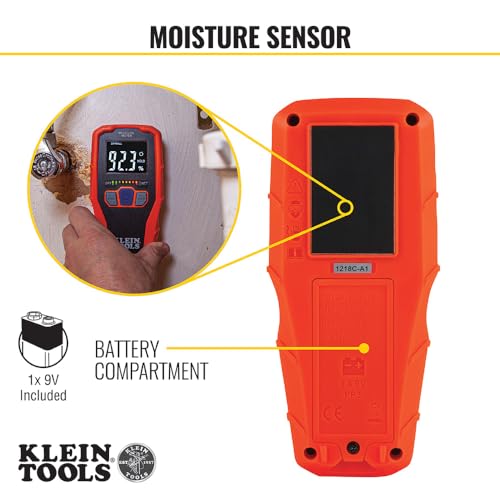
Klein Tools ET140 Pinless Moisture Meter for Non-Destructive Moisture Detection in Drywall, Wood, and Masonry; Detects up to 3/4-Inch Below Surface





As an Amazon Associate we earn from qualifying purchases. Product prices and availability are accurate as of the date/time indicated.
Start here: a moisture meter is the one tool that tells you what a board actually is before you commit to it — solid timber and board read very differently.
The four products, and how to tell them apart
Look at a cut edge. That single view identifies all four, and on flat-pack furniture there is nearly always an unfinished edge inside a drawer or at the back.
Plywood
Thin sheets of timber peeled from a log and glued in layers with the grain of each layer at right angles to the last. The cross-lamination is what makes it strong and stable in both directions. On the edge you see distinct stripes, like a very fine sandwich. Good plywood is a genuinely excellent furniture material; the failure mode is voids inside cheap grades.
MDF
Wood broken down to individual fibres, mixed with resin and pressed. The edge is uniform and slightly chocolatey, with no visible structure at all. Dead flat, takes paint beautifully, machines to a crisp edge, and holds a screw poorly. Water is its enemy: a wet MDF edge swells irreversibly and never goes back.
Particleboard or chipboard
Coarse chips and flakes glued and pressed. The edge shows obvious lumps. The cheapest board, the weakest, and the one that crumbles when a screw is over-tightened. Almost all flat-pack furniture below a certain price is particleboard with a melamine face.
Veneered board
Any of the above with a slice of real timber glued to the face, usually 0.6 to 3 mm thick. From the top it is indistinguishable from solid wood, and it can be very good furniture. The give-away is the edge: a veneered panel has a differently-coloured core, and often a thin edge banding strip that can be picked at a corner.
| What the edge looks like | Material | Screw holding | Water |
|---|---|---|---|
| Fine stripes, like layers | Plywood | Good | Survives a splash |
| Uniform, no structure, brown | MDF | Poor | Swells permanently |
| Visible chips and flakes | Particleboard | Very poor | Swells and crumbles |
| Different colour to the face | Veneered board | Depends on the core | Depends on the core |
| Continuous grain around the corner | Solid timber | Very good | Recoverable |
That last row is the test that settles solid against everything else: on solid timber the grain pattern runs over the edge and continues on the adjacent face. On a veneer it stops.
Why engineered wood exists
It is easy to read the category as pure cost-cutting. Some of it is. But three of the reasons are real engineering.
- It does not move. Solid timber changes width with humidity, which is why solid tops crack when they are bolted down rigidly. Engineered boards barely move at all, so they can be fixed at every corner and stay flat.
- It comes in large flat sheets. There is no tree that yields a flawless 2400 × 1200 mm board. Panels that size only exist because of engineering.
- It uses the whole log, and lesser logs. A veneer slice yields many times the surface area of the same log sawn into boards.
Stability is the honest advantage and it is worth something. A bookcase carcass in plywood will stay square in a centrally heated room longer than the same carcass in wide solid boards.
Where each one is genuinely fine
- Plywood: carcasses, shelves, drawer bottoms, anywhere structural. A birch ply bookcase is better than a pine one in most respects except how it looks on the edge.
- MDF: painted work — doors, panelled fronts, mouldings. Nothing takes paint as well, because there is no grain to raise.
- Particleboard: a bedroom carcass that will never be moved and never get wet. It does that job at a price nothing else matches.
- Veneered board: large flat surfaces where solid timber would move — wardrobe doors, sideboard tops, wide panels.
And where it is not: anywhere that gets wet, anywhere that takes repeated screwing and unscrewing, anywhere carrying a load over a long span, and anywhere you expect to refinish rather than replace.
The one thing you cannot do
A solid wood table with twenty years of rings and scratches can be sanded back to bare timber and refinished, and it comes out looking new. That option does not exist for engineered wood.
On veneered board the slice is often under a millimetre; a random-orbit sander goes through it in seconds and there is no repair for that. On MDF and particleboard there is no surface layer to restore at all. Damage is permanent, and the piece is a consumable rather than an heirloom.
That is the single decision underneath the whole category, and it is why the comparison against solid hardwood is worth doing carefully — the axes that actually differ are set out in our guide to engineered wood against hardwood.
Reading a listing honestly
Sellers rarely lie outright, but the vocabulary is slippery. Three habits help.
- “Solid wood” is the only phrase that means solid wood. “Wood”, “real wood”, “wood composite”, “engineered wood”, “manufactured wood” and “all wood construction” all permit board.
- Look for a weight. Particleboard is heavy for its strength, and a listing that gives a weight is telling you more than one that gives a finish.
- Zoom on an inside corner. Product photographs almost always include one drawer pulled out or one door open, and that is where the edge shows.
If the piece is described only by a species name — “oak finish”, “walnut effect” — that is a colour, not a material. The five-test method for telling the difference in a shop is in our guide to solid wood, engineered wood or veneer.
What helps
- Moisture meter Reads whether a board is solid timber, and whether it has taken up water On Amazon →
- Iron-on edge banding Tidies the cut edge that gave the material away On Amazon →
- Threaded inserts The fix for board that will no longer hold a screw
- Digital caliper Measures a veneer thickness at an exposed corner
What to buy

Questions we get asked
Is engineered wood real wood?
It is made of real wood, broken down and glued back together. Whether that counts as “real wood” depends on what you want from the phrase: the material is timber, but it does not behave like a solid board, cannot be refinished, and will not last in the same way.
Is engineered wood good quality?
Plywood and good veneered board can be excellent, and are used in furniture people keep. Particleboard is cheap and behaves like it. The category spans both, so the word on the listing tells you very little on its own — you have to identify which of the four it is.
Does engineered wood last?
In a dry room, with no water and no repeated dismantling, a plywood or veneered piece will last decades. Particleboard typically fails at the fixings after a couple of house moves. Nothing in the category survives a leak.
Can you sand and refinish engineered wood?
Not meaningfully. A veneer under a millimetre thick will not survive sanding, and MDF and particleboard have no surface layer to bring back. Refinishing is the thing you give up in exchange for stability and price.
Which engineered wood is the strongest?
Plywood, by a wide margin, because the cross-laminated layers give it strength in both directions. MDF is stable but weak in bending and poor at holding screws; particleboard is weaker again.

