What Is Rubberwood? Three Names for the Same Timber
The Wooden Stars is a participant in the Amazon Services LLC Associates Program. We may earn a commission when you buy through links on our site, at no extra cost to you.
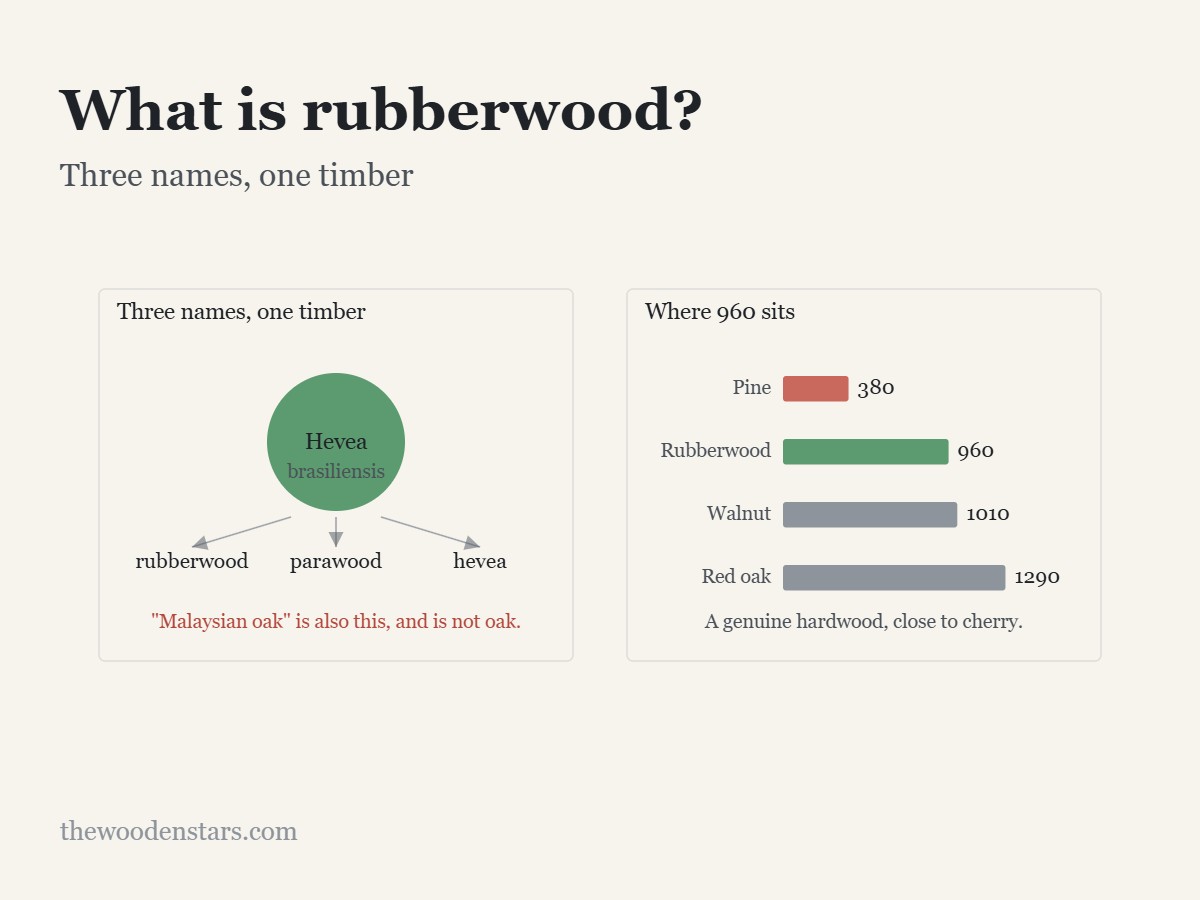
Rubberwood is the timber most people have owned without knowing it. It is sold under at least three names, it appears in enormous quantities of mid-priced furniture, and it is routinely described in listings as something else entirely.
It is also better than its reputation, and worse than the listings imply. Both of those are worth understanding before you buy a table made of it.
Rubberwood is the timber of the Pará rubber tree, harvested after about 25 years when it stops producing latex. It is sold as rubberwood, hevea (from Hevea brasiliensis) and parawood — three names for the same wood. It is a genuine hardwood at around 960 on the Janka scale, similar to cherry, pale and close-grained, and it takes stain well. Its weakness is moisture: it has a high starch and sugar content, so untreated it is prone to fungal staining and insect attack, and it must be kiln-dried and treated. Indoors, dry, and well finished, it is perfectly good furniture.

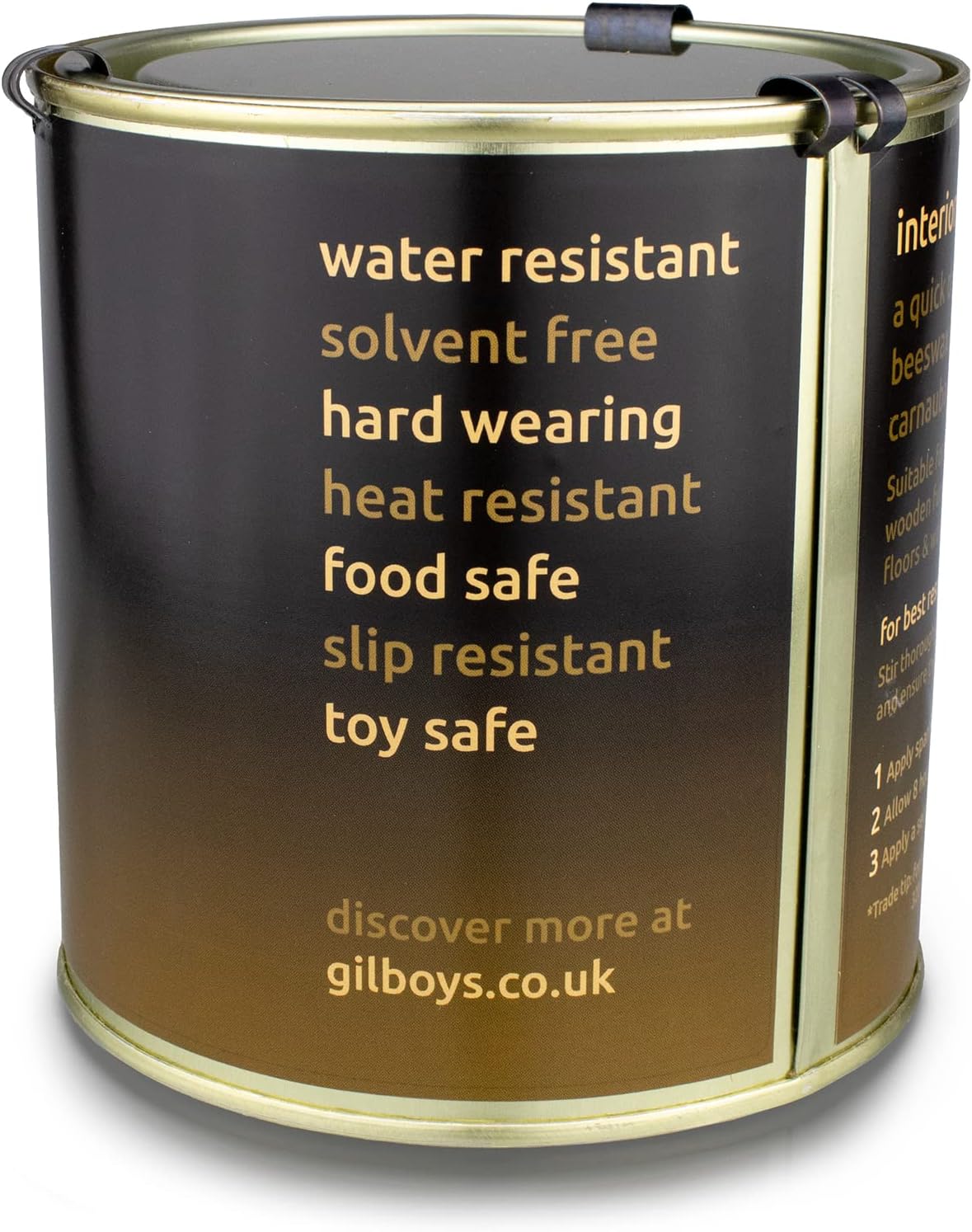
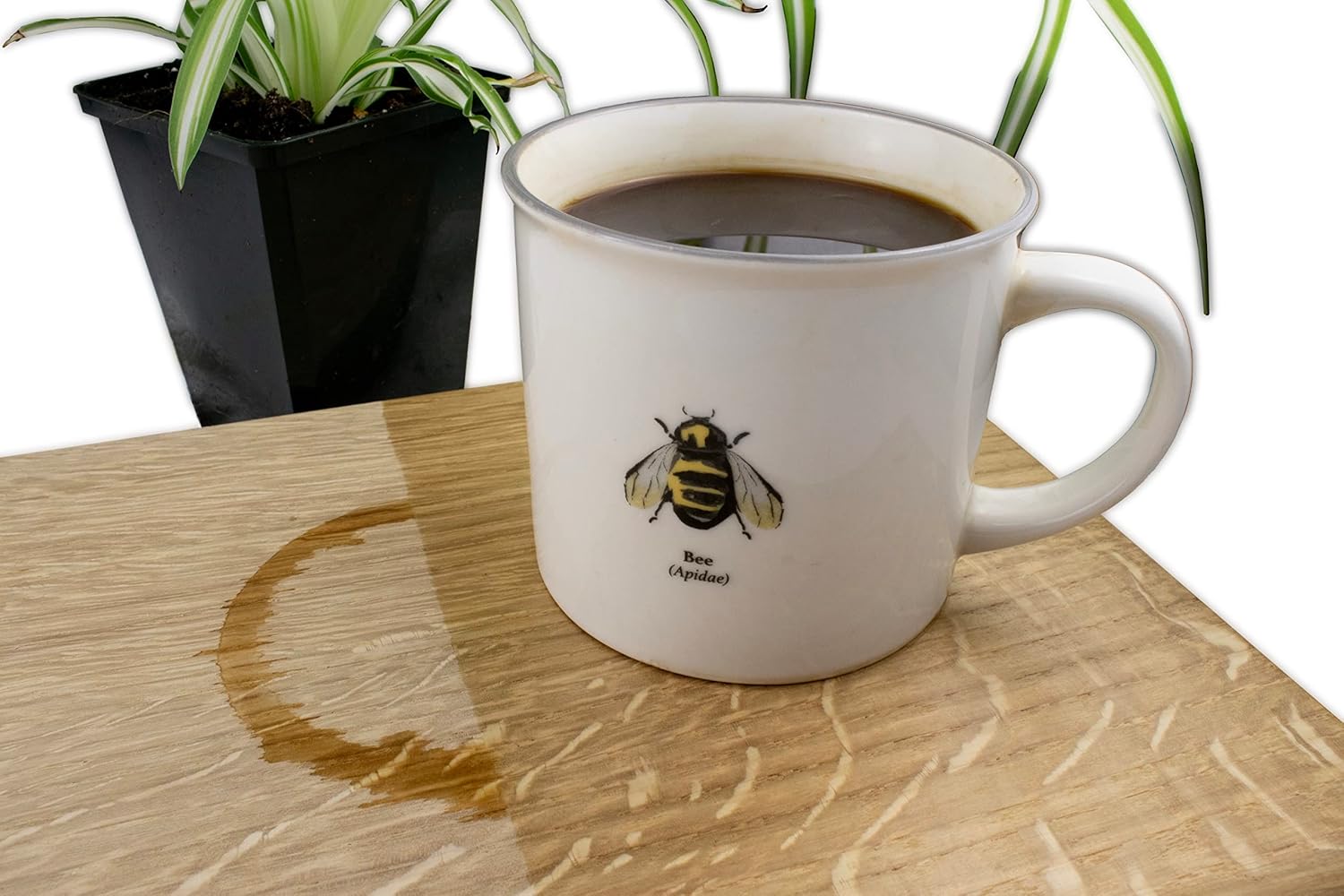
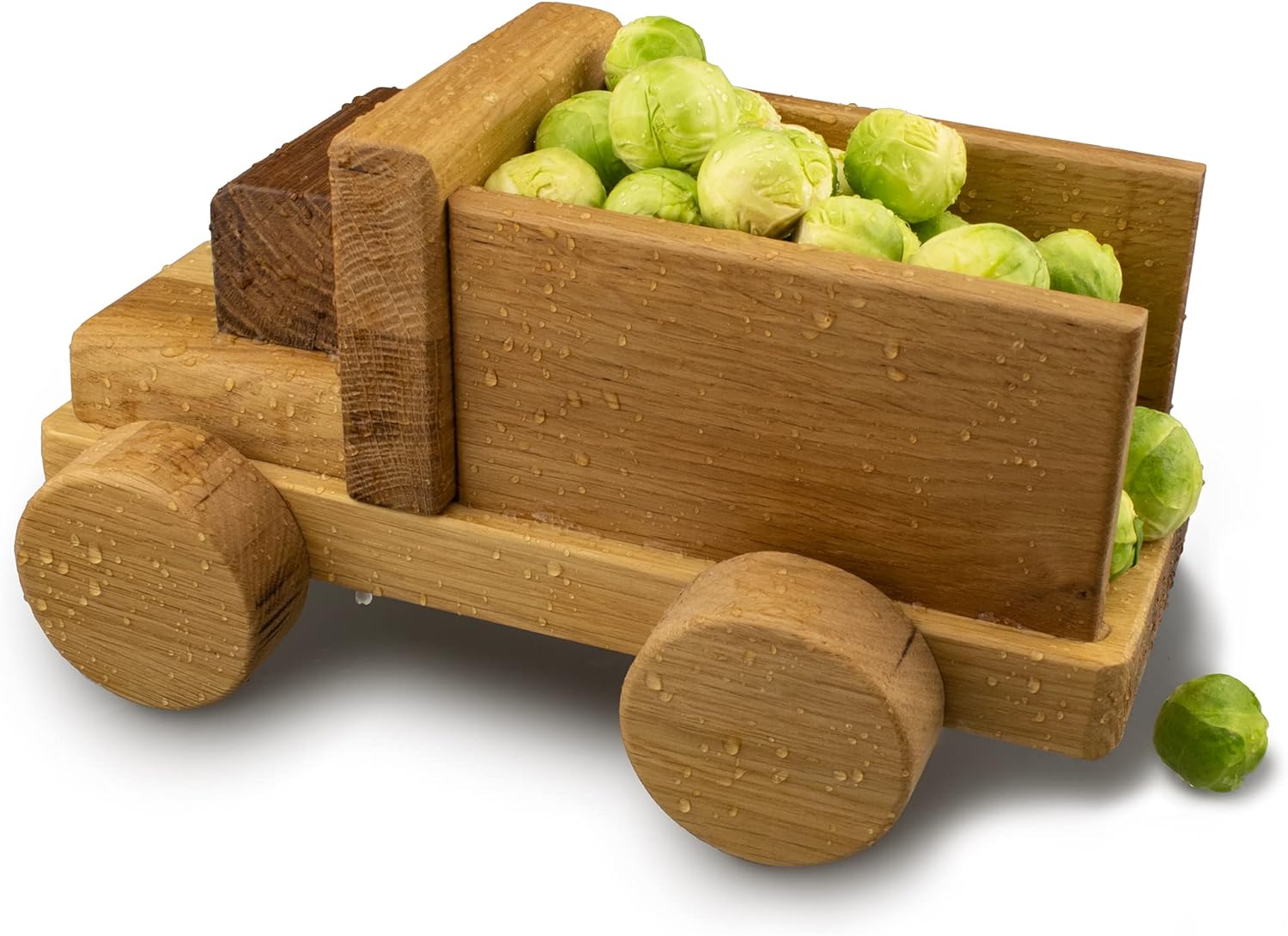
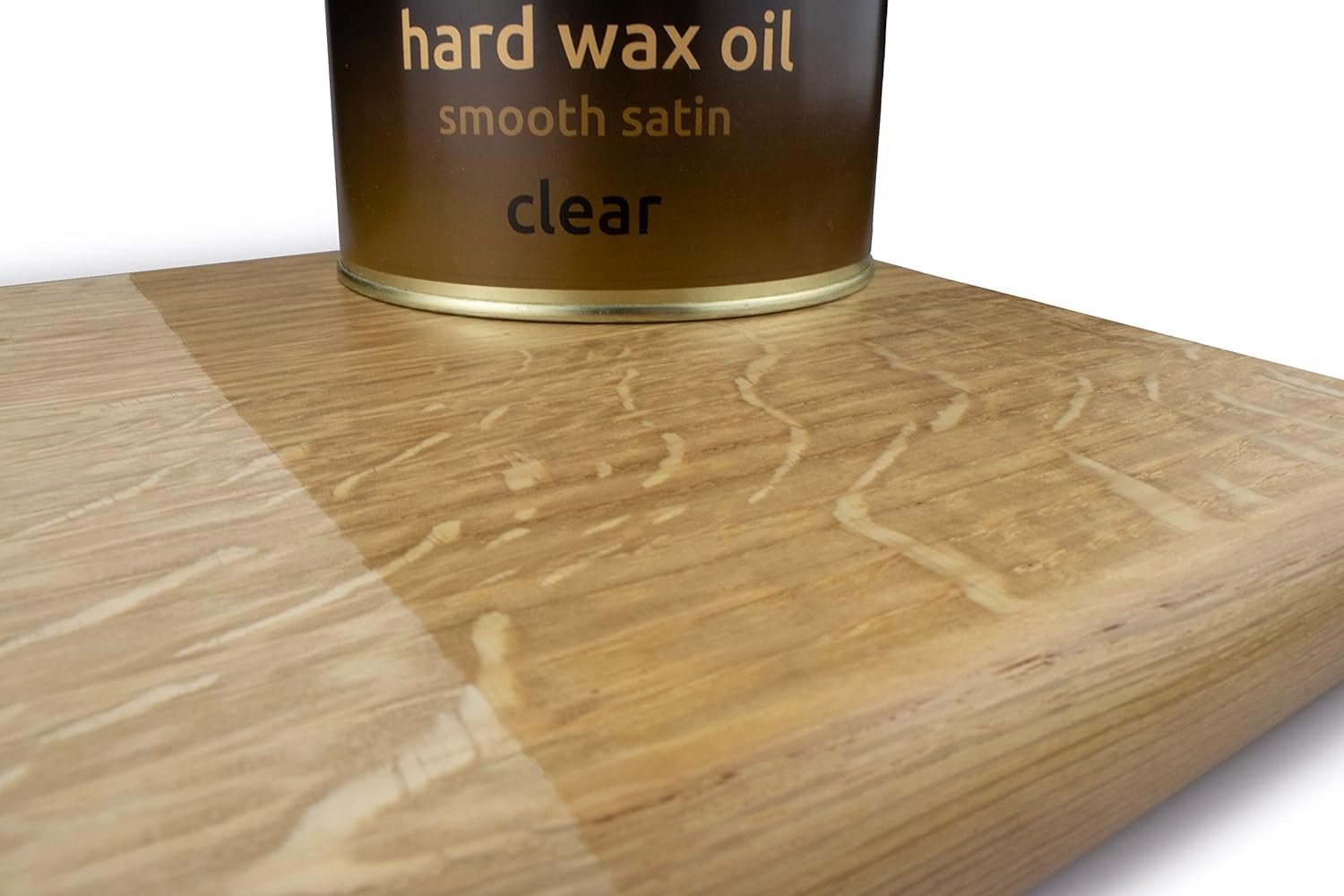
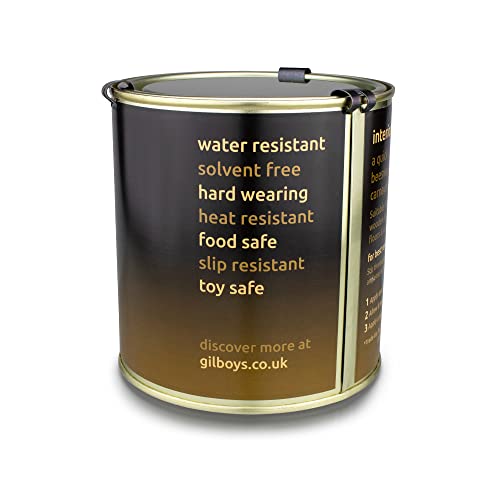
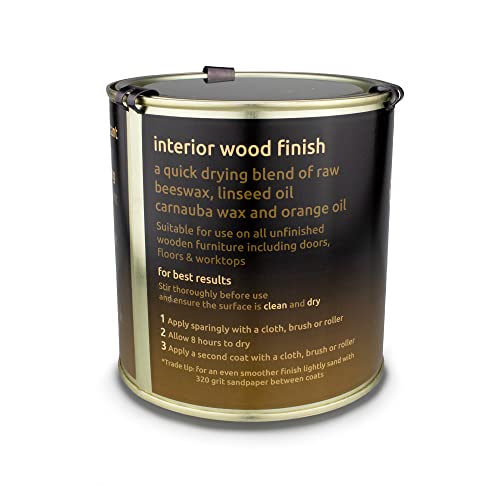
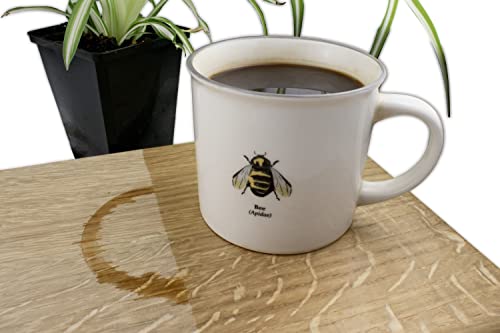
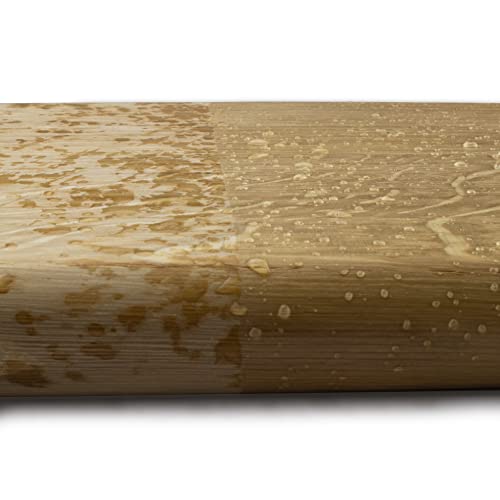
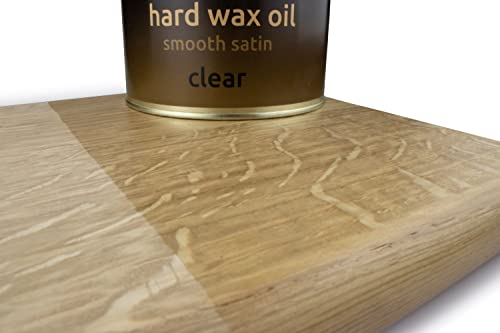
Prime Gilboys Hard Wax Oil - Interior Wood Finish - 500ml - All Natural, Quick Drying, Water & Heat Resistant - Perfect for Sealing & Finishing Kitchen worktops, Stairs, Floors, Doors & Dining Tables…


As an Amazon Associate we earn from qualifying purchases. Product prices and availability are accurate as of the date/time indicated.
Start here: if you own rubberwood, the single thing that decides how long it lasts is a sound finish. It is a good timber with one weakness, and this closes it.
Three names, one timber
The name on the listing usually tells you more about the seller than the wood.
- Rubberwood — the plain English name, most common in the UK and Australia.
- Hevea — the botanical genus, used where the marketing prefers a Latin name.
- Parawood — from Pará in Brazil, where the tree originates; common in North American listings.
- “Asian hardwood”, “plantation hardwood”, “Malaysian oak” — vaguer terms that very often mean rubberwood. “Malaysian oak” is not oak.
None of these is dishonest exactly, but the effect is that the same timber appears at several price points depending on which word is used. If a listing gives a Latin name or an unfamiliar regional one, it is worth searching it before assuming it is a rare species.
What it is actually like
| Property | Rubberwood | For comparison |
|---|---|---|
| Janka hardness | 960 lbf | Cherry 950, red oak 1,290 |
| Colour | Pale cream to light tan | Similar to maple, lighter than oak |
| Grain | Straight, close, fairly featureless | Less figure than oak or ash |
| Density | 560–640 kg/m³ | Oak 720, pine 420 |
| Movement with humidity | Moderate | More than teak, less than beech |
| Takes stain | Very well, evenly | Better than pine, which blotches |
| Rot and insect resistance | Poor untreated | Teak excellent, oak good |
Two things follow from that table. The hardness is genuinely respectable — it is not a soft wood, and it dents no more readily than cherry or walnut. And the grain is plain, which is why it is so often stained: it takes colour evenly and can be finished to resemble more expensive timbers.
Where it is used as itself, pale and clear-finished, it looks a lot like maple and is pleasant. Where it is stained dark to imitate walnut, it usually reads as what it is.
The sustainability argument, honestly
Rubberwood is a by-product. The tree is grown for latex, tapped for about 25 years, and then felled because yields fall away. Before rubberwood was commercialised, those trees were burned.
That makes it one of the genuinely better-argued timbers on environmental grounds: no forest is cleared for it, and the plantation exists regardless. The usual caveats apply — plantations displaced forest historically, and the timber travels a long way — but as a use of a tree that is being felled anyway, the case is real rather than marketing.
The weakness: starch, and therefore moisture
Living rubberwood is high in starch and sugar, which is exactly what moulds and borers want. Freshly felled and untreated, it stains and is attacked within weeks.
Commercial rubberwood is therefore kiln-dried and chemically treated before it is made into anything, and properly processed timber is stable and durable indoors. What this means in practice:
- It is indoor furniture. Not garden, not a covered porch, not a bathroom.
- Finish it, and keep the finish up. Bare rubberwood absorbs spills readily; a sound film or hard wax oil finish removes the problem entirely.
- Dark blue-grey staining in the timber is fungal, from poor drying. It is cosmetic rather than structural but it will not sand out on a veneer.
- Watch the joints on cheap pieces. Much rubberwood furniture is finger-jointed from short offcuts, which is fine structurally but visible under a clear finish.
Which finish suits it is the same decision as for any pale close-grained timber, and the three families are set out in our guide to the best finish for a solid wood top.
Where rubberwood is a good buy
- Dining tables and chairs at the mid price point, where the alternative is particleboard with a photograph on it. Solid rubberwood is a considerably better object.
- Painted furniture. The plain grain is an advantage; nothing to raise or fight.
- Butcher block worktops, where it is very widely used and performs well.
And where it is not: anywhere damp, anywhere outdoors, and anywhere you are paying a premium under the impression it is a rare timber. If the price is at oak or walnut level, the name on the listing is doing work it should not be.
For how it sits against the other timbers you are likely to be choosing between, see the figures in our guide to the Janka hardness scale. And if the listing is vague about whether the piece is solid at all, the tests are in our guide to what engineered wood actually is.
What helps
- Hard wax oil Seals a pale close-grained timber without hiding it On Amazon →
- Gel stain Rubberwood takes colour evenly, which is why it is usually stained On Amazon →
- Moisture meter The one real risk with this timber is damp On Amazon →
- Soft brush For cleaning without marking a finished front
What to buy


Questions we get asked
Is rubberwood real wood?
Yes, entirely — it is solid timber from the Pará rubber tree, not a board product. The confusion comes from the name, which sounds synthetic, and from listings that use “hevea” or “parawood” instead.
Is rubberwood good quality furniture?
For its price band, yes. It is a genuine hardwood at around 960 Janka, it is stable indoors when properly dried, and solid rubberwood is a much better object than the particleboard it usually competes against. It is not a premium timber and should not be priced as one.
Is rubberwood durable?
Indoors and finished, yes — it dents about as readily as cherry and holds up to normal furniture use for decades. Untreated or damp, no: its starch content makes it vulnerable to mould and insects, which is why commercial stock is always kiln-dried and treated.
Is rubberwood the same as hevea or parawood?
Yes, all three are the same timber. “Malaysian oak” and “Asian hardwood” also frequently mean rubberwood, and neither is oak.
Can rubberwood furniture go outside?
No. It has poor natural rot and insect resistance and will not survive weather even with an exterior finish. It is an indoor timber, and a covered porch is not enough.

