How to Measure Drawer Slides Before You Buy: Length, Type, Clearance
The Wooden Stars is a participant in the Amazon Services LLC Associates Program. We may earn a commission when you buy through links on our site, at no extra cost to you.
Drawer slides are the most-returned furniture part there is, and it is almost always for the same reason: three measurements, and people take one. Length is the easy one and it is not the one that catches you out. Clearance is.
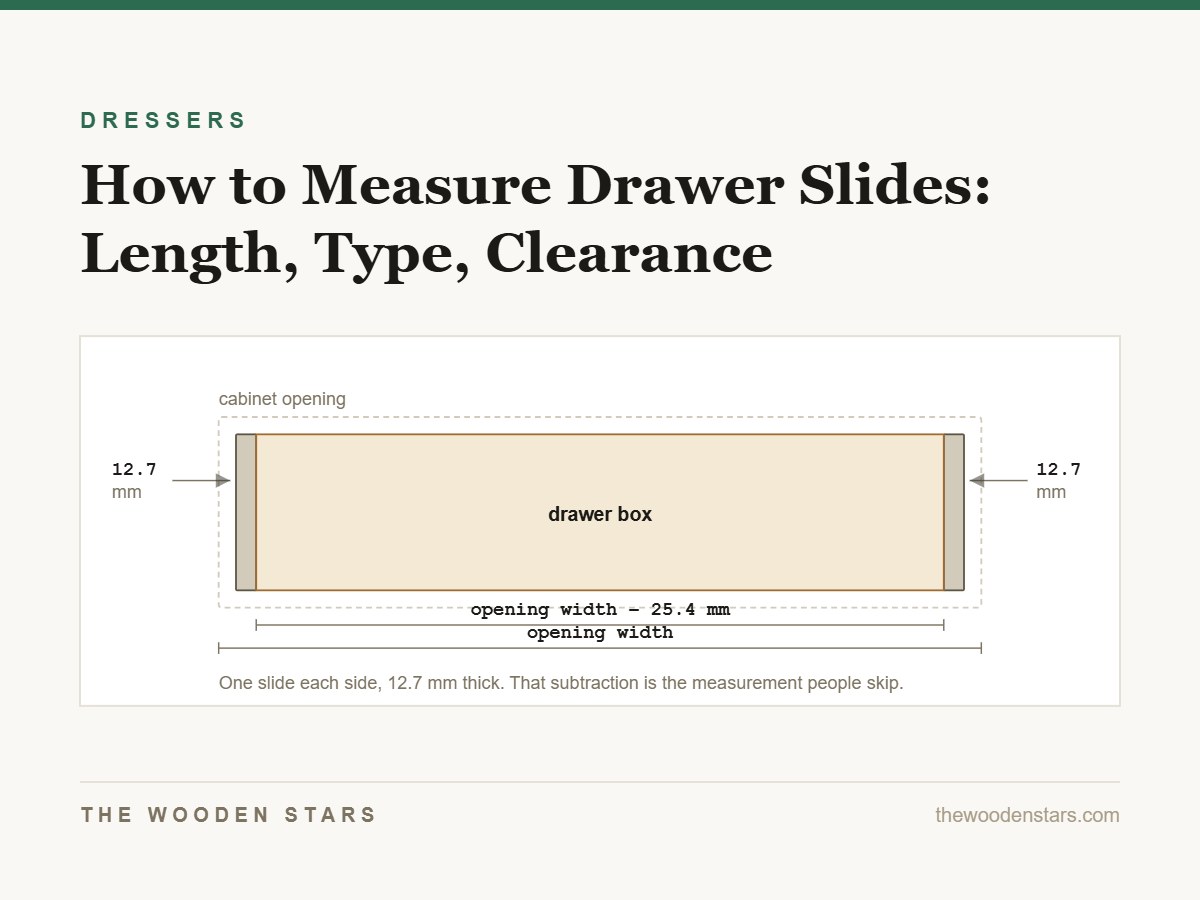
You need three numbers before ordering: slide length (the internal depth of the cabinet, rounded down to a standard size), side clearance (side-mount slides need 12.7 mm / 1/2 in on each side, so the drawer box must be 25.4 mm narrower than the opening), and load rating (35 kg / 75 lb is standard; go higher for a wide dresser drawer). Also confirm the mounting type — side, centre or undermount — because they are not interchangeable.
Start here: six pairs of full-extension slides re-fit a whole dresser in one order, which is cheaper than buying pairs twice.

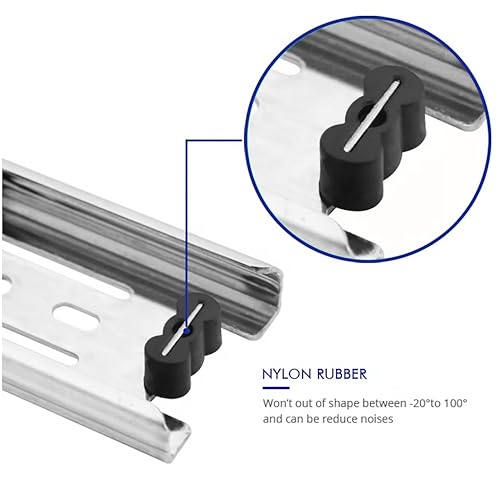
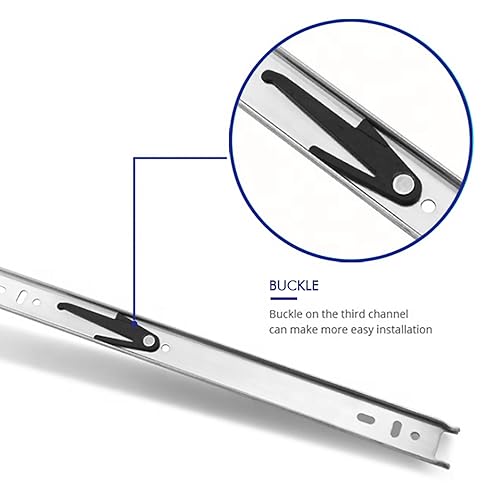
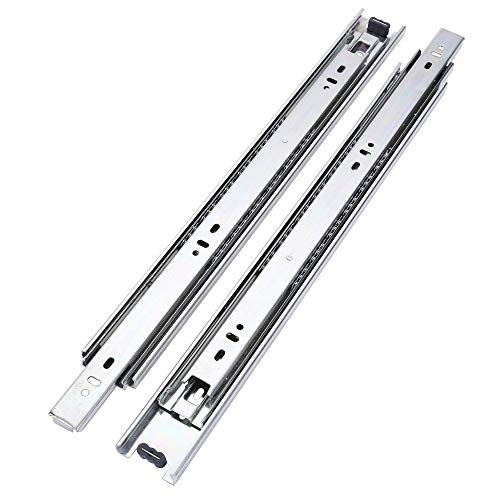
Prime 6 Pairs of 18 Inch Full Extension Side Mount Drawer Slides



The three mounting types
| Type | Where it sits | Clearance needed | Retrofits to an old dresser? |
|---|---|---|---|
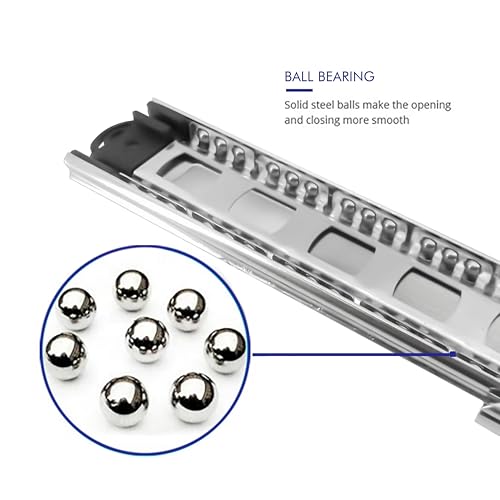
| Side mount, ball bearing | Both sides of the drawer | 12.7 mm each side | Yes, if the drawer is narrow enough |
| Side mount, epoxy roller | Both sides | 12.7 mm each side | Yes, and cheapest |
| Centre mount | Single slide under the drawer | A few mm underneath | Yes, easiest retrofit |
| Undermount, soft close | Under the drawer, hidden | Specific bottom construction | Rarely |
| Wooden runner (original) | Grooves or strips | None | It is what you already have |
For retrofitting to a solid wood dresser, centre mount is the forgiving option: one slide, no side clearance requirement, and it works with a drawer that already fills its opening. The trade-off is that it does not carry much weight and it allows a little side-to-side play. Side mount ball bearing is much better in use and demands that the drawer box be the right width.
Measurement 1: length
Measure the internal depth of the cabinet — from the inside face of the back panel to the front edge of the opening. Then subtract anything in the way: a back rail, a cable, the lip of a face frame.
Slides come in even sizes, typically 250, 300, 350, 400, 450, 500 and 550 mm (10, 12, 14, 16, 18, 20 and 22 in). Round down. A slide 10 mm too long stops the drawer closing flush, and there is nothing you can do about it afterwards.
Do not measure the existing drawer’s depth and use that. Drawers are frequently shallower than their cabinets, and you want to use the depth available.
Measurement 2: clearance — the one that catches people
Side-mount slides are 12.7 mm thick. One goes on each side. So:
Drawer box width = opening width − 25.4 mm
Measure the opening at the front, and again at the back, because a racked case is narrower at one end — and if the case is racked, fix that first, as in our guide to drawers that will not slide. Use the smaller figure.
If your existing drawer box is already the full width of the opening — normal on older dressers with wooden runners — you have three options:
- Rebuild the drawer box narrower. The correct answer, and the most work.
- Fit centre-mount slides instead. No side clearance needed.
- Stay with wooden runners and repair them: glue a hardwood strip over the worn track and wax. Often the right call on a piece worth keeping.
A digital caliper is worth having for this. Opening widths need to be right to the millimetre, and a tape measure held inside a cabinet at arm’s length is not a millimetre-accurate instrument.
Measurement 3: load rating
Rated in kilograms or pounds per pair, and it is per pair, not per slide.
| Drawer | Typical load | Rating to buy |
|---|---|---|
| Nightstand drawer | 5–10 kg | 35 kg / 75 lb |
| Dresser drawer, clothes | 10–20 kg | 35 kg / 75 lb |
| Wide dresser drawer, full of denim | 25–35 kg | 45 kg / 100 lb |
| Desk file drawer | 20–30 kg | 45 kg / 100 lb |
| Kitchen drawer, pans | 30–45 kg | 55 kg+ / 120 lb+ |
| Under-bed storage drawer | 20–40 kg | 45 kg / 100 lb |
Under-rating is the mistake that shows up in year two, as a slide that no longer retracts smoothly and a drawer that drops at the front when open.
Extension type
- 3/4 extension — the back quarter of the drawer stays inside the cabinet. Cheapest, and genuinely annoying on a deep dresser drawer.
- Full extension — the whole drawer clears the cabinet. What you want on anything you actually rummage in.
- Over-travel — extends slightly past full, for drawers under a fixed top or an overhang.
Full extension costs a little more and needs the same space. There is rarely a reason to choose 3/4 for a retrofit.
What you need to measure and fit
- Full-extension ball-bearing slides, 12 in Nightstands and shallow cabinets On Amazon →
- Full-extension slides, 18 in, 6 pairs Enough for a whole dresser in one order On Amazon →
- Side-mount slides, 18 in, single pair For replacing one failed pair On Amazon →
- Digital caliper Openings need millimetre accuracy, tapes do not give it On Amazon →
- Combination square Slides must be fitted parallel and level or they bind
What to buy
Order by length rounded down and by load. A caliper is worth adding if you have not measured the opening to the millimetre.


Fitting so they do not bind
Slides are unforgiving of misalignment in a way wooden runners are not. Three rules:
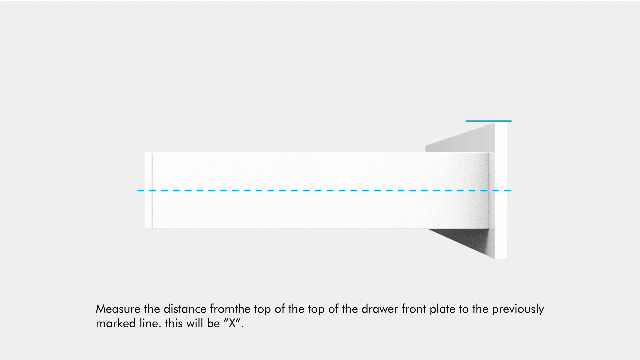
- Both cabinet members at exactly the same height and exactly parallel. Mark from a common reference line, not from the bottom of the opening — the bottom of the opening is not necessarily level.
- Fit with the front screw only, test, then fit the rest. Slide mounting holes are slotted for a reason: they let you adjust before committing.
- Set the drawer member’s front-to-back position from the drawer front, so the front finishes flush. A slide fitted 3 mm too far back gives you a drawer front that stands proud, and there is no adjustment left.
On a face-frame cabinet — where the front rail overlaps the opening — side-mount slides need a rear socket or a mounting block to bring the slide out flush with the frame. Buying slides without noticing you have a face frame is the second most common ordering mistake after clearance.
Questions we get asked
Are drawer slides sold as pairs or singles?
Almost always as pairs, and load ratings are quoted per pair. Listings occasionally sell single slides for centre-mount applications or as spares — check the quantity in the title, because “18 inch drawer slides” can mean one slide, one pair, or six pairs depending on the seller.
Can I mix metric and imperial slides in one dresser?
Physically yes, practically no. A 450 mm and an 18 in slide differ by about 7 mm, which is enough that drawers close to different depths. Pick one system for the whole piece.
My drawer sags at the front when it is open. Is that the slide?
Usually the slide is under-rated or worn, yes. Ball-bearing slides develop play in the bearings and the symptom is exactly that droop. It can also be a 3/4-extension slide being asked to hold a heavy drawer at full reach, which is a design limit rather than a fault.
Do I need soft-close?
It is a comfort feature, not a durability one, and it adds cost and depth. On a nightstand beside a sleeping partner it earns its money. On a dresser in a spare room it does not. What it will not do is fix a binding drawer.
Is it worth converting wooden runners to metal slides at all?
On a piece you use daily and that is already worn, yes — the drawers work better than they did when new. On an antique or a well-made piece where the runners just need waxing and a hardwood strip, no: you are cutting into original joinery for a marginal gain, and it is not reversible. Wax first, always.