Is Poplar a Hardwood? Botanically Yes, Practically No
The Wooden Stars is a participant in the Amazon Services LLC Associates Program. We may earn a commission when you buy through links on our site, at no extra cost to you.
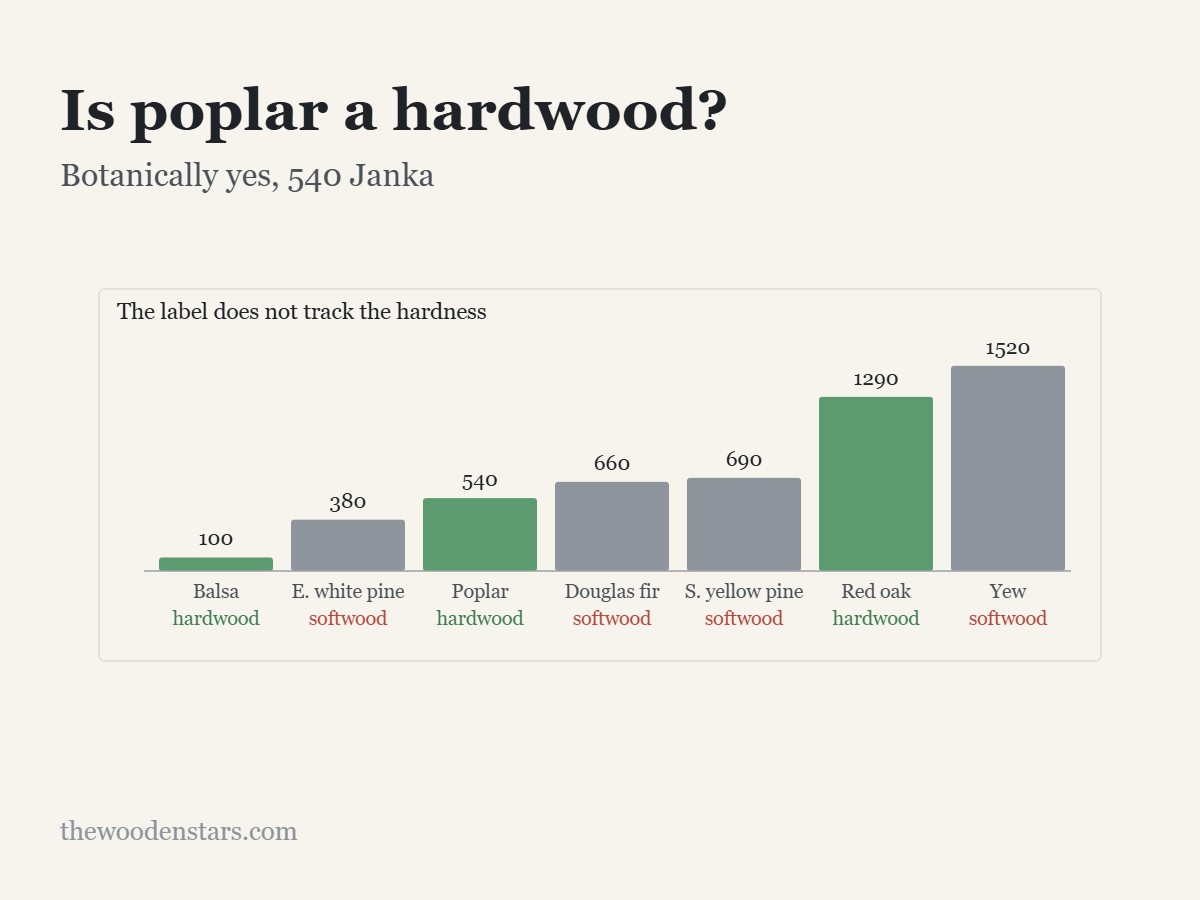
Poplar is the timber that exposes how useless the word “hardwood” is on its own. It is botanically a hardwood, it is softer than several woods sold as softwood, and both of those statements are true at the same time.
Understanding why settles a lot of confused furniture listings, and tells you exactly what poplar is good for.
Yes, botanically. “Hardwood” and “softwood” describe how the tree reproduces, not how hard the timber is: hardwoods are broadleaved and flower, softwoods are conifers and bear cones. Poplar is broadleaved, so it is a hardwood. But at about 540 on the Janka scale it is softer than yellow pine (690), which is a softwood. Poplar dents easily and is a poor choice for a dining table top. It is an excellent choice for painted furniture, drawer sides and carcass work, because it is stable, cheap, straight-grained and takes paint better than almost anything.

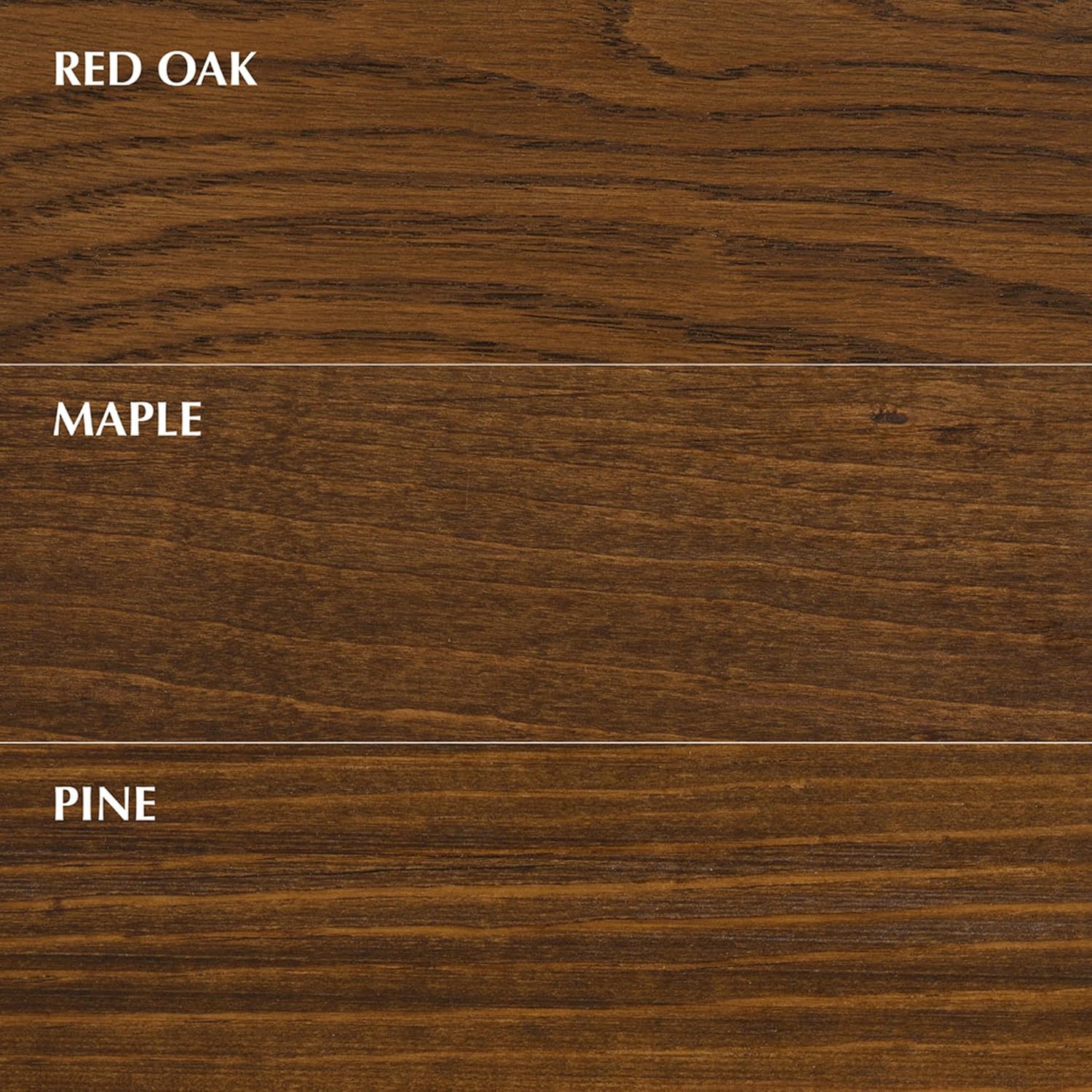
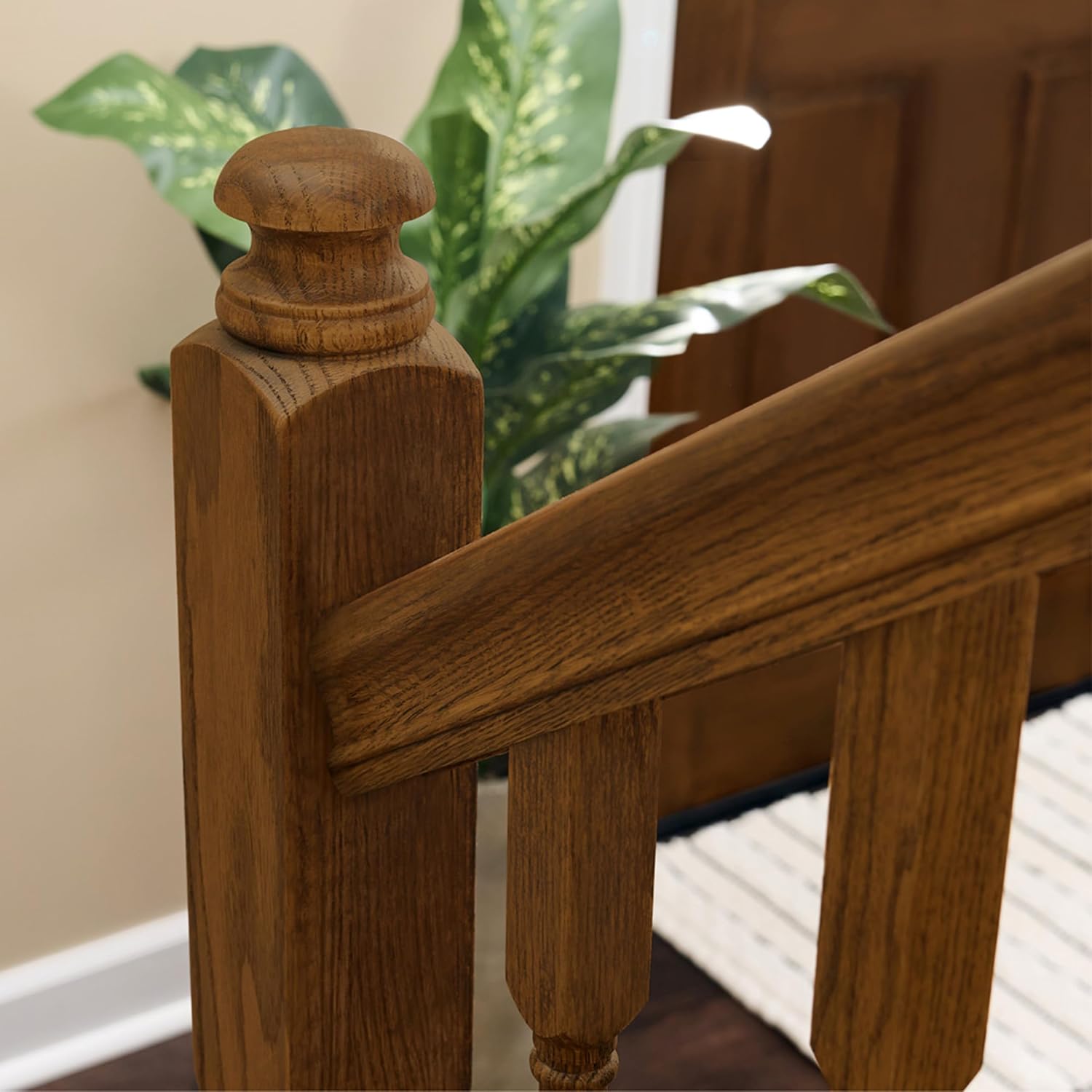
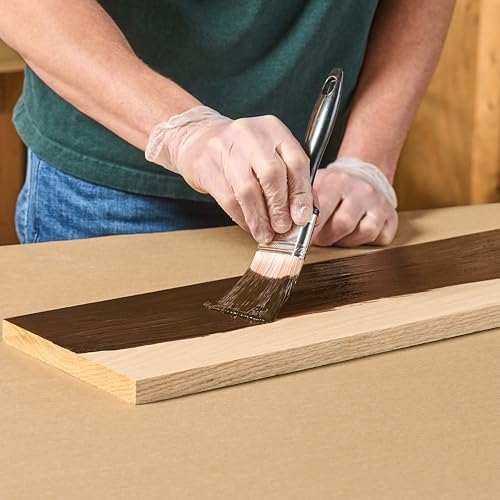
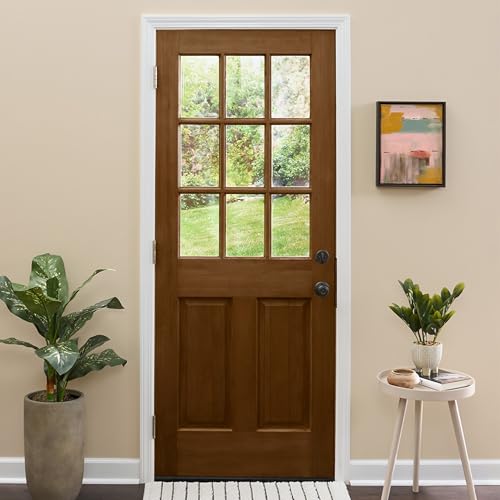
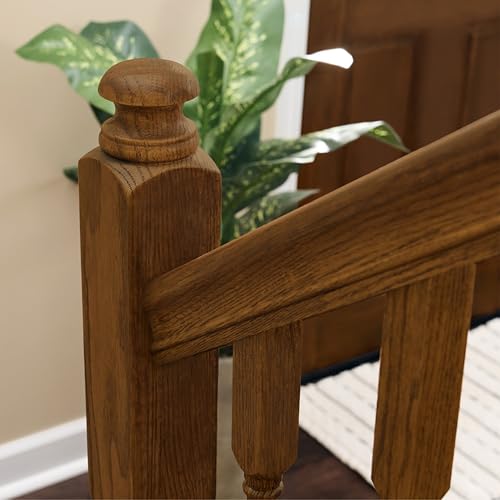
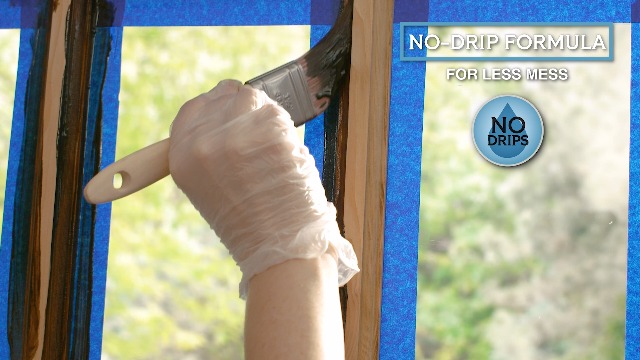
Prime Varathane Total Control Dark Walnut Gel Stain






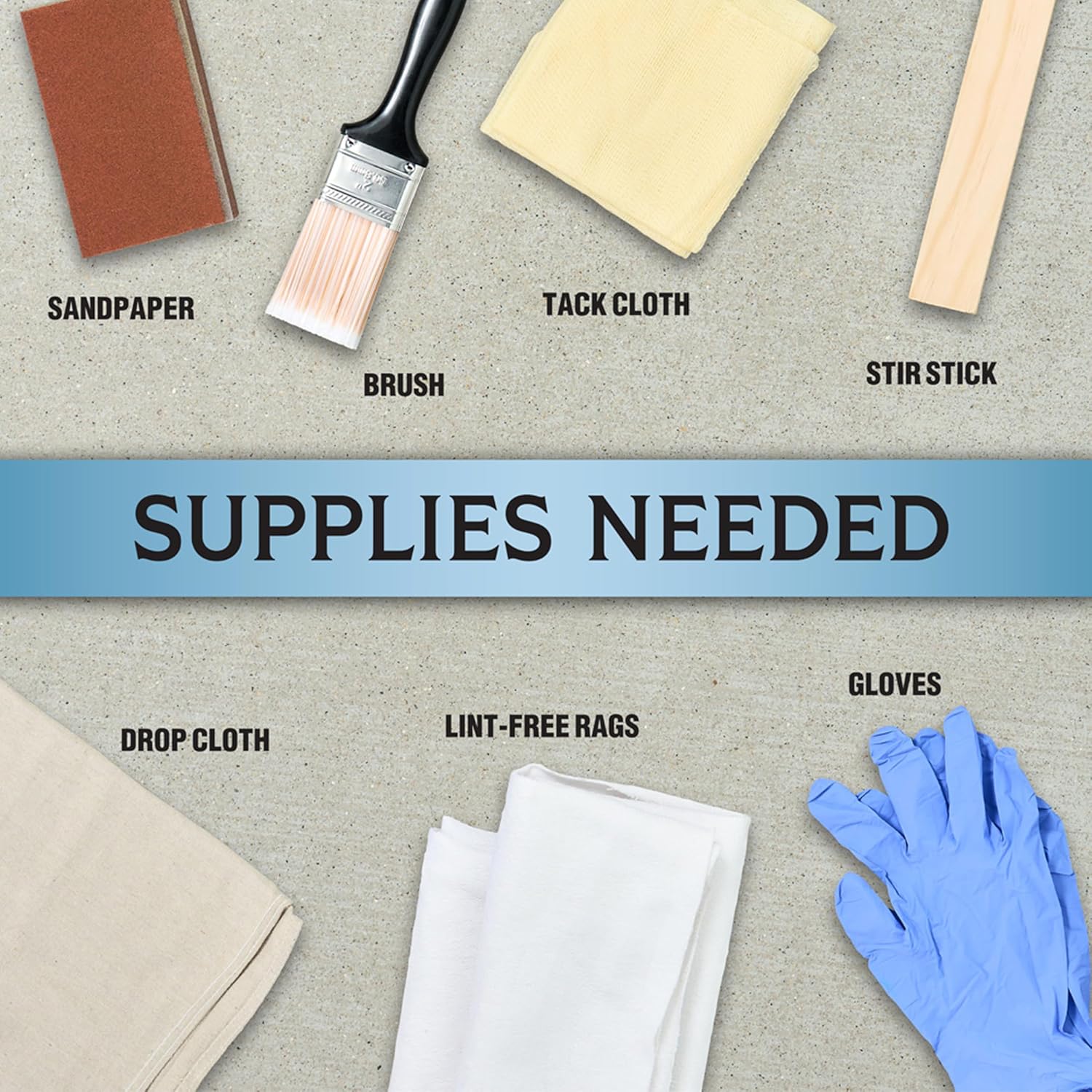




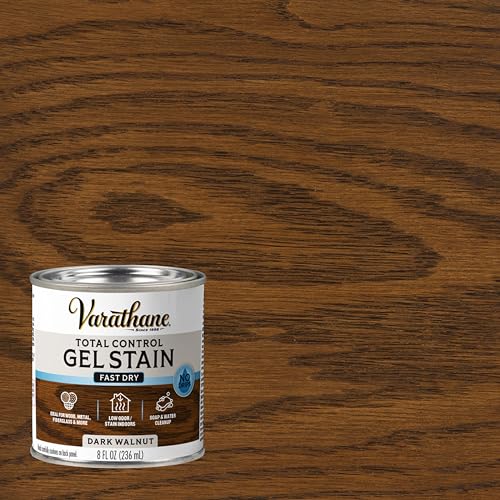
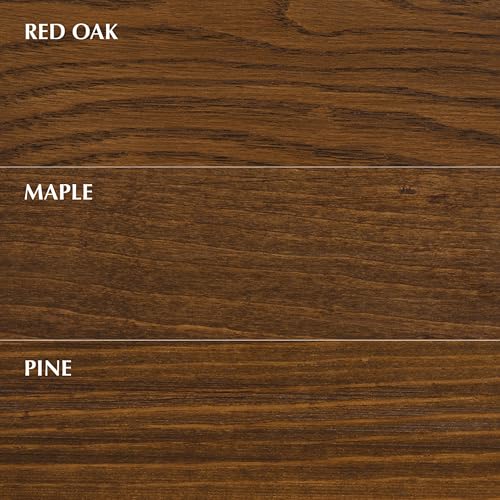
As an Amazon Associate we earn from qualifying purchases. Product prices and availability are accurate as of the date/time indicated.
Start here: poplar is a painting timber, so the stain is where the decision actually is — an ordinary penetrating stain will blotch it.
Why “hardwood” does not mean hard
The two words are botanical classifications that predate any hardness testing.
- Hardwoods are angiosperms: broadleaved trees that flower and produce seeds in a fruit or nut. Oak, maple, walnut, poplar, balsa.
- Softwoods are gymnosperms: conifers with needles and cones. Pine, spruce, fir, cedar, yew.
The names came about because most hardwoods happen to be denser than most softwoods, and the rough correlation held well enough for the timber trade to keep the terms. But the exceptions are large in both directions.
| Timber | Class | Janka (lbf) | Note |
|---|---|---|---|
| Balsa | Hardwood | 100 | The softest commercial timber there is |
| Poplar | Hardwood | 540 | Softer than most pine |
| Eastern white pine | Softwood | 380 | Softer than poplar |
| Southern yellow pine | Softwood | 690 | Harder than poplar |
| Douglas fir | Softwood | 660 | Harder than poplar |
| Yew | Softwood | 1,520 | Harder than oak |
| Red oak | Hardwood | 1,290 | The label works here |
Balsa is the clinching case: it is a hardwood, and it is the softest timber sold. Yew is a softwood harder than oak. If hardness is what you care about, read the Janka figure and ignore the label — the numbers for the species you will actually meet are in our guide to the Janka hardness scale.
What poplar is actually like
| Property | Poplar | For comparison |
|---|---|---|
| Janka hardness | 540 lbf | Pine 380–690, oak 1,290 |
| Colour | Cream to pale green, with grey-green streaks | Unusual, and why it is usually painted |
| Grain | Straight, fine, very uniform | Less figure than any common hardwood |
| Density | 450 kg/m³ | Light for a hardwood |
| Stability | Very good | Moves less than beech or maple |
| Takes paint | Exceptionally well | Better than pine, which resins and blotches |
| Takes stain | Poorly, blotches badly | The main reason it is painted |
The green-grey streaking is the visual signature and it is why poplar is rarely finished clear: the colour is genuinely odd, sometimes almost olive, and it does not read as furniture timber. Under paint, none of that matters.
Where poplar is the right choice
- Painted furniture. This is its main use and it is genuinely the best common timber for it. Fine, even grain means no raised fibres and a glass-flat finish.
- Drawer sides and backs. Light, stable, cheap, and it does not matter that it is plain. Traditional drawer construction has used poplar and similar secondary timbers for centuries.
- Carcass and hidden structure. Inside a cabinet where nothing shows.
- Mouldings and trim, painted.
- Practice pieces. Cheap enough to make mistakes on and behaves like a hardwood under tools.
And where it is not: any surface that takes wear. A poplar dining table top will show fingernail marks. A poplar desk will carry the imprint of anything written on a single sheet of paper. If a listing offers a solid poplar table top at a hardwood price, that is the thing to weigh.
If you already own poplar furniture
Three practical points.
- Dents are recoverable. A dent in soft timber is crushed fibres, not lost material. A damp cloth and a warm iron will raise most of it, which does not work on a scratch that has removed wood.
- Do not try to stain it clear. If you want the timber to look like walnut, use a gel stain or a toned finish rather than a penetrating stain; poplar blotches badly with the latter.
- Repaint rather than refinish. Poplar’s virtue is paint. Stripping a painted poplar piece to bare wood usually reveals why it was painted.
Which finish suits which species, including when a film finish is the right answer for a soft timber, is set out in our guide to the best finish for a solid wood top.
What helps
- Gel stain The only stain that does not blotch on poplar On Amazon →
- Touch-up marker set A soft timber will dent, and dents need filling On Amazon →
- Wood primer Poplar’s whole case is that it takes paint perfectly
- Household iron Raises a dent in soft timber, which no filler matches
What to buy

Questions we get asked
Is poplar a hardwood or a softwood?
A hardwood, botanically, because the tree is broadleaved and flowering. That classification says nothing about hardness: at 540 Janka poplar is softer than most pine, which is a softwood.
Is poplar good for furniture?
For painted furniture, drawer sides and carcass work, yes — it is stable, cheap and takes paint better than nearly anything. For a table top or any wearing surface, no; it dents too easily.
Why is poplar green?
Mineral streaking in the heartwood, which ranges from grey through olive to almost purple. It is natural and structurally harmless. It is also the main reason poplar is painted rather than finished clear.
Can you stain poplar to look like walnut?
With a gel stain or a toned finish, reasonably well. With an ordinary penetrating stain, poorly — poplar absorbs unevenly and goes blotchy. If a dark timber look is the goal, a gel stain over a sealer is the reliable route.
Is poplar stronger than pine?
In bending and stiffness they are broadly comparable, and poplar is more stable. In hardness poplar is softer than southern yellow pine and harder than eastern white pine, so the answer depends entirely on which pine is meant.

