Coffee Table Dimensions: Sized From the Sofa, Not the Room
The Wooden Stars is a participant in the Amazon Services LLC Associates Program. We may earn a commission when you buy through links on our site, at no extra cost to you.
Coffee table dimensions are published as a single set of numbers, which is why so many tables that match the numbers still look wrong in the room.
A coffee table has no dimensions of its own. Every one of them is a relationship: to the sofa’s height, to the sofa’s length, and to the walking route past it.
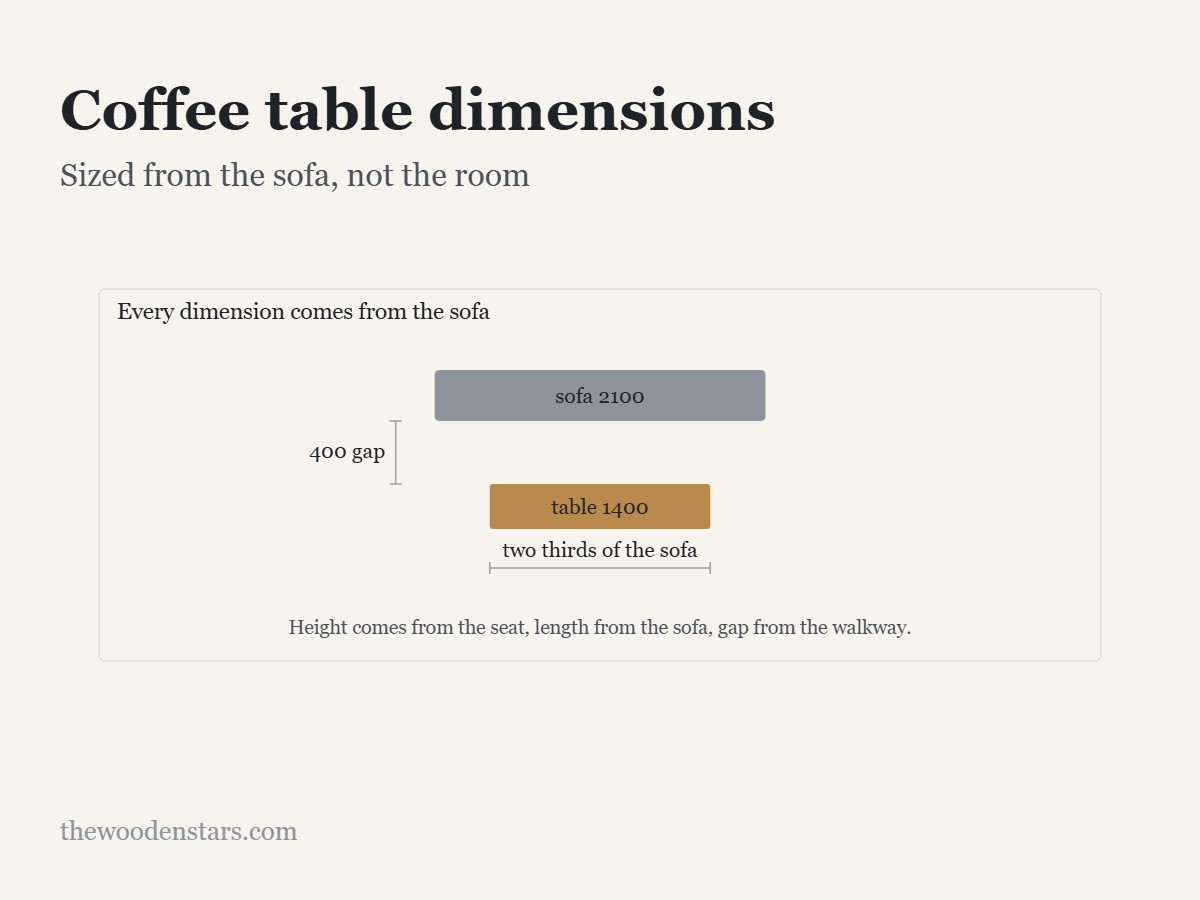
Take three measurements from the room, not from a chart. Height: level with the sofa seat or up to 50 mm below — most sofas sit at 400–450 mm, so most coffee tables do too. Length: about two thirds of the sofa, so a 2100 mm sofa wants a table around 1200–1400 mm. Gap: leave 300–450 mm between the sofa edge and the table — close enough to reach a cup, far enough to walk past. Depth is usually 500–700 mm and matters least. If the room is a walkway, the gap wins and the table shrinks.

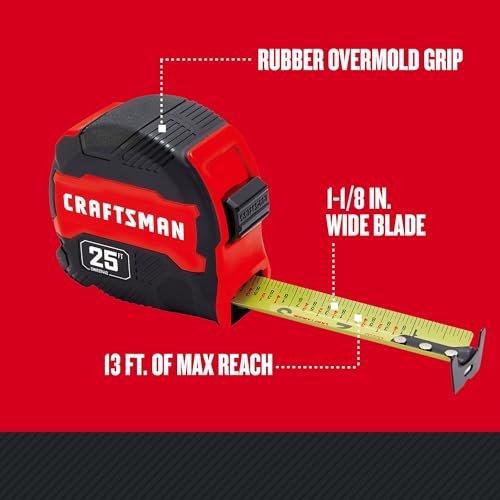
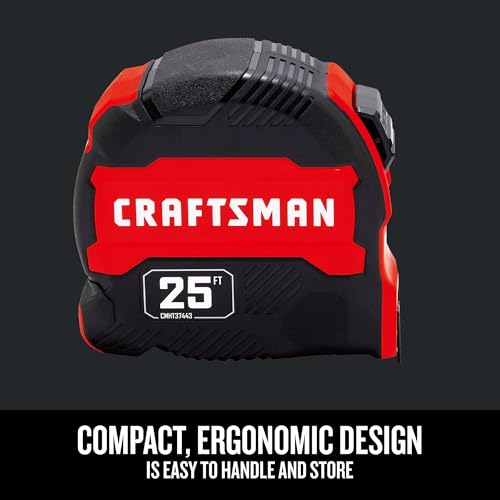
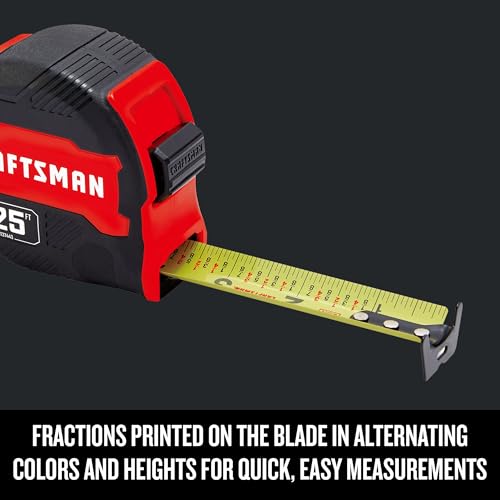
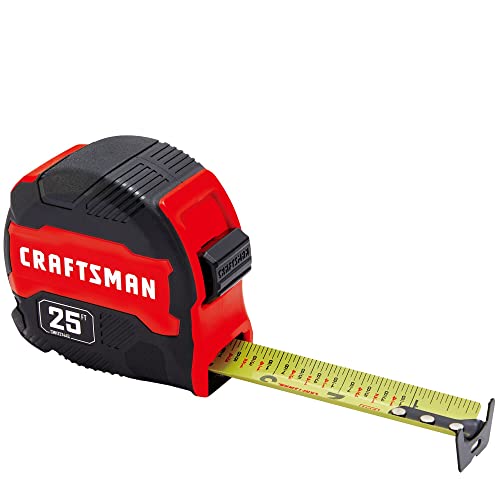
Prime CRAFTSMAN 25-Ft Tape Measure with Fraction Marketing, Retractable, Manual-Locking Blade (CMHT37443S)



As an Amazon Associate we earn from qualifying purchases. Product prices and availability are accurate as of the date/time indicated.
Start here: measure the sofa before you shop. Every coffee table dimension is taken from it, and no chart substitutes.
Height: taken from the sofa, always
The convention is level with the seat cushion or slightly below. Level reads generous; below reads lighter. Above the seat height looks wrong at any size, and it is the mistake that makes an otherwise good table feel like a dining table that lost its legs.
| Sofa seat height | Table height | Reads as |
|---|---|---|
| 360–390 mm, low modern | 350–380 mm | Level or just under |
| 400–430 mm, most sofas | 400–420 mm | The default |
| 440–470 mm, traditional | 420–450 mm | Slightly under, more open |
| 480 mm and up, high-seat | 440–470 mm | Under, deliberately |
Measure the seat with someone sitting on it if the cushions are soft. A feather-filled sofa loses 40 mm under load and the compressed height is the one that matters.
If you are building rather than buying, the leg length is that height minus the top thickness, and the fixing has its own rules — set out in our guide to metal coffee table legs.
Length: two thirds of the sofa
This is the proportion that does most of the work visually. Two thirds looks deliberate; much shorter looks lost, much longer looks like a bench.
| Sofa | Table length | Sensible range |
|---|---|---|
| 1800 mm, two seat | 1200 mm | 1000–1300 mm |
| 2100 mm, three seat | 1400 mm | 1200–1500 mm |
| 2400 mm, large three seat | 1600 mm | 1400–1700 mm |
| L-shaped sectional | Measure the longest run | Or use two smaller tables |
| Two facing sofas | Fill 60–70% of the gap | Round often reads better here |
With a sectional, the two-thirds rule applies to the longest side, and the table should not extend past the inside corner. Two nesting or paired tables often work better than one large one, because they can be moved apart when people sit on both runs.
The gap, which is the one people get wrong
300 to 450 mm between the sofa edge and the table. Below 300 you cannot get past without turning sideways; above 450 you cannot reach a cup without standing.
Two situations override it:
- The table is on the main route through the room. Then the walkway wins: 600–900 mm of clear floor for a main route, and the table gets smaller to allow it.
- Nobody walks past. A table against a wall or in a bay can sit at 300 mm and gain the space back in size.
Clearance on the other three sides matters less, but leave at least 450 mm to a wall or an armchair so the room does not feel packed.
Depth, shape and the numbers that matter least
Depth is usually 500–700 mm and rarely decides anything, because it is constrained by the gap either side. Shape does more.
- Rectangular: the default, best with a single sofa, most surface for the footprint.
- Round or oval: better in a walkway, better between two facing sofas, and much better in a room with small children — there are no corners at head height. Size a round table at about half the sofa length rather than two thirds.
- Square: works with an L-shaped sectional where a rectangle would point awkwardly.
- Nesting or paired: the flexible answer, and the one that solves a room used in more than one way.
Whichever shape, a solid top on a low table still moves with the seasons, and the fixing has to allow it — the same rule that applies to any solid surface, set out in our guide to a table top cracking at the seams.
| Size | Shape | Suits |
|---|---|---|
| 900 × 500 mm | Rectangular | Two-seat sofa, small room |
| 1200 × 600 mm | Rectangular | The most common size sold |
| 1400 × 700 mm | Rectangular | Three-seat sofa |
| 900 mm diameter | Round | Between two facing sofas, or a walkway |
| 1000 mm square | Square | L-shaped sectional |
| Two at 500 × 500 mm | Paired | Sectional, or a room that gets rearranged |
Measuring before you buy
- Measure the compressed sofa seat height, with weight on it.
- Measure the sofa length, arm to arm, and take two thirds.
- Mark the footprint on the floor with tape and live with it for a day. This catches walkway problems that no measurement does.
- Walk the route past it carrying something in both hands.
- Check the height against the sofa arm as well as the seat, if the arm is where people put drinks.
The tape trick is worth the two minutes. Most returns are not because the table was the wrong size on paper but because the room turned out to be a corridor.
What helps
- Tape measure, 25 ft Sofa height compressed, sofa length, and the walkway On Amazon →
- Felt pads Fit them before the table goes down, not after On Amazon →
- Painter’s tape Mark the footprint on the floor and live with it for a day
What to buy
CRAFTSMAN 25-Ft Tape Measure with Fraction Marketing, Retractable, Manual-Locking Blade (CMHT37443S)

Questions we get asked
What is the standard coffee table height?
400 to 450 mm for most, but the number that matters is your sofa’s seat height. Aim level with the seat or up to 50 mm below. A table taller than the seat looks wrong regardless of what the chart says.
How big should a coffee table be relative to the sofa?
About two thirds of the sofa’s length. A 2100 mm three-seat sofa suits a table around 1400 mm. For a round table, half the sofa length reads better than two thirds.
How much space between the sofa and the coffee table?
300 to 450 mm. Closer and you cannot walk past; further and you cannot reach. If the table sits on the main route through the room, allow 600 to 900 mm for the walkway and make the table smaller.
What size coffee table for a sectional?
Measure the longest run and take two thirds of that, and keep the table inside the corner rather than past it. Two smaller tables or a nesting pair usually work better than one large rectangle, because people sit on both runs.
Is a round or rectangular coffee table better?
Rectangular gives more surface for the same footprint and suits a single sofa. Round is better in a walkway, between two facing sofas, and in a house with small children, because there are no corners at head height.