How Many Chairs Fit a Round Table? The Arithmetic
The Wooden Stars is a participant in the Amazon Services LLC Associates Program. We may earn a commission when you buy through links on our site, at no extra cost to you.
The number of chairs a table seats is not a property of the table. It is a property of how much elbow room you are willing to give people, and the published figures are almost always the optimistic end of that.
The arithmetic is simple once you know what is being divided, and it explains why a table that “seats six” seats four comfortably.
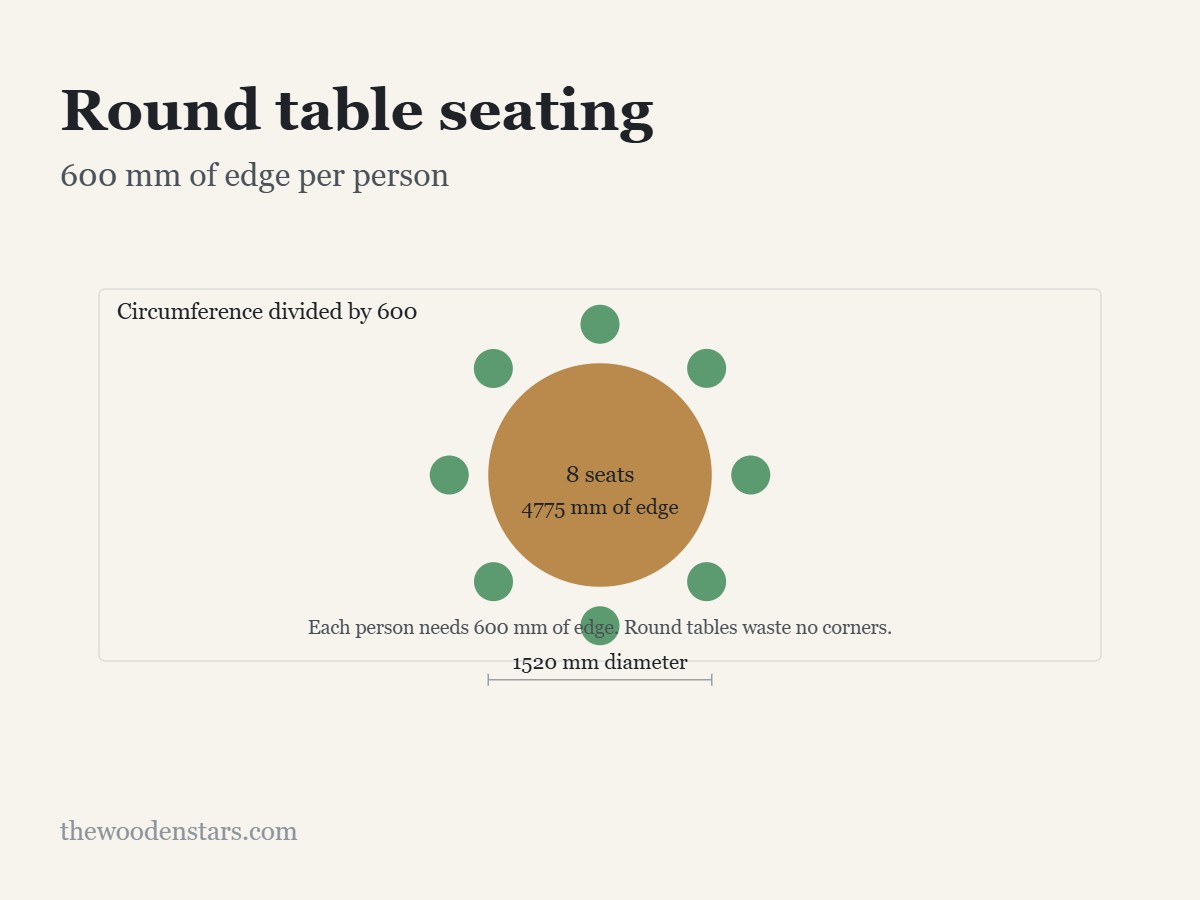
Each person needs 600 mm of table edge to eat comfortably, and 500 mm at a squeeze. For a round table, divide the circumference (diameter × 3.14) by 600. A 1520 mm (60 inch) round table has 4,775 mm of edge, so it seats 8 comfortably and 6 generously. For a rectangular table, count the long sides in 600 mm units and add one per end if the end is at least 900 mm wide. Then check the room: you need 900 mm of clear floor behind each chair to pull it out and sit down, and 1100 mm where people walk past.

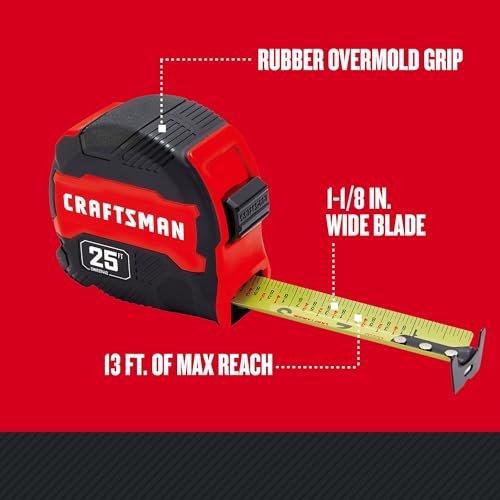
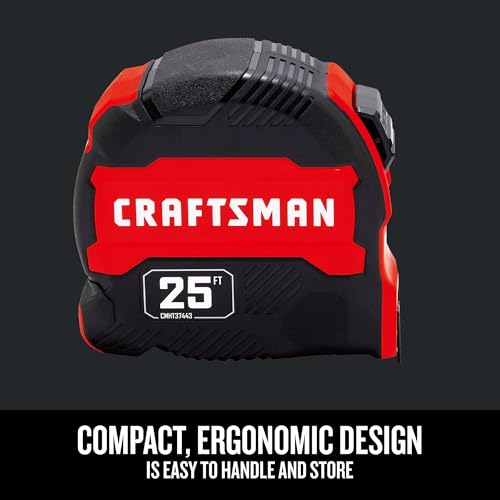
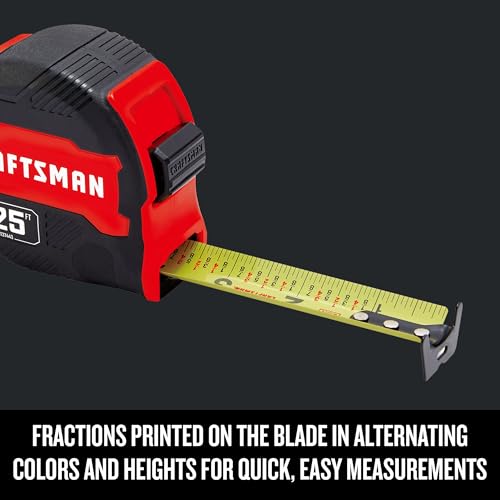
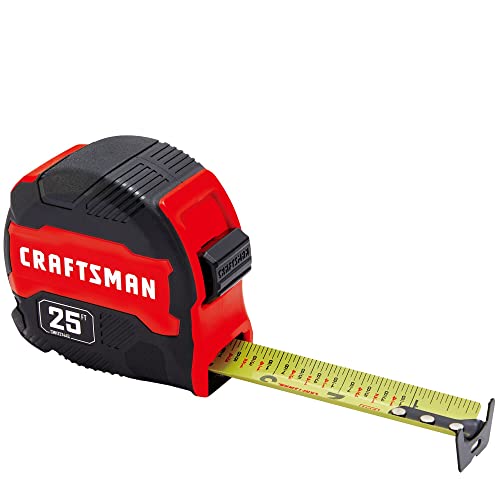
Prime CRAFTSMAN 25-Ft Tape Measure with Fraction Marketing, Retractable, Manual-Locking Blade (CMHT37443S)



As an Amazon Associate we earn from qualifying purchases. Product prices and availability are accurate as of the date/time indicated.
Start here: measure the room before the table. The floor behind the chairs is what limits the seat count, not the table top.
Round tables: divide the circumference
A round table has no corners to waste, which is why it seats more per square metre than a rectangle. The whole edge is usable.
| Diameter | Circumference | Comfortable (600 mm) | Squeeze (500 mm) |
|---|---|---|---|
| 900 mm / 36 in | 2,830 mm | 4 | 5 |
| 1070 mm / 42 in | 3,360 mm | 5 | 6 |
| 1220 mm / 48 in | 3,830 mm | 6 | 7 |
| 1370 mm / 54 in | 4,300 mm | 7 | 8 |
| 1520 mm / 60 in | 4,775 mm | 8 | 9 |
| 1680 mm / 66 in | 5,280 mm | 8 | 10 |
| 1830 mm / 72 in | 5,750 mm | 9 | 11 |
Two things limit the top of that table in practice. Above about 1,500 mm the middle becomes unreachable, so serving dishes need a lazy susan or a second person. And a pedestal base at 1,800 mm has to be substantial or the table rocks when someone leans on the edge.
Legs matter too: four corner legs on a round table put a leg exactly where the fourth and eighth diner want their knees. A pedestal or a trestle avoids it, which is the main practical argument for them — the trade-offs are in our guide to table legs.
Rectangular tables: count the sides
Divide each long side by 600 and round down. Add one seat per end if the end is at least 900 mm wide; below that an end seat has nowhere to put their elbows.
| Length × width | Long sides | Ends | Total comfortable |
|---|---|---|---|
| 1200 × 800 mm | 2 + 2 | 0 | 4 |
| 1500 × 900 mm | 2 + 2 | 2 | 6 |
| 1800 × 900 mm | 3 + 3 | 2 | 8 |
| 2100 × 1000 mm | 3 + 3 | 2 | 8 |
| 2400 × 1000 mm | 4 + 4 | 2 | 10 |
| 2700 × 1100 mm | 4 + 4 | 2 | 10 |
Width does more than it looks. Below 800 mm two people opposite each other have overlapping place settings; 900 to 1,100 mm is the comfortable band; above 1,200 mm you cannot pass a dish across.
The room, which usually decides it
A table that seats eight in the abstract seats six in most rooms, because the constraint is not the table but the floor around it.
- 900 mm behind each chair to pull it out and sit down. This is the minimum and it feels tight.
- 1100 mm where someone has to walk behind a seated person.
- 750 mm is the absolute floor for a chair that is only used occasionally, against a wall.
So the sum for a room is: table length plus 1,800 mm (900 each side) as an absolute minimum, and table length plus 2,200 mm to be comfortable. A 2,100 mm table needs a room at least 3,900 mm long in the table’s direction, and 4,300 mm to be pleasant.
Mark it on the floor with tape before buying. It is the only reliable way to find out that the door no longer opens.
Extending tables, and what the extra leaf really buys
A leaf adds its own width to the length, which on the arithmetic above is one seat per 600 mm — so a 400 mm leaf does not add a seat, and a 900 mm leaf adds one on each side plus nothing at the ends.
- Butterfly and drop-in leaves typically add 400–500 mm: one extra seat, sometimes two if people shuffle.
- Two leaves at 450 mm add 900 mm: two seats reliably.
- Drop-leaf tables change width rather than length, which adds no seats at all — it makes the existing seats comfortable.
And the room still has to take the extended size with 900 mm behind the chairs, which is the reason most extending tables are used extended twice a year.
Chair width, the last check
The 600 mm figure is the space a person occupies, not the chair. Most dining chairs are 450–500 mm wide, so they fit within it. Two exceptions catch people out.
- Carver or armchair ends are 550–650 mm wide and need their own allowance.
- Chairs that must tuck under need the apron height checked: at least 300 mm from the floor to the underside of the apron, or the chair seat hits it.
If the chairs are being replaced along with the table, chair leg style and how they take side load are covered in our guide to replacing chair legs.
What helps
- Tape measure, 25 ft Table, chairs and the floor behind them On Amazon →
- Felt pads Chairs pulled out several times a day mark a floor fast On Amazon →
- Painter’s tape Mark the table and the 900 mm chair zone on the floor first
What to buy
CRAFTSMAN 25-Ft Tape Measure with Fraction Marketing, Retractable, Manual-Locking Blade (CMHT37443S)

Questions we get asked
How many chairs fit around a 60 inch round table?
Eight comfortably, at 600 mm of edge each, and six generously. Nine is possible at a squeeze. A 1520 mm table has 4,775 mm of circumference, and dividing by 600 gives the answer directly.
How much table edge does one person need?
600 mm to eat comfortably, 500 mm at a squeeze, and 700 mm for a genuinely relaxed dinner. Chairs are narrower than that; the number is the space a person occupies, not the furniture.
How much space do you need behind a dining chair?
900 mm to pull the chair out and sit down, and 1,100 mm where someone has to walk behind a seated person. This is usually what limits the table size, not the table itself.
Does a round table seat more than a rectangular one?
For the same floor area, generally yes, because there are no corners going to waste. A 1,220 mm round table seats six; a rectangular table seating six is about 1,500 × 900 mm and occupies more floor once the chair zones are added.
How many seats does a table leaf add?
One per 600 mm of added length, so a typical 450 mm leaf adds one and two leaves add two. A drop-leaf that changes the width rather than the length adds no seats at all — it makes the existing ones comfortable.