Metal Coffee Table Legs: Low Height, and Wood That Still Moves
The Wooden Stars is a participant in the Amazon Services LLC Associates Program. We may earn a commission when you buy through links on our site, at no extra cost to you.
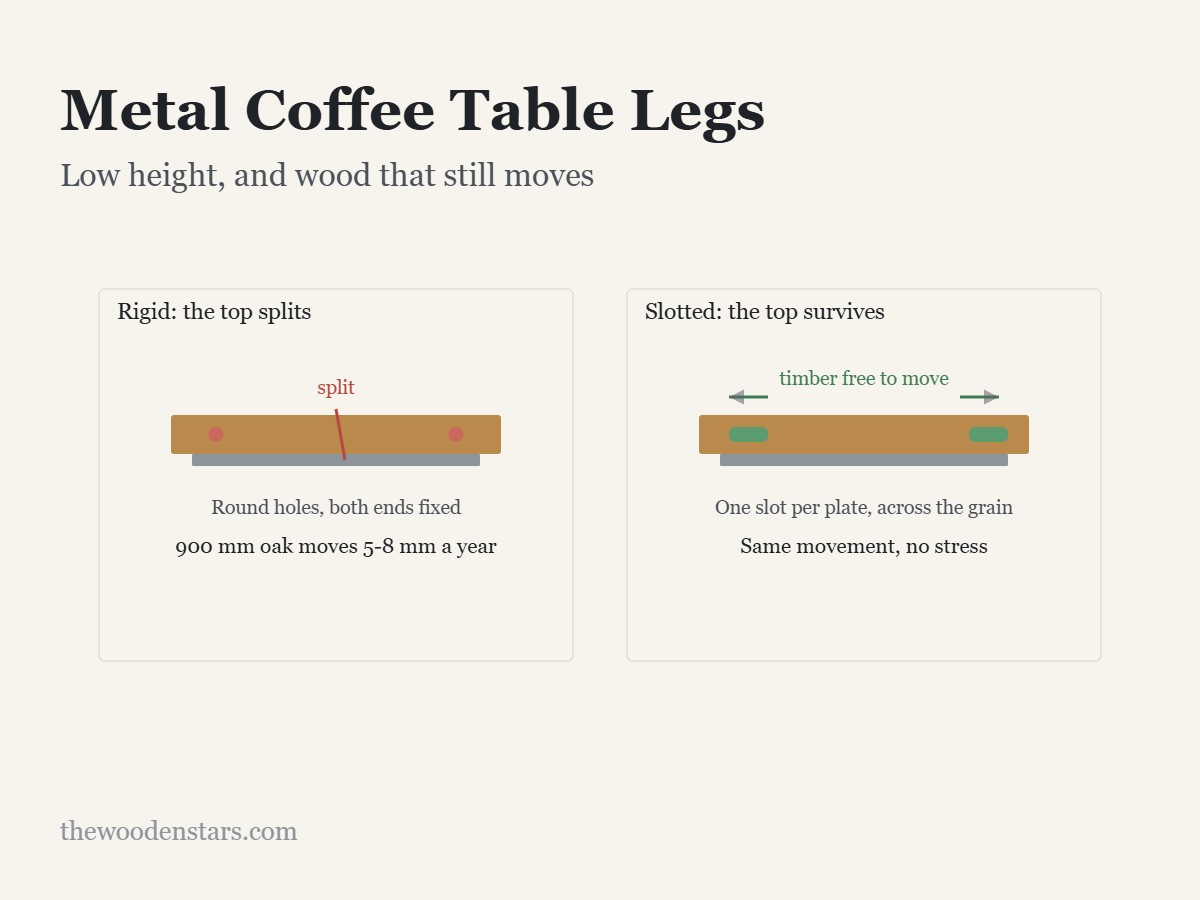
Metal legs on a wood coffee table is the most forgiving combination in furniture, right up to the point where it is not. The height is low enough that slender legs work, but the top is usually solid timber, and solid timber moves.
Steel does not. Bolt a wide solid top rigidly to a steel frame and one of the two has to give, which is why so many otherwise well-made slab coffee tables develop a crack running with the grain.
Two numbers and one rule. Finished coffee table height is 400–450 mm, and the convention is to sit level with the sofa seat or up to 50 mm below it — so measure the sofa, not a chart. Leg length is that height minus the top thickness. The rule: on any solid wood top wider than about 400 mm, at least one fixing per leg plate must be a slot running across the grain, so the top can change width with the seasons without splitting. On plywood or veneered board, fix rigidly; those do not move.

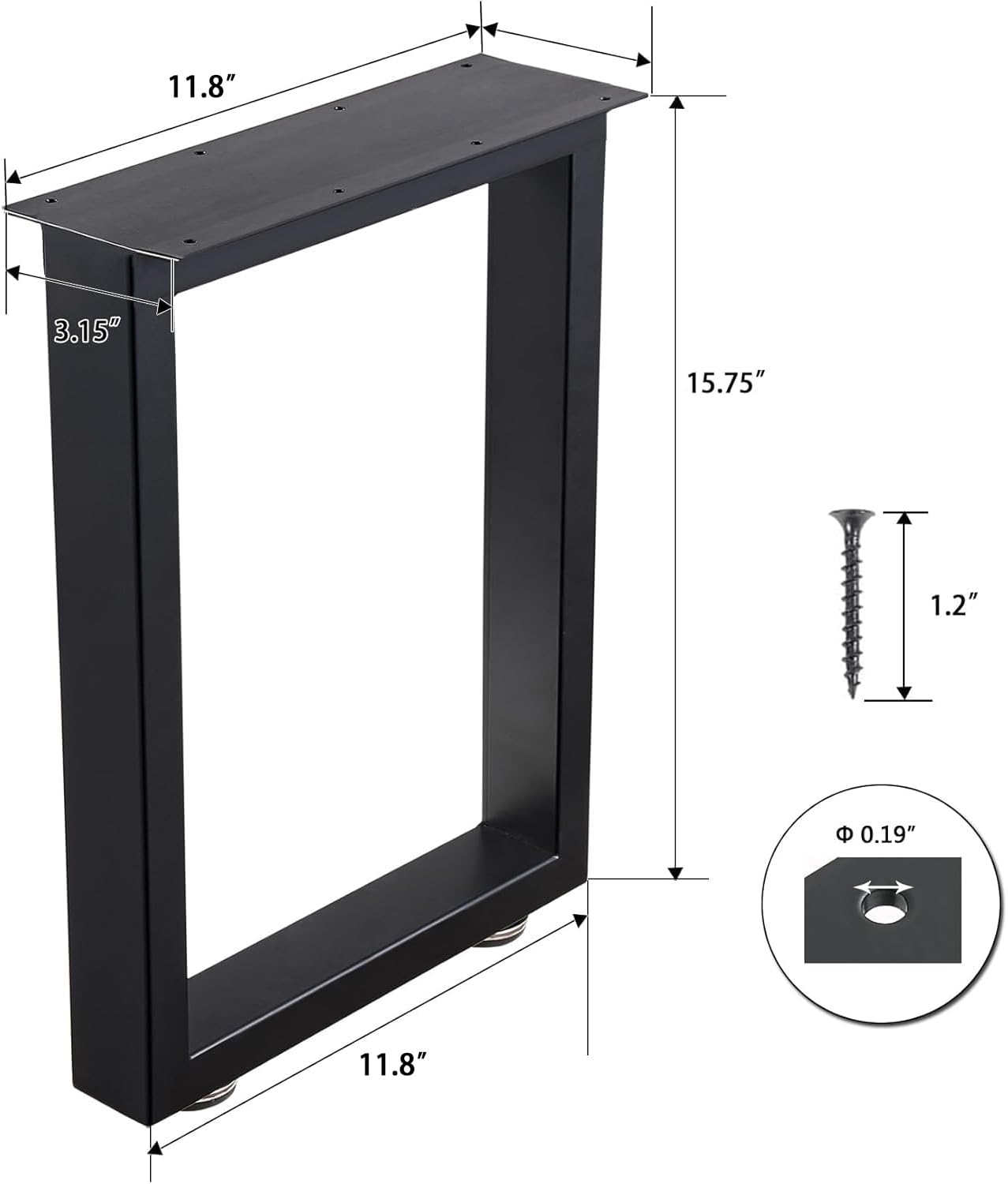
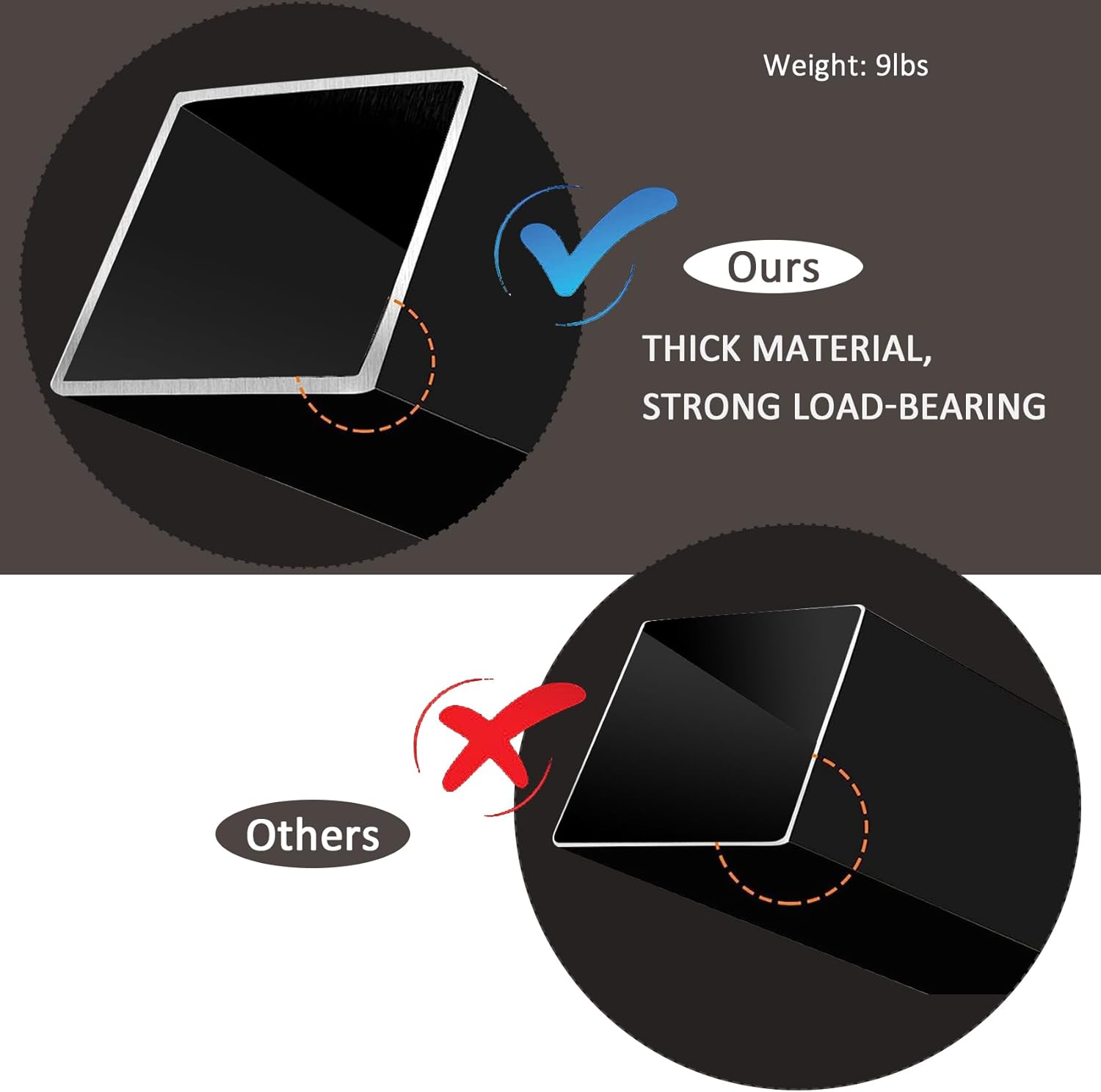
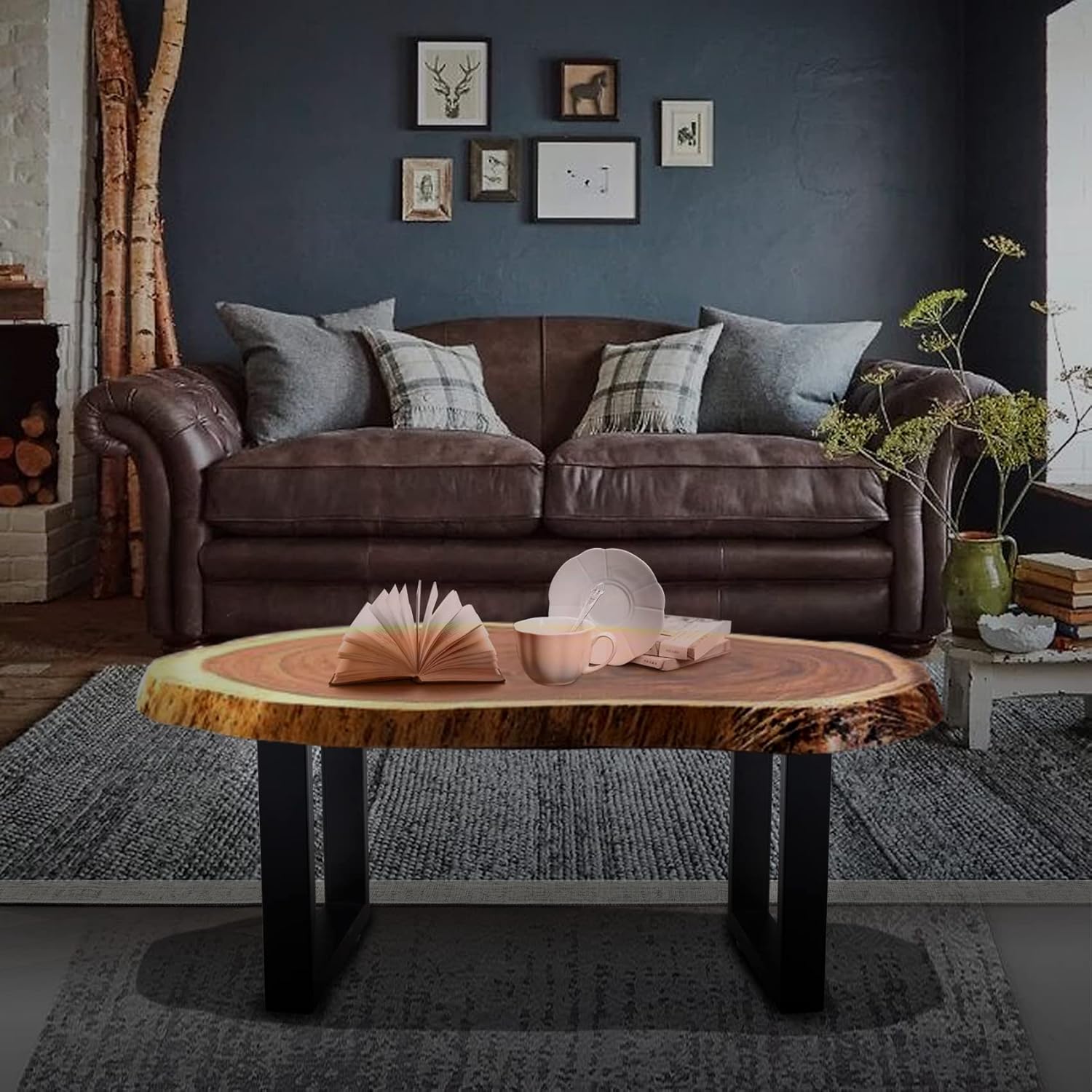
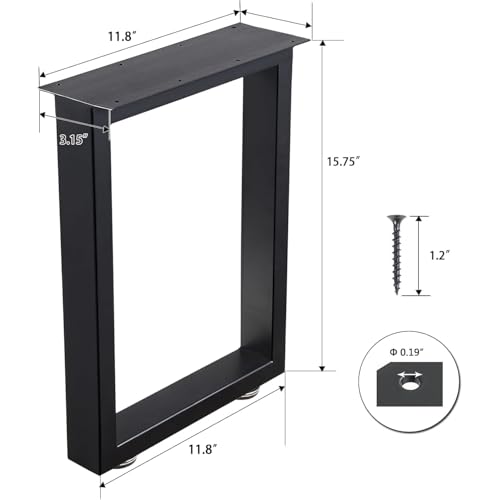
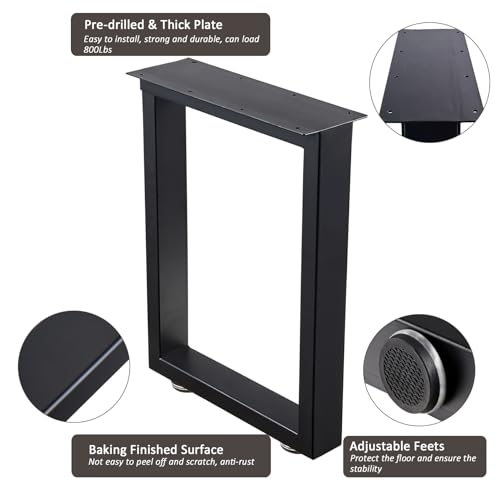
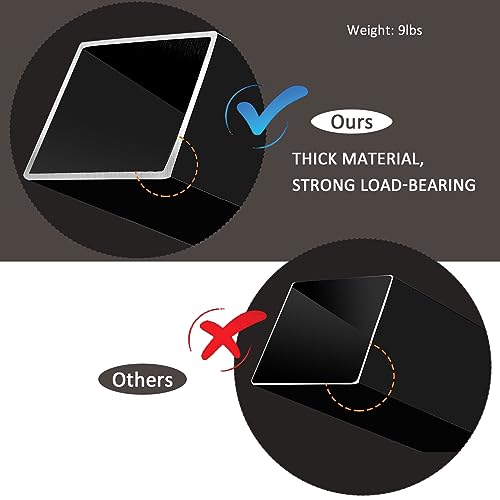
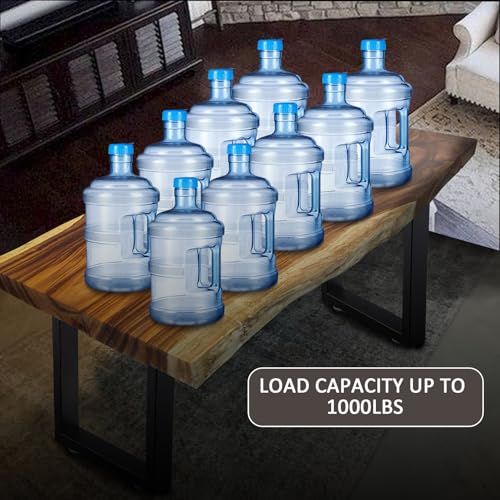
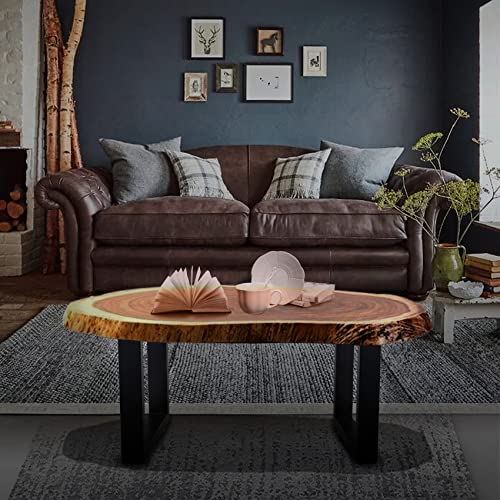
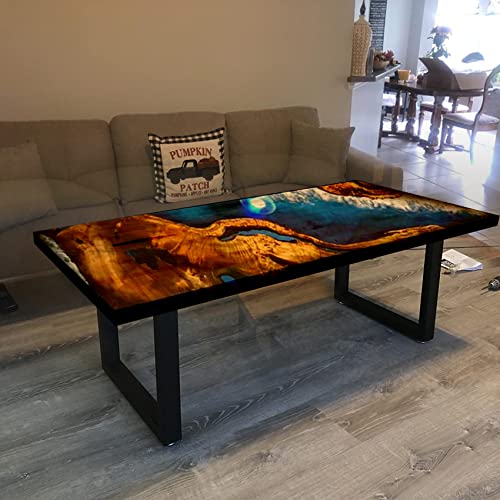
Prime ALLCOS Bench Legs 16 Inch Metal Coffee Table Legs Heavy Duty Furniture Desk Chair Legs, Set of 2, Black




As an Amazon Associate we earn from qualifying purchases. Product prices and availability are accurate as of the date/time indicated.
Start here: at coffee height almost any metal leg is rigid enough, so spend the attention on how it attaches to a top that moves.
Height, taken from the sofa
Coffee table height is a relationship, not an absolute. A table 50 mm below the sofa seat feels right; the same table beside a low modern sofa feels tall.
| Sofa seat height | Table height | With a 25 mm top | With a 40 mm slab |
|---|---|---|---|
| 380 mm, low modern | 350–380 mm | 325–355 mm | 310–340 mm |
| 420 mm, typical | 400–420 mm | 375–395 mm | 360–380 mm |
| 450 mm, traditional | 420–450 mm | 395–425 mm | 380–410 mm |
| 480 mm, high-seat | 440–470 mm | 415–445 mm | 400–430 mm |
Two practical margins. Leave 300–450 mm between the sofa edge and the table so people can walk past and stand up. And if the legs splay, measure the footprint at floor level rather than at the top, because a splayed set eats considerably more floor than the tabletop suggests.
The general rules for leg fixing, thread sizes and choosing between plates and inserts apply here too, and they are set out in our guide to table legs. What follows is only what the low height and the metal-to-wood joint change.
Why metal legs suit this height
A hairpin leg at dining height is a compromise — 710 mm of 10 mm rod flexes noticeably. The same leg at 400 mm is short enough to be genuinely rigid, which is why hairpins have always looked right on coffee tables and slightly nervous on dining tables.
- Hairpin. Two or three rods welded to a plate. Light, cheap, visually quiet, and at this height stiff enough. Three-rod versions are noticeably stronger than two.
- Tapered steel or brass tube. A single tube, often with a fitted glide. Clean, mid-century, and simple to fit with a standard plate.
- Flat bar U-frame or hoop. A single piece each end. Very rigid, spreads the fixing along the top’s width, and the easiest style to combine with slotted holes.
- Box or plinth frame. A welded rectangle underneath. Strongest, heaviest, and the one most likely to fight a solid top over movement.
Rod thickness matters more than style. Below 10 mm, hairpins are display legs. 12 mm and up will carry a heavy slab and somebody sitting on the edge of it, which coffee tables get more often than any other table in the house.
The joint that cracks tops
A 900 mm wide solid oak top can change width by 5–8 mm between a humid summer and a dry heated winter. That movement is slow, enormously powerful, and entirely across the grain — along the grain, timber barely moves at all.
Steel does none of this. So the fixing has to allow the wood to slide relative to the metal.
| Top | Fixing | Movement allowance | Note |
|---|---|---|---|
| Solid wood under 400 mm wide | Plate, round holes | Not critical | Small tops move little |
| Solid wood 400–900 mm | Plate with slotted holes | One slot per plate minimum | Slots run ACROSS the grain |
| Solid slab over 900 mm | Slots, or figure-8 fasteners | Two per plate | The frame must not box it in |
| Butcher block | Slots | One per plate | Glue lines do not stop movement |
| Plywood or veneered board | Any, rigid is fine | None needed | These are dimensionally stable |
Three ways to allow it, in order of how easy they are:
- Slotted holes in the plate. Many leg plates come with one round hole and one slot; use the slot, and run it across the grain. If all holes are round, a round file widens one into a slot in a couple of minutes.
- Figure-8 fasteners. A metal figure of eight recessed into the frame; the top screw pivots as the timber moves. The traditional answer and still the best on a slab.
- Washers, not overtightened. A wide washer under a bolt in a slot, done up firm rather than crushed, lets the timber slide. Crushed tight, the slot does nothing.
This is the same failure that splits dining tops at the seams, and the diagnosis is identical: check what is holding the top down before blaming the timber. Our guide to a cracking table top covers it in full.
Fitting metal to wood, cleanly
- Work with the top upside down on a blanket. Steel plates mark a finished surface instantly.
- Set legs in from the edge by 40–80 mm. Flush with the corner looks severe and leaves no meat around the screws.
- Pre-drill every screw hole. Hardwood splits, and the plate gives you no way to see it happening.
- Check screw length against the top thickness and write the maximum on tape stuck to the top. A screw through a coffee table top is at eye level when you sit down.
- Orient the slots across the grain before the first screw goes in — after that, they are set.
- Add felt pads or fitted glides. Metal legs on a hard floor mark it, and on a rug they sink and rock.
What to buy
- Metal coffee table legs, 16 in Coffee height, heavy enough for a solid top On Amazon →
- Hairpin legs, 16 in, 3 rod Genuinely rigid at this height, unlike at dining height On Amazon →
- Figure 8 fasteners Lets a solid top move against a steel frame On Amazon →
- Felt pads Metal legs mark hard floors and rock on rugs On Amazon →
- Round file Turns a round hole in a leg plate into a movement slot
What to buy


Questions we get asked
How tall should coffee table legs be?
Take the sofa seat height, aim for level with it or up to 50 mm below, then subtract the top thickness. For a typical 420 mm sofa seat and a 25 mm top that is roughly 375–395 mm of leg. Measure your sofa rather than trusting a standard height.
Will metal legs crack a solid wood top?
They can, if every fixing is rigid and the top is wider than about 400 mm. The timber changes width across the grain with humidity and the steel does not, so at least one hole per plate needs to be a slot running across the grain. Plywood and veneered tops do not have this problem.
Are hairpin legs strong enough for a coffee table?
Yes, and this is where they work best. At 400 mm the rods are short enough to be rigid, unlike at dining height. Use 12 mm rods and three-rod legs if the top is a heavy slab or people sit on the table edge.
How far in from the edge should the legs go?
40–80 mm. Right at the corner leaves too little timber around the screws and looks harsh; too far in and the table becomes tippy when somebody leans on one end.
Do metal legs need levelling feet?
On a hard floor, fitted glides or felt pads stop the steel marking it. On a rug they matter more: bare metal legs press into pile unevenly, and a table that seemed steady on a hard floor rocks on a rug. Adjustable glides fix both at once.