Bookshelf Brackets: the Wall Decides What They Hold
The Wooden Stars is a participant in the Amazon Services LLC Associates Program. We may earn a commission when you buy through links on our site, at no extra cost to you.
A shelf bracket is not chosen by how it looks. It is chosen by what is behind the wall, and everything else — style, finish, brand — is what you pick from whatever survives that first decision.
Get it wrong and the failure is not gradual. A bracket pulling out of plasterboard takes a fist-sized crater of wall with it, usually at three in the morning, usually with the books still on the shelf.
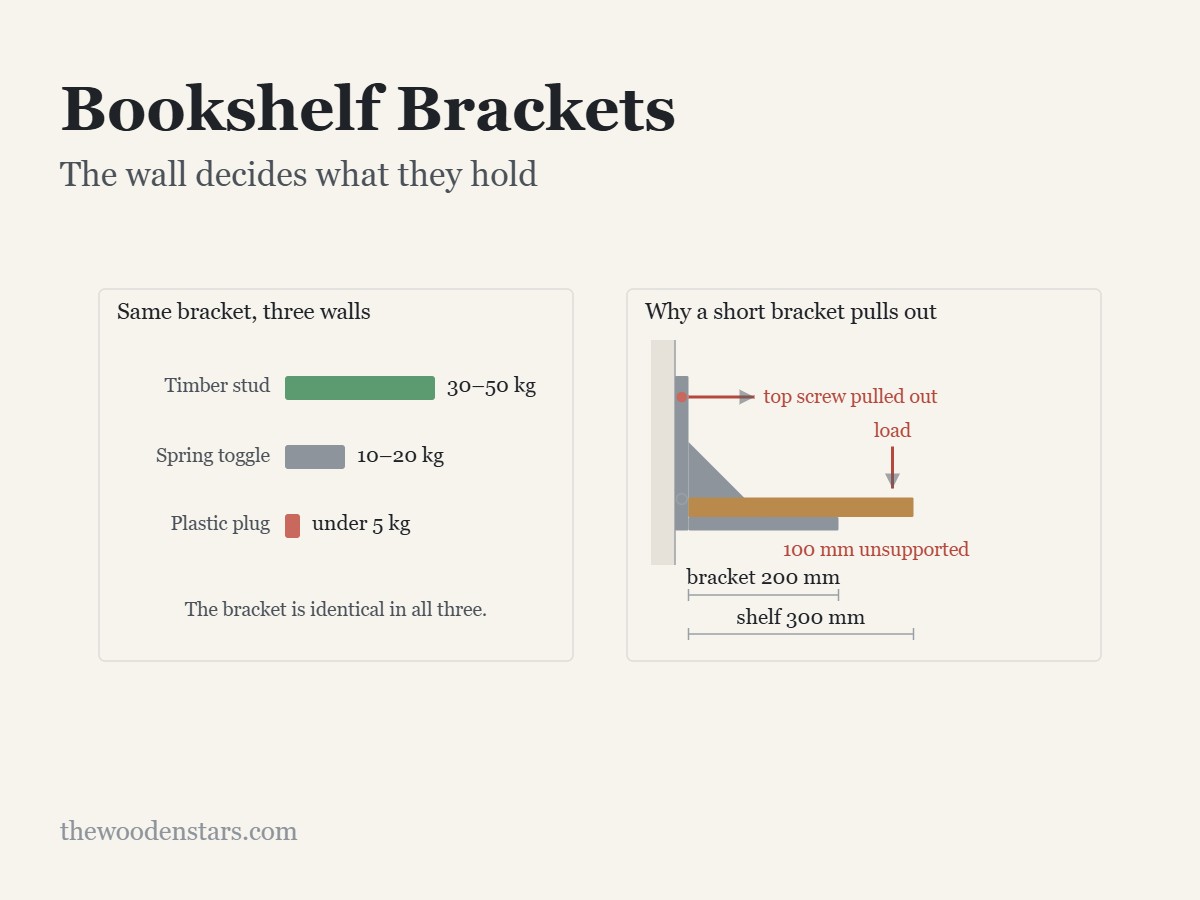
Find the studs first. A bracket screwed into a timber stud with two 60 mm screws holds 30–50 kg per bracket; the same bracket in bare plasterboard with the screws supplied holds 5 kg or less. If the studs do not fall where you want the shelf, use a twin-slot standard spanning several studs, or move the shelf. Bracket depth should be within about 25 mm of the shelf depth, and brackets should sit no more than 800 mm apart for solid wood, 600 mm for melamine board.

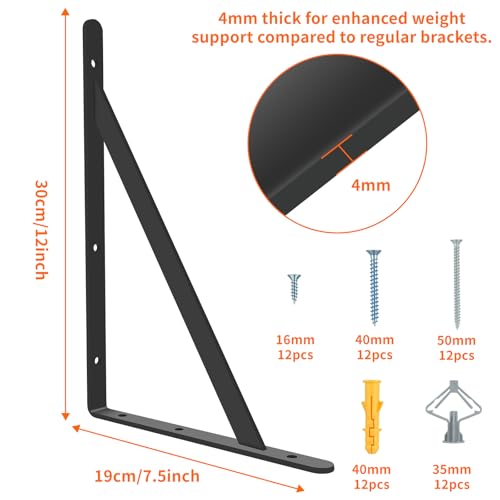
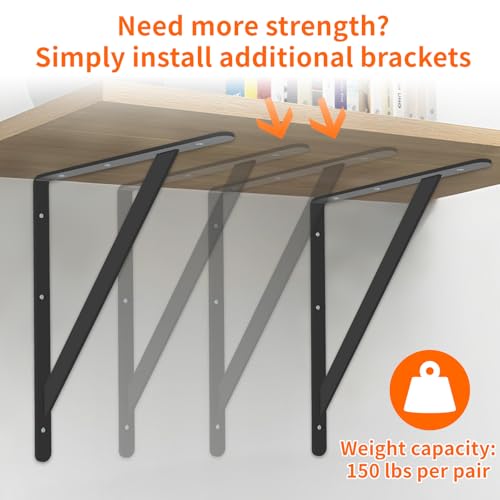
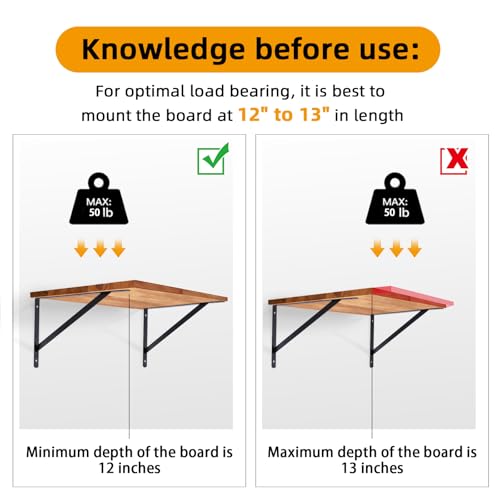
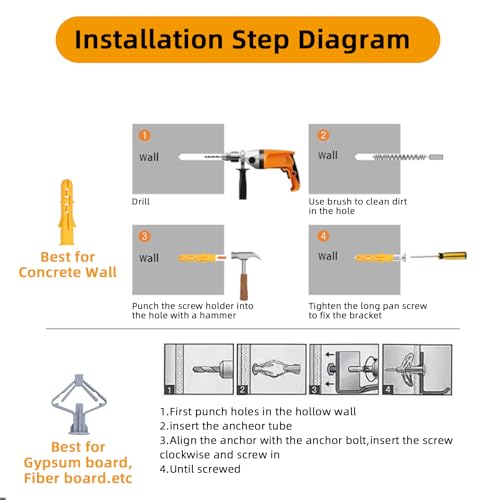
Prime Heavy Duty Shelf Brackets 12 x 8 inch, 6 Pack Wall Shelf Brackets with 90 Degree Triangle, Black Metal L Brackets, Shelves L Brackets(300x190mm)





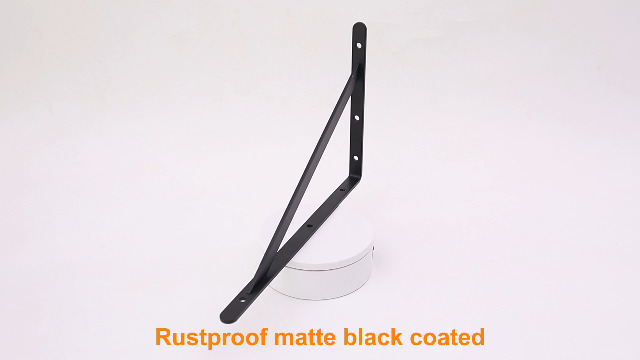
As an Amazon Associate we earn from qualifying purchases. Product prices and availability are accurate as of the date/time indicated.
Start here: a gusseted steel bracket is the one part of this job that is cheap to over-specify, and the fixings you pair it with matter more than the bracket you choose.
The four bracket families, and what each is actually for
Fixed L-bracket
Two arms at a right angle, one against the wall, one under the shelf. The workhorse, and the cheapest way to carry real weight — provided the wall arm reaches a stud. Look for a gusset (the triangular web between the arms) if the shelf will carry books: an ungusseted stamped bracket opens up like a hinge under load.
Twin-slot standard and clip
A vertical steel upright screwed to the wall, with brackets that hook into slots along it. Two advantages that matter: the uprights land on studs while the shelves sit wherever you want them, and shelf heights change later without new holes. This is the correct answer when the studs and the shelf positions disagree, which is most of the time.
Corbel
A decorative solid bracket, usually wood or cast metal, fixed under the shelf front. Corbels are chosen for appearance; structurally they behave like a short, deep L-bracket and are only as good as their fixing. A wooden corbel screwed to plasterboard carries no more than a steel one does.
Concealed rod (floating)
A steel plate with rods that bury inside holes drilled into the back of a thick shelf, so nothing is visible underneath. A different product with different rules — the shelf has to be thick enough to take the rod, and the capacity is set by the leverage on the rod rather than by the bracket arm. Covered separately in our guide to floating shelf brackets.
| Type | Typical load per pair, into studs | Adjustable later | Best for |
|---|---|---|---|
| Fixed L-bracket, gusseted | 60–100 kg | No | Books, kitchen, garage |
| Fixed L-bracket, stamped | 20–40 kg | No | Light display shelves |
| Twin-slot standard | 80–150 kg per upright pair | Yes, freely | Studs that do not line up, shelving runs |
| Corbel | 20–50 kg | No | Appearance, short spans |
| Concealed rod | 15–30 kg | No | Thick shelves, no visible support |
Those numbers assume the fixing holds. In practice the bracket is almost never the part that fails.
What is behind the wall decides everything
Before buying anything, find out what you are screwing into. A cheap stud detector, or knuckles and a 2 mm bit in an inconspicuous spot, settles it in a couple of minutes.
| Wall | Correct fixing | Safe load per bracket | Notes |
|---|---|---|---|
| Timber stud | 2 × 5 mm × 60 mm woodscrew | 30–50 kg | The only cheap way to carry books |
| Solid brick or block | 7 mm plug and 60 mm screw | 40–60 kg | Drill on hammer, blow the dust out |
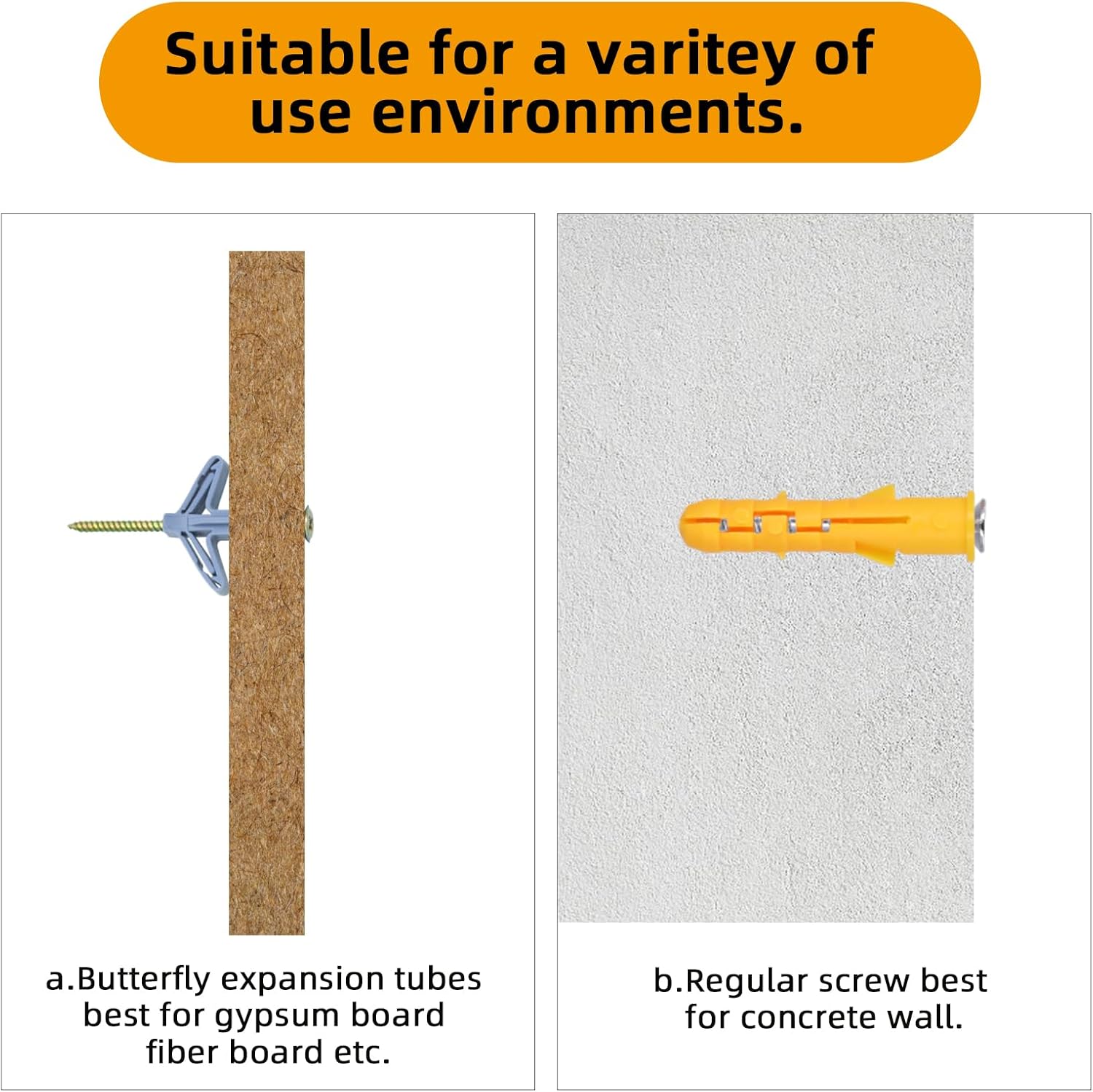
| Plasterboard, no stud | Metal toggle or spring toggle | 10–20 kg | Needs the cavity clear behind |
| Plasterboard, plastic plug | Supplied plastic plug | Under 5 kg | Not a shelf fixing |
| Dot-and-dab plasterboard | Long toggle to the blockwork | Varies | The gap behind is the problem |
The bottom two rows are where nearly all shelf failures come from. The plastic plugs in the bracket packet are sized for a picture, not a shelf of hardbacks — a metre of books is roughly 20 kg, and a full run of reference books more than double that.
Dot-and-dab walls deserve their own warning. The plasterboard is stuck to the blockwork on blobs of adhesive with an air gap between, so a toggle that opens into that gap is anchored to a sheet of gypsum and nothing else. The fixing has to be long enough to reach the block behind.
Sizing: depth, spacing, and how much shelf hangs past the bracket
Three numbers, and they are the ones people guess at.
- Bracket depth. Within about 25 mm of the shelf depth. A 300 mm shelf on a 200 mm bracket has 100 mm of unsupported front edge, and anything set on that front edge levers the bracket’s top fixing outwards. That leverage is what pulls screws from a wall.
- Bracket spacing. Set by the shelf material, not by the bracket. See the table below.
- End overhang. Keep the shelf ends within about 150 mm of the outer brackets. Longer than that and the ends deflect visibly under load even when the middle is fine.
| Shelf material | 18–19 mm thick | 25 mm thick |
|---|---|---|
| Solid hardwood | 800 mm | 1000 mm |
| Solid pine | 700 mm | 900 mm |
| Plywood | 750 mm | 950 mm |
| MDF | 600 mm | 750 mm |
| Melamine-faced chipboard | 500 mm | 600 mm |
If the shelf is already up and sagging between correctly spaced brackets, the shelf is the problem rather than the brackets, and the fix is a different one — that is span, and it is covered in our guide to a sagging bookshelf.
Where metal bookshelf brackets actually differ
Almost every bracket sold is steel, so “metal” is not the useful distinction. Three things are.
How it was made. A stamped bracket is folded from flat sheet and has a seam at the corner; it is the cheapest and the one that opens under load. A formed and welded bracket has a separate gusset welded in. A cast bracket is a single piece of iron or aluminium, rigid but brittle — it will not bend, and if overloaded it cracks without warning.
Thickness. Sold as gauge or millimetres. Under 2 mm is display-only. 2.5–3 mm is a proper book shelf bracket. Heavy-duty and worktop brackets run 4–6 mm. Thickness matters more than the size printed on the packet.
Finish. Powder coat is the durable one. Electroplated zinc looks similar in a photograph and marks easily. In a kitchen, bathroom or garage, powder coat or stainless is worth the difference; a painted bracket in a damp room rusts from the screw holes outwards.
Steel brackets can also mark a wall over time where the paint is soft. A slip of felt behind the wall arm — the same self-adhesive felt used under table levelling feet — prevents it.
Fitting so it is level and stays level
- Mark the studs first, then decide the shelf position. Not the other way round. Everything else follows from where the timber is.
- Fix one bracket, fully. Both screws, tight.
- Level from that bracket, not from the wall or the skirting. Neither is level. Rest a batten and a spirit level across to the next position and mark there.
- Drill the second bracket’s top hole only. Hang it on one screw, re-check level, then drill the lower hole. This is what makes a run of brackets line up.
- Load from the middle out. And check the screws once after a fortnight — timber studs move a little as they take up load.
One extra step for a shelf carrying serious weight: put a small dab of wood glue on the screw threads going into a stud. It does nothing for capacity, but it stops the slow loosening that comes from a shelf being loaded and unloaded over years.
What to buy
- Gusseted steel L-brackets, 2.5 mm The default for a shelf carrying books On Amazon →
- Twin-slot standards and brackets When the studs and the shelf positions disagree On Amazon →
- Spring toggle fixings The only honest plasterboard option, where no stud is reachable On Amazon →
- Stud detector Two minutes, and it decides which bracket you need On Amazon →
- Spirit level, 600 mm Long enough to span two bracket positions
What to buy


What the big-box aisle carries, and what to look for in it
The bracket aisle in a large hardware store is arranged by size and price, which is exactly the wrong order. Two habits make it usable.
- Ignore the stated load rating on the packet. It is measured in a laboratory fixing, usually steel or solid timber, and tells you nothing about your wall. The wall is the limit.
- Pick the bracket up and try to twist it. A gusseted 2.5 mm bracket does not move in your hands. A stamped one flexes, and you can feel the corner seam give. That two-second test sorts the aisle faster than any label.
Buy the fixings separately, and to suit your wall. Bracket packets include plastic plugs because they are nearly free, not because they are right, and the toggles or plugs you actually need are a small fraction of what the shelf costs.
Questions we get asked
How much weight can a bookshelf bracket really hold?
The bracket is rarely the limit. A gusseted 2.5 mm steel bracket screwed into a timber stud will carry 30–50 kg on its own, more than the shelf usually will. In plasterboard with the supplied plugs the same bracket carries under 5 kg. Quote the fixing, not the bracket, when you are working out whether a shelf is safe.
Can I put up a book shelf with no studs where I want it?
Yes, with spring toggles, and with a lower expectation — 10–20 kg per bracket, so more brackets, closer together, and no reference books. The better answer is usually a twin-slot standard: the uprights go on the studs wherever they happen to be, and the shelves then sit at any height you like.
Do brackets go under the shelf or behind it?
Under. The horizontal arm supports the shelf and the vertical arm takes the load into the wall. Brackets fixed to the back edge of a shelf rely entirely on screws in end grain or in the shelf’s face, which is a much weaker joint and the reason those shelves droop at the front.
Are wooden brackets as strong as metal ones?
A well-made hardwood corbel is strong enough for most shelves; the weakness is the fixing rather than the timber, and corbels usually have fewer and shallower screw positions than a steel bracket. If you like the look, use them where the load is moderate and make sure they hit studs.
How many brackets for a 1200 mm shelf?
Three for solid wood or plywood, and three for MDF or melamine as well — with melamine the middle bracket is not optional, because 1200 mm exceeds its 500 mm spacing limit by a wide margin. Two brackets on a 1200 mm melamine shelf will bow within a few months and will not recover.