Vintage Dresser Pulls: Dating the Hardware, Matching the Centres
The Wooden Stars is a participant in the Amazon Services LLC Associates Program. We may earn a commission when you buy through links on our site, at no extra cost to you.
Replacing hardware on an old dresser is a different job from replacing it on a new one, and the reason is that old furniture was drilled to imperial sizes that no longer sit on a shop shelf.
The pulls are also a different design. A vintage bail pull hangs from posts and swings; a modern pull is rigid. That changes what fits, what looks right, and what you can salvage.
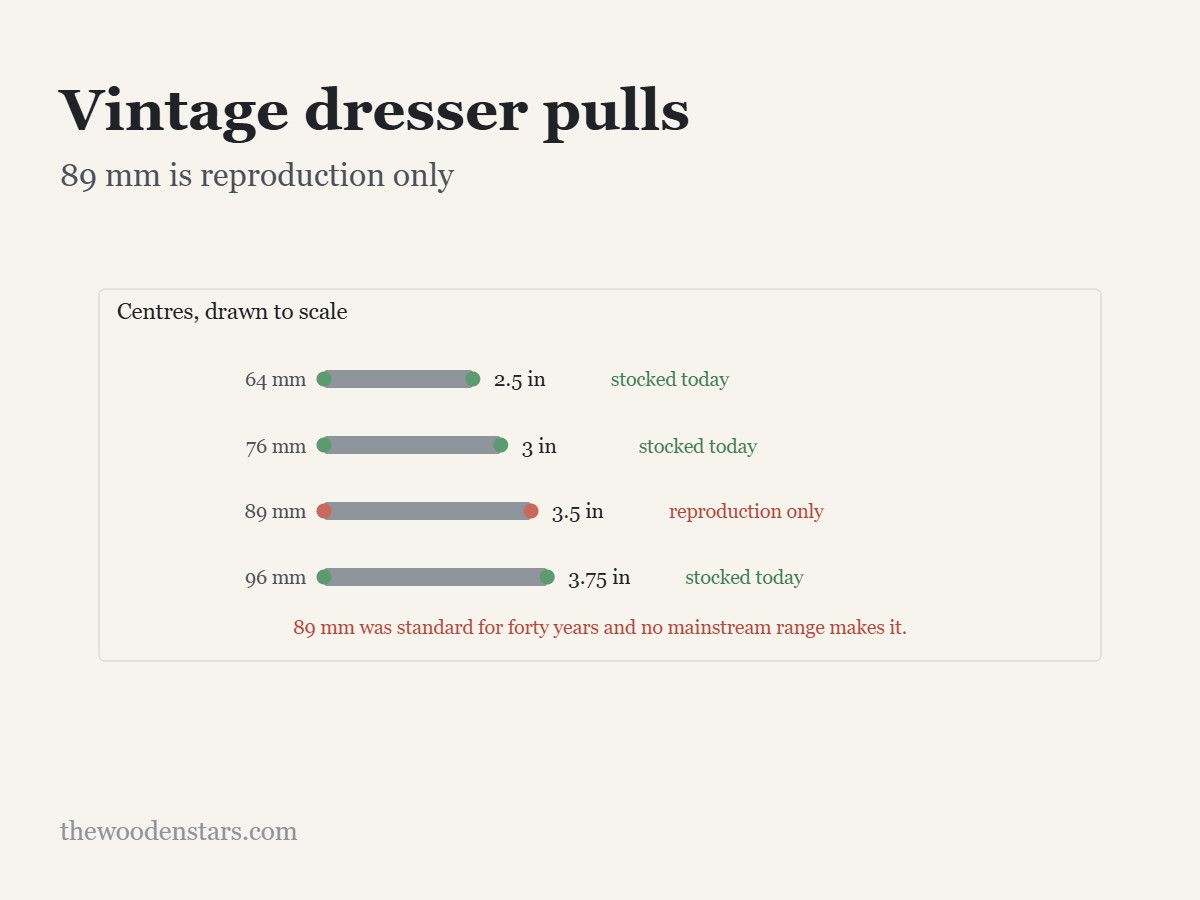
Measure the centres — hole to hole — before anything else. Vintage American pieces are usually 3 inch (76 mm), 3.5 inch (89 mm) or 2.5 inch (64 mm); 89 mm in particular is not a modern stock size and needs a reproduction supplier. If the centres do not match anything available, a back plate covers the old holes and frees you to choose. Reproduction hardware is widely made for the common periods, so date the piece first: bail pulls on rosettes suggest pre-1900, waterfall and bakelite suggest 1930s–40s, and plain wooden or brushed steel suggests 1950s–60s.

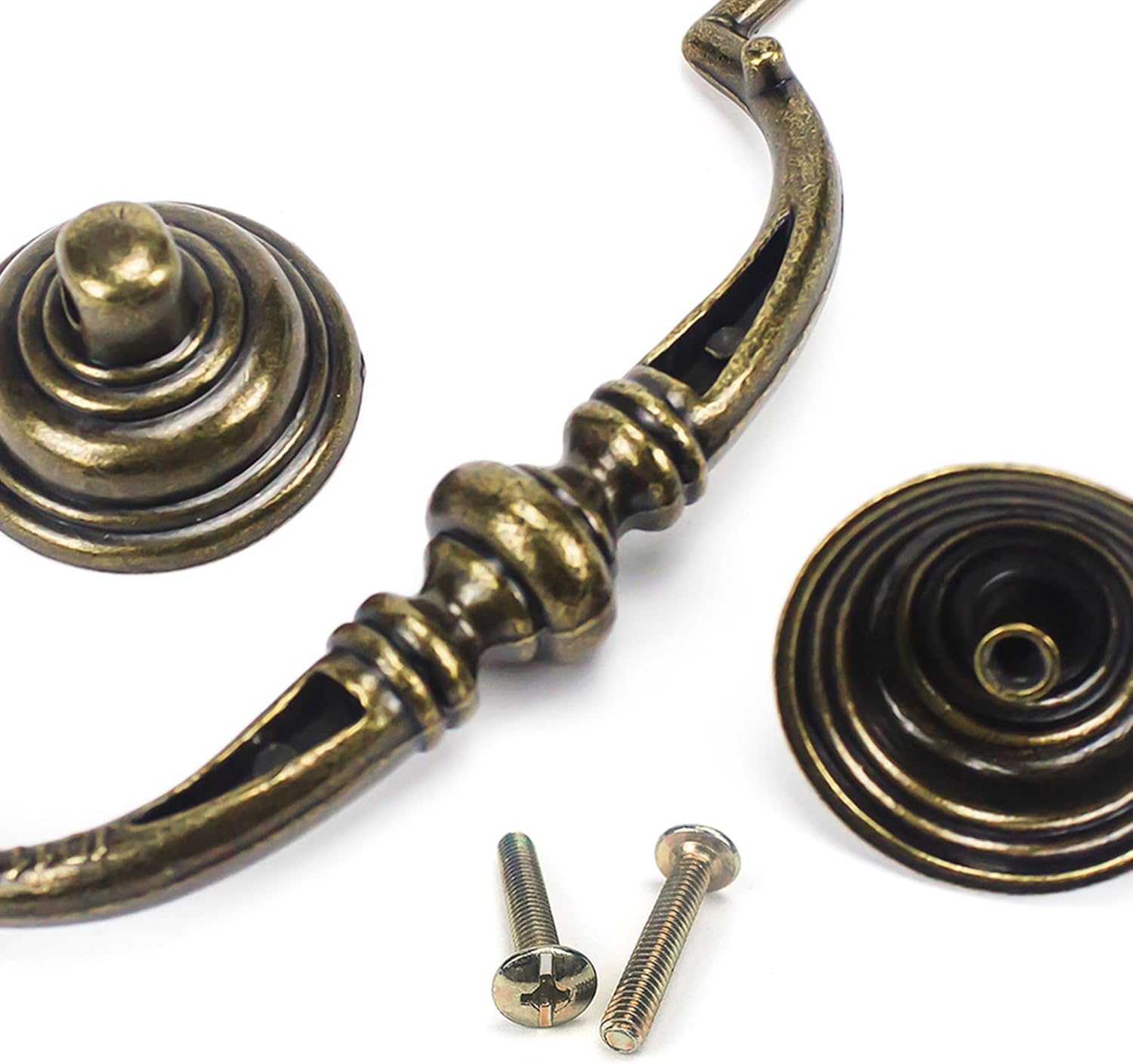
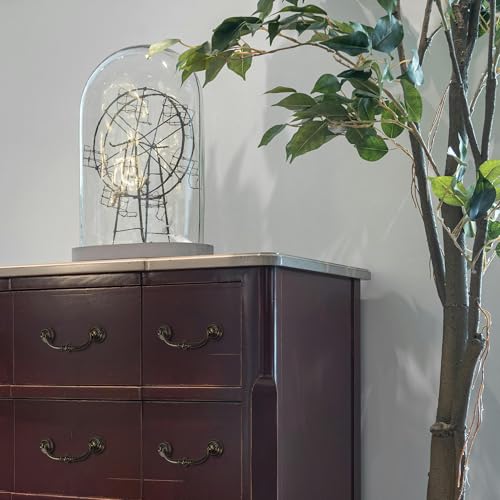
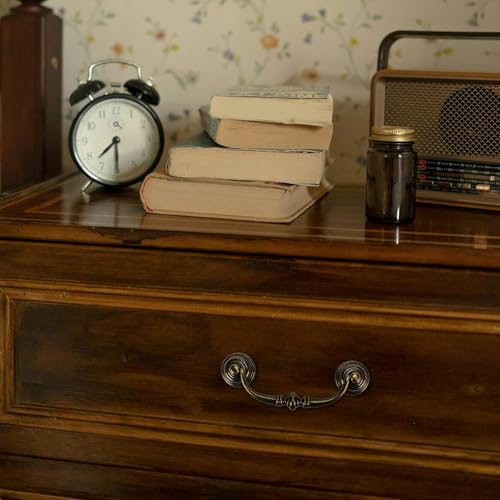
Prime 6 PCS Antique Brass Metal Drop Bail Pulls,3-1/2" Center to Center


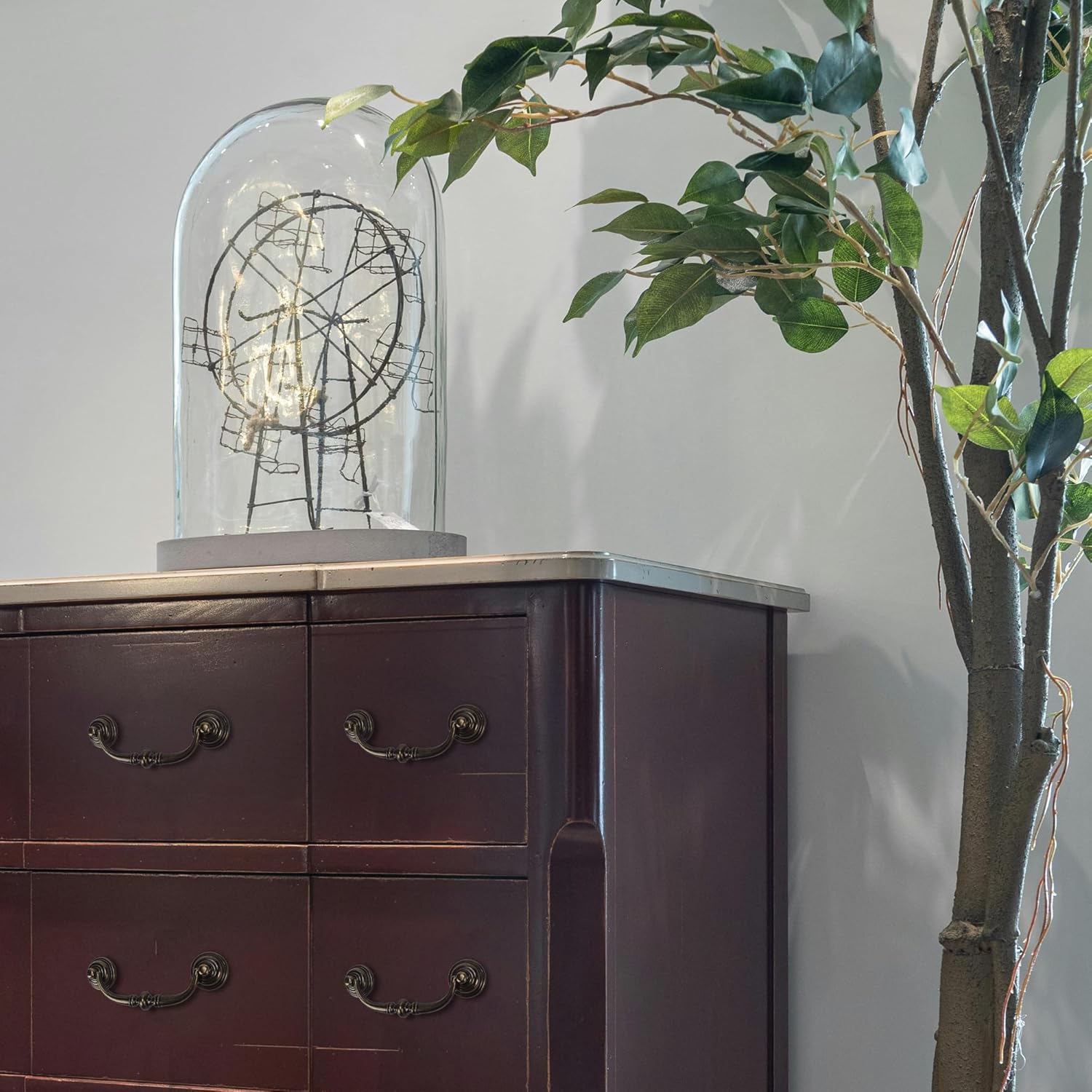


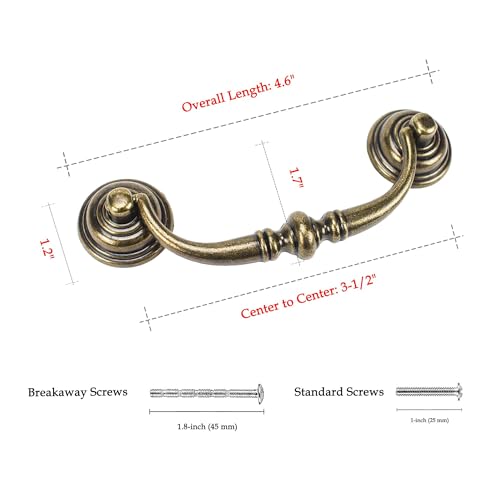
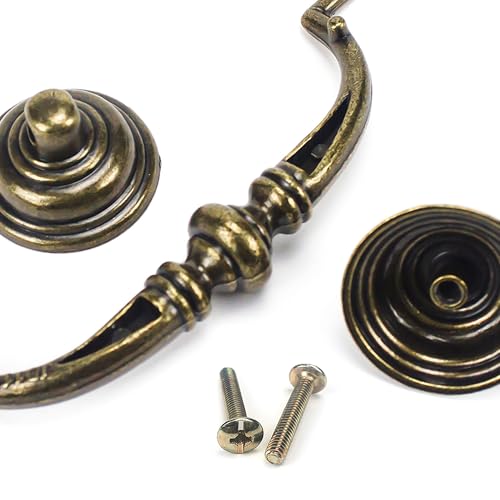
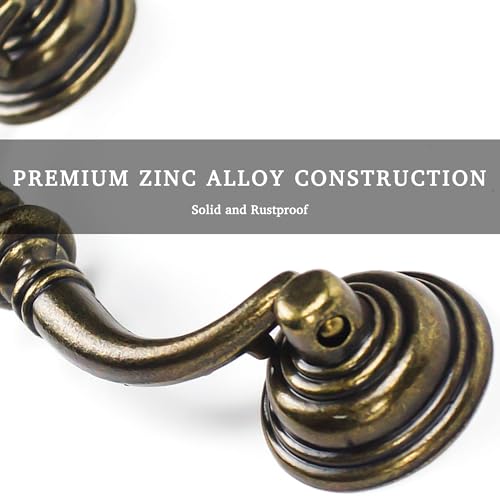

As an Amazon Associate we earn from qualifying purchases. Product prices and availability are accurate as of the date/time indicated.
Start here: measure the centres first. If they come out at 89 mm, this is the reproduction size that no mainstream range makes.
Measure first, date second
The centres decide what is physically possible; the period decides what looks right. Do them in that order, because a beautiful period-correct pull at the wrong centres is no use.
| Centres | Imperial | Era and origin | Modern stock size? |
|---|---|---|---|
| 64 mm | 2.5 in | Small drawers, all periods | Yes |
| 76 mm | 3 in | The most common American vintage size | Yes |
| 89 mm | 3.5 in | Common 1900–1940, US | No, reproduction only |
| 96 mm | 3.75 in | European, and post-1970 US | Yes |
| 102 mm | 4 in | Larger drawers, 1900–1940 | Rare |
| Single hole | — | Knobs, and most bail pull posts | Yes |
89 mm is the one that traps people. It is a hair over 3.5 inches, it was extremely common for forty years, and it is not a size any mainstream range makes. If you measure 89 and find nothing, that is why — go to a reproduction supplier rather than assuming you measured wrong.
How to take the measurement, and why the handle length is not a fitting dimension, is set out in our guide to dresser knobs and pulls.
Dating the piece from the hardware it has
Even damaged original hardware tells you what the piece is, and therefore what reproduction to buy.
- Bail pull on two rosettes, cast, often with a keyhole escutcheon: Victorian through Edwardian, roughly 1870–1910.
- Bail pull on a single stamped back plate, thinner metal: 1910–1930.
- Waterfall fronts with bakelite or wooden pulls, often teardrop shaped: 1930s–40s. Bakelite is warm to the touch and makes a dull click, not a ring.
- Plain rectangular metal pulls, brushed or anodised: 1950s–60s mid-century.
- Wooden knobs turned to match the timber: any period, and often a later replacement.
Screw heads are a second clue. Slotted screws throughout suggest pre-1960; Phillips heads appeared in furniture from the 1940s and dominate after. A piece with Phillips screws holding “Victorian” hardware has been re-done at some point.
When the centres do not match
Four options, best first.
- Reproduction hardware at the original centres. Made for exactly this, widely available for the common periods, and it is the answer that keeps the piece looking like itself.
- A back plate. Covers the old holes entirely, so you can use any centres you like. Period-appropriate plates exist; a plain one reads as a deliberate choice rather than a repair.
- Two knobs instead of one pull on a wide drawer, using the existing holes. Often looks deliberate.
- Fill and re-drill. The last resort. Wood filler in a small hole under daily load fails — glue a hardwood dowel in, let it cure, and drill through that.
What not to do: force a modern 96 mm pull into 89 mm holes by springing the posts. It works for a week, then the posts fatigue and the pull comes off in someone’s hand.
Salvaging what is there
Old hardware is often better than what you would replace it with, and the problem is usually dirt rather than damage.
- Take it off the drawer first. Every cleaner marks a finished front, and the mark is worse than the tarnish.
- Soak in warm soapy water, not solvent, and use a soft brush in the detail. Most of what looks like corrosion is a century of wax and skin oil.
- Do not polish it bright. The dark surface is what makes an old piece look old, and it takes decades to come back. Whether hardware is solid brass or plated — which decides whether polishing is even survivable — is covered in our guide to brass dresser hardware.
- Straighten a bent bail in a vice with wooden packing, gently and in stages. Cast bails snap; stamped ones bend back.
- Keep the odd one out. If one pull of eight is missing, a matched reproduction set for the whole piece looks better than seven originals and one near-match.
Screws, which are always the wrong length
Vintage drawer fronts are commonly 22–25 mm of solid timber, sometimes more with an applied moulding, and reproduction hardware ships with a screw sized for 16 mm board. The thread is 8-32 UNC on virtually everything, so a longer screw bought loose fits any of it.
On bail pulls the posts pass through and are secured with a nut on the inside rather than a screw, and those posts are also sold by length. Measure the front thickness before ordering, because a post that is too short cannot be made to work.
What helps
- Antique brass bail pulls, 3.5 in The reproduction size no mainstream range makes On Amazon →
- Back plates Covers old holes and frees you to choose the centres On Amazon →
- 8-32 screws, assorted Vintage fronts are thicker than any supplied screw assumes On Amazon →
- Digital caliper Reads 89 mm against 96 mm, which the eye cannot
What to buy


Questions we get asked
What size are vintage drawer pulls?
Most commonly 3 inch (76 mm) or 3.5 inch (89 mm) centres on American pieces from 1900 to 1940, with 2.5 inch on smaller drawers. 89 mm is not a modern stock size, which is why so many searches come up empty.
Can I put modern pulls on an antique dresser?
If the centres match, yes — 76 mm is a current size. If they do not, use a back plate to cover the old holes rather than forcing or re-drilling. Never spring a modern pull’s posts to fit wider or narrower holes; they fatigue and fail.
How do I date dresser hardware?
Bail pulls on two cast rosettes suggest 1870–1910; a single stamped back plate suggests 1910–1930; bakelite or wooden teardrops suggest the 1930s–40s; plain brushed metal suggests the 1950s–60s. Slotted screws throughout point to pre-1960.
Should I clean or replace original hardware?
Clean, if it is complete and sound — original hardware is usually better made than its replacement and it is part of what the piece is. Soap and water first, and stop before polishing it bright.
What if one pull is missing?
Replace the whole set with a matched reproduction rather than hunting one piece. Seven originals and one close-but-not-quite match is more noticeable than eight consistent reproductions, and you can keep the originals in a bag for a future owner.