Bed Frame Center Support Legs: When You Need One, and Which Height
The Wooden Stars is a participant in the Amazon Services LLC Associates Program. We may earn a commission when you buy through links on our site, at no extra cost to you.
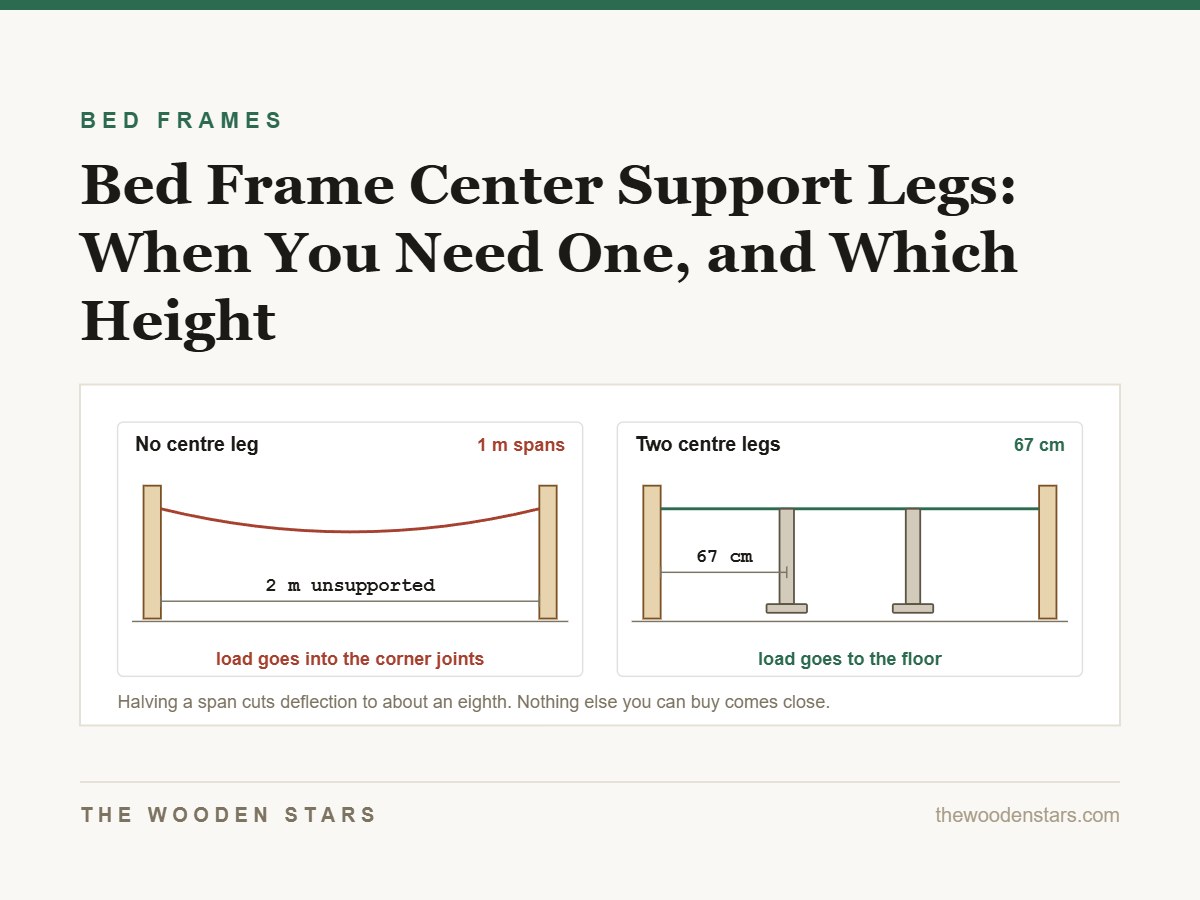
The centre support leg is the part that ships loose in the box, gets put to one side during assembly, and is never seen again. It is also the part that decides whether a queen or king bed lasts ten years or two, because without it the centre rail is a beam spanning two metres with a mattress and two people on it.
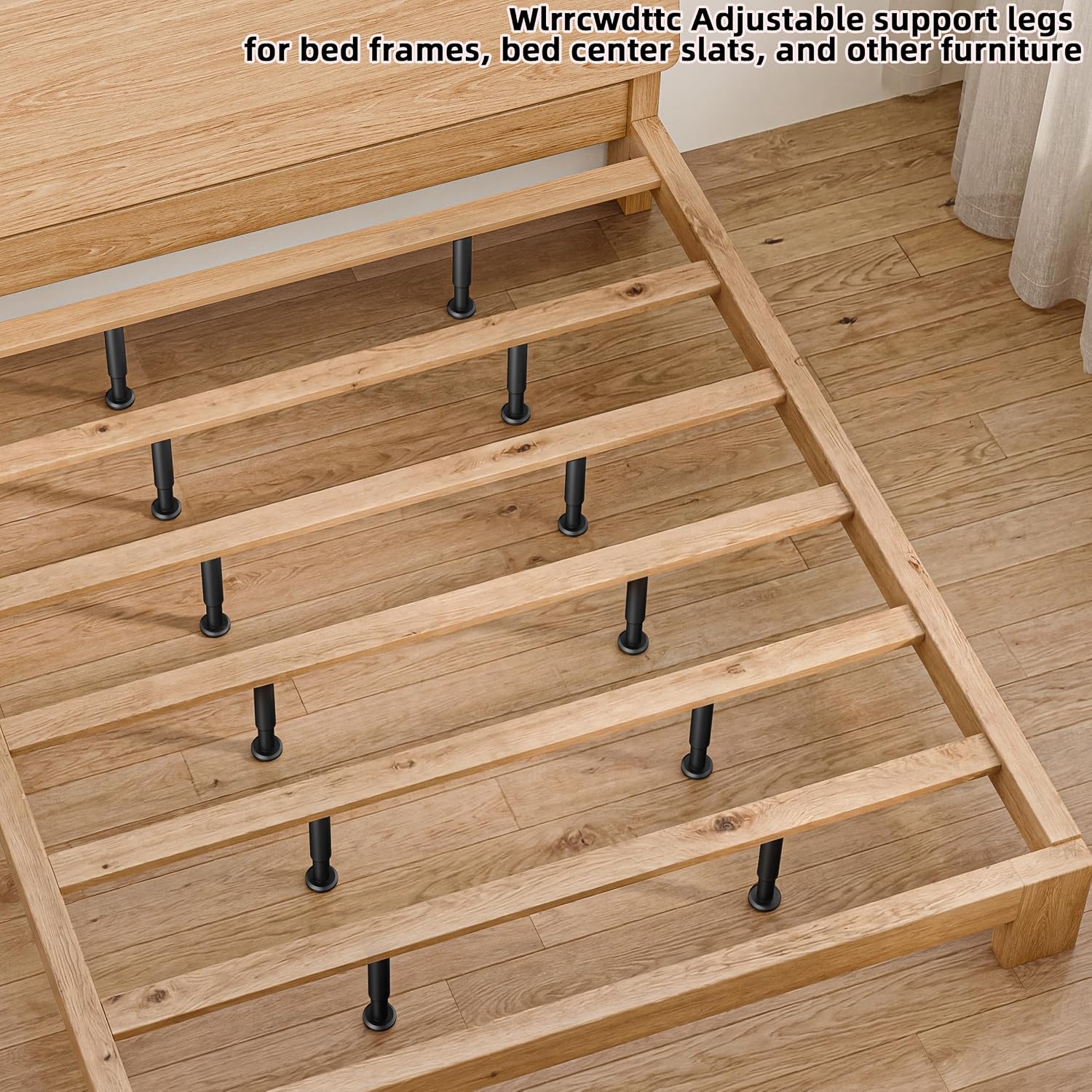
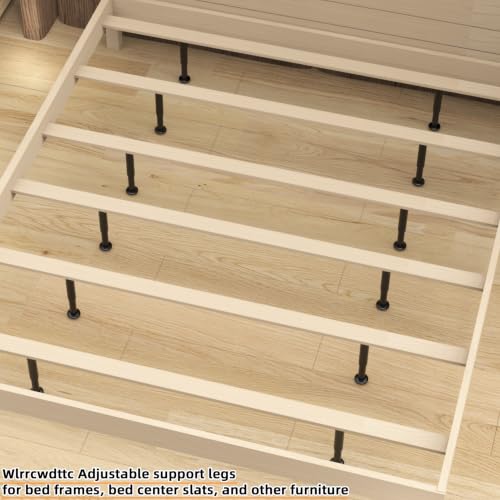
Any bed full-size or wider needs a centre rail with at least one leg to the floor: one for a full or queen, two to three for a king or Cal king, spaced no more than about 1 m apart. Set the leg so it is in firm contact with the floor without lifting the rail — a leg 2 mm short does nothing until you lie down, and then it taps. Measure from the underside of the centre rail to the floor to get the height.
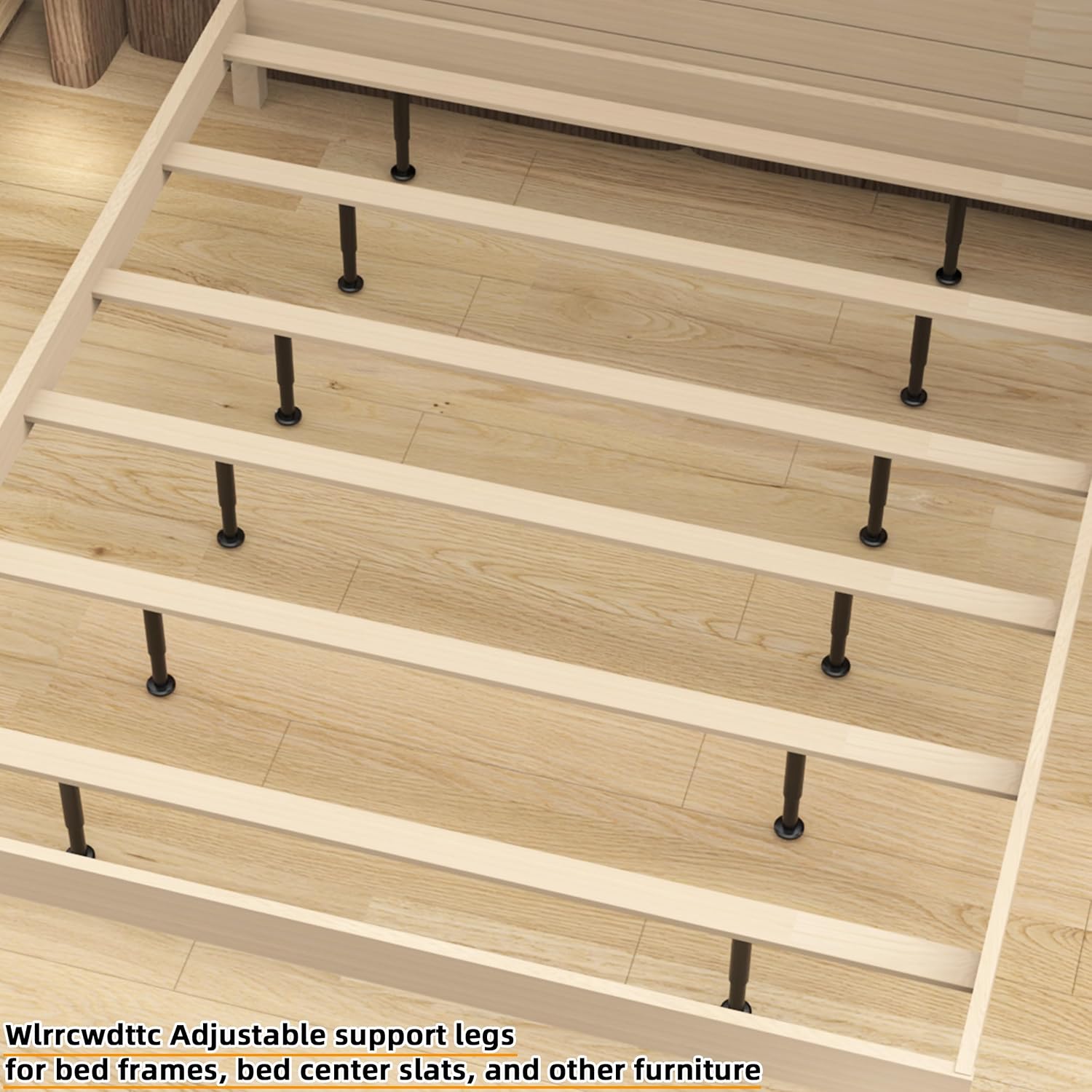
Start here: a four-pack of adjustable legs covers a king, and adjustable is what saves you cutting a wooden block twice.

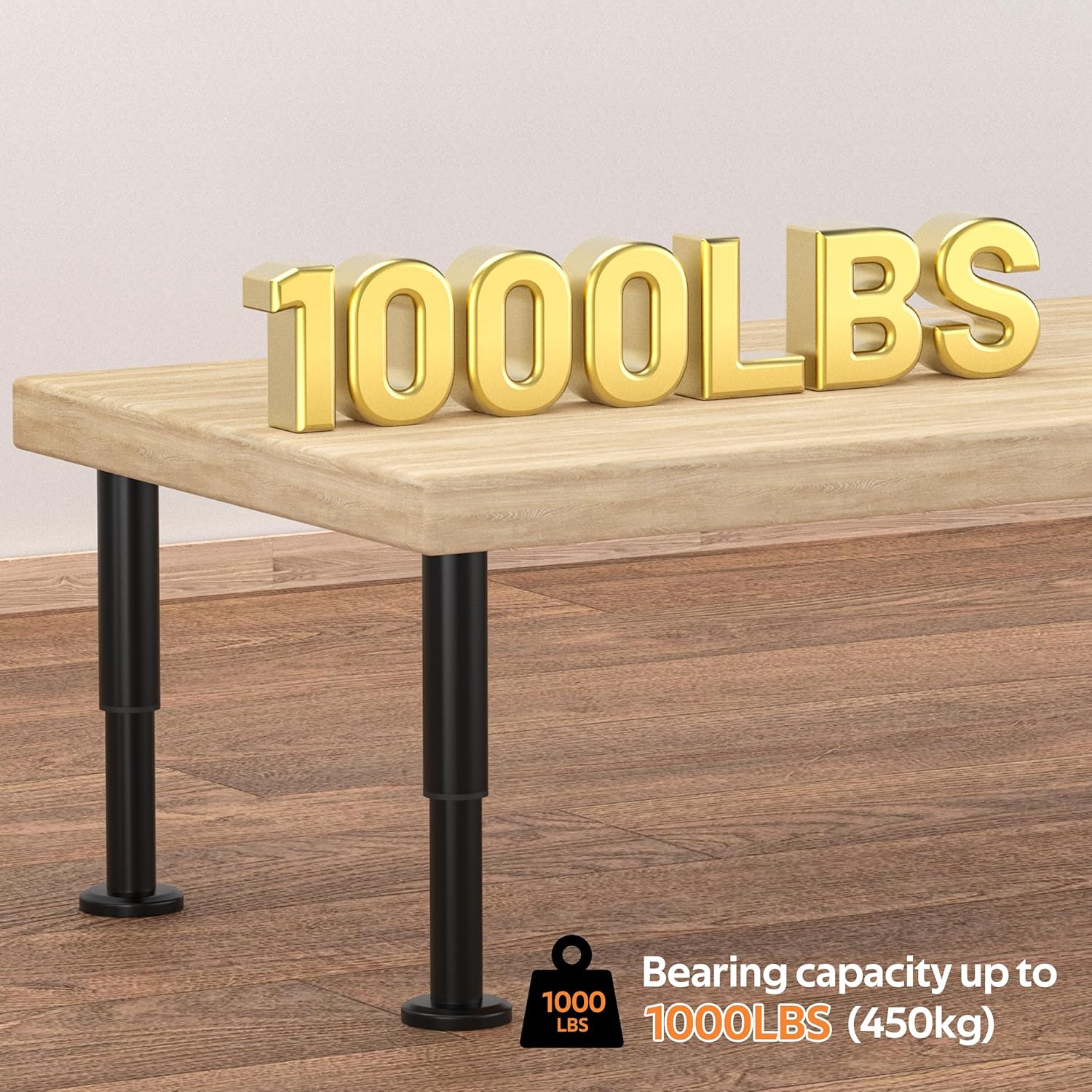
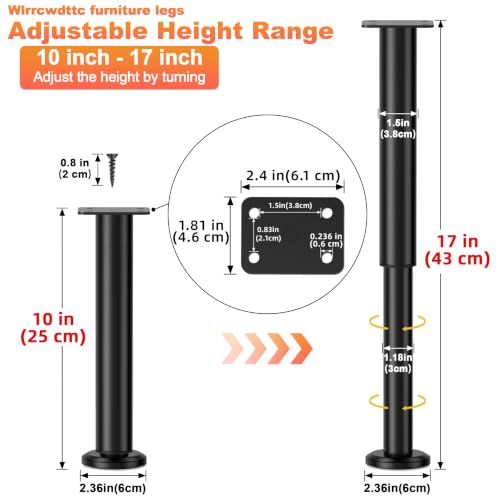
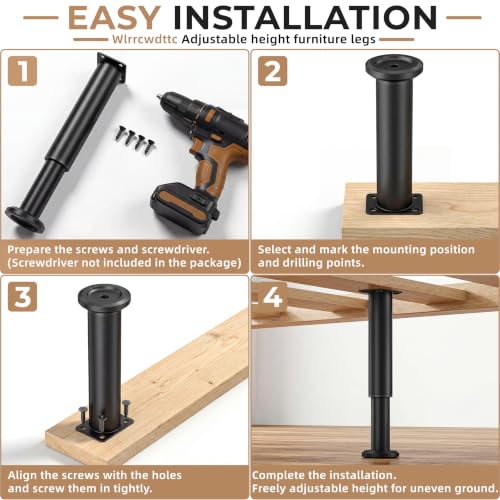
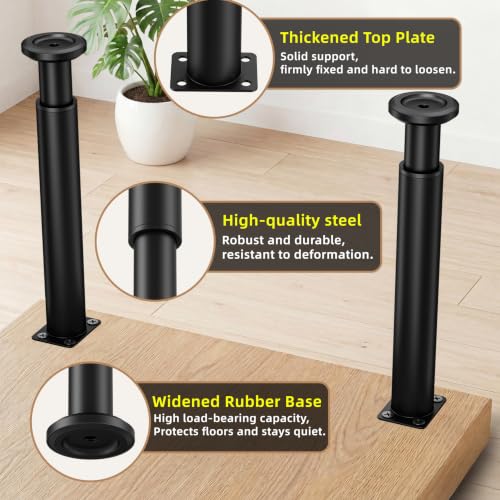
Prime Wlrrcwdttc 4 Pcs Adjustable Bed Center Support Legs 10-17 inch for Bed Frame/Bed Center Slat, Metal Adjustable Furniture Legs for Bed/Cabinet/Sofa/Dresser/Couch/Table,Heavy Duty Bed Replacement Legs









When you actually need one
| Bed size | Centre rail | Legs to floor | Max spacing between legs |
|---|---|---|---|
| Twin / Single | Not required | 0 | — |
| Twin XL | Optional | 0–1 | — |
| Full / Double | Required | 1 | — |
| Queen | Required | 1–2 | 1 m |
| King | Required | 2–3 | 1 m |
| Cal King | Required | 2–3 | 1 m |
| Bunk / loft bed | Required | Per manufacturer | Follow the instructions exactly |
The reason the numbers jump at full-size is simple: below that width, the slats span a distance solid wood handles comfortably. Above it, they do not, and the centre rail exists to halve the span. A centre rail with no leg halves the span of the slats and then transfers all of that load into the head and foot rails, which is why the joints at the corners of an unsupported king loosen first.
Measuring for the right height
One measurement, taken in the right place: from the underside of the centre rail down to the floor, with the bed assembled and empty.
That is the length the leg must reach. Then choose an adjustable leg whose range brackets it comfortably — if your measurement is 25 cm, a leg adjusting from 25 to 43 cm is at the very bottom of its range and will be at its least stable. Aim for the middle of the range.
| Adjustment range | Suits | Notes |
|---|---|---|
| 16–28 cm | Low platform beds | Check the leg’s collapsed height clears the rail |
| 25–43 cm | Standard frames | The most common requirement |
| 30–50 cm | Tall frames, storage beds | Heavier duty needed at this height |
| Fixed height | Only when you know the exact figure | No tolerance for floor variation |
Three practical cautions:
- Carpet. A leg set on carpet sinks into the pile under load. Set the height with the bed loaded, or fit a wider foot plate to spread the load.
- Floor slope. If you are fitting two or three legs, each needs adjusting individually. Do not set them all to the same number.
- Storage drawers. Under-bed drawers and a centre leg compete for the same space. Legs with an offset foot or a side-mounted bracket exist for exactly this.
Fitting one properly
- Assemble the bed and fit the slats before setting the leg height, so the rail is in its loaded position.
- Fix the top plate to the underside of the centre rail with screws short enough not to come through the top of the rail. This is the mistake that ruins a rail: a 40 mm screw into a 30 mm rail.
- Adjust so the leg is in firm contact — you should not be able to slide a sheet of paper under the foot — but not so long that it visibly lifts the centre of the bed. Lifting the rail transfers load into the slats in the wrong direction.
- Lock the adjustment. Almost every adjustable leg has a lock nut or a set screw, and almost nobody tightens it. An unlocked leg rotates itself shorter over months, which is where the thump comes back from.
- Load the bed and re-check after a week.
Symptoms of a missing or badly set leg
- A thump or deep creak from the middle of the bed when someone moves — the rail flexing down and back. Distinct from the higher squeak of a loose joint at the corners.
- A visible dip along the centre line of the mattress that a new mattress does not cure.
- Slats breaking near the middle of their span, repeatedly, in the same area.
- Corner joints loosening faster than they should, because they are carrying load the centre leg should take.
If the noise is at the corners rather than the middle, the leg is not your problem — work through the order in wooden bed frame squeaking instead. And if slats are breaking, check the spacing at the same time, using the limits in bed slat replacement and spacing.
What you need
- Adjustable centre support legs, 4-pack For a king or Cal king needing 2–3 legs On Amazon →
- Adjustable centre support legs, 2-pack Full or queen, one or two legs On Amazon →
- Low-profile centre legs For platform beds with limited clearance On Amazon →
- Tape measure Underside of centre rail to floor, bed empty
- Short wood screws Short enough not to break through the rail
What to buy
Buy by how many legs the size needs: a four-pack for a king or Cal king, a pair for a full or queen, and the low-profile version if a platform frame leaves you little clearance.


What to look for in a leg
- Steel, not plastic-bodied. The load here is real — a couple, a mattress and the frame, concentrated on one or two points.
- A wide foot. A 25 mm foot on a wooden floor under 100 kg will dent it. Look for 50 mm or more, or add a pad.
- A lock nut, not just friction. Friction adjusters walk.
- A top plate with at least three screw holes, so the leg cannot pivot on a single fixing.
- The right collapsed height. A leg that will not go short enough is as useless as one that will not go long enough — check the minimum, not just the maximum.
Questions we get asked
My bed came without a centre leg. Does it need one anyway?
If it is full-size or wider and has a centre rail, yes — the rail is there because the designer expected a leg under it. Some beds do ship genuinely leg-free with a very deep centre rail acting as a beam, but they are the exception and the rail is obviously heavier. If in doubt, fit one; a leg under a rail that did not need one does no harm.
How do I know if the leg is doing anything?
Lie on the bed and have someone try to slide a sheet of paper under the foot. If it slides freely with the bed loaded, the leg is too short and is carrying nothing. If it will not slide with the bed empty and the rail looks pushed up, it is too long.
Can I use a block of wood instead?
Yes, and for a permanent installation on a level floor it is fine — cut to length, glued and screwed to a base plate. The reason adjustable legs are worth it is that floors are not level and beds get moved. A wood block also has no fine adjustment, so getting it right means cutting it twice.
Should the leg sit on the floor or on the frame’s side rail?
The floor. A leg that transfers load into the side rails has not removed the load, only moved it, and side rails are the joints most likely to loosen. The whole point is to take the centre load out of the frame’s joinery.
Two legs or three on a king?
Measure the centre rail. If the unsupported span between legs would exceed about a metre, add another. On a 200 cm king, two legs give spans of roughly 67 cm and that is comfortable; one leg gives two spans of a metre each, which works but flexes. Three is not overkill on a heavy latex mattress.