Bed Frame Brackets and Rail Hooks: Which System You Have
The Wooden Stars is a participant in the Amazon Services LLC Associates Program. We may earn a commission when you buy through links on our site, at no extra cost to you.
Bed frame hardware is the one category where buying the right part is genuinely difficult, because there are half a dozen incompatible systems, most beds arrive with no documentation, and the parts are hidden inside the joint you are trying to identify.
The good news is that you only need to recognise which system you have. Once you know that, the replacement is cheap and takes minutes.
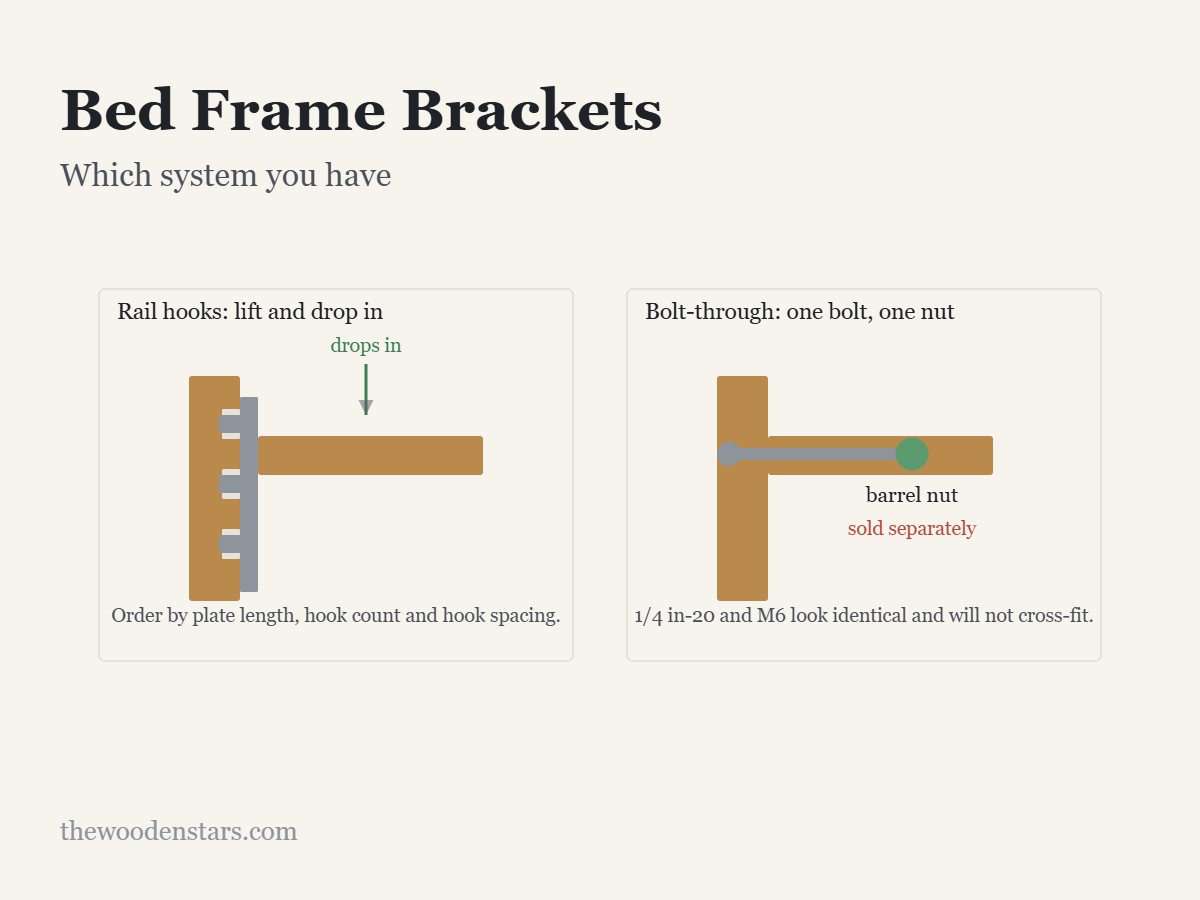
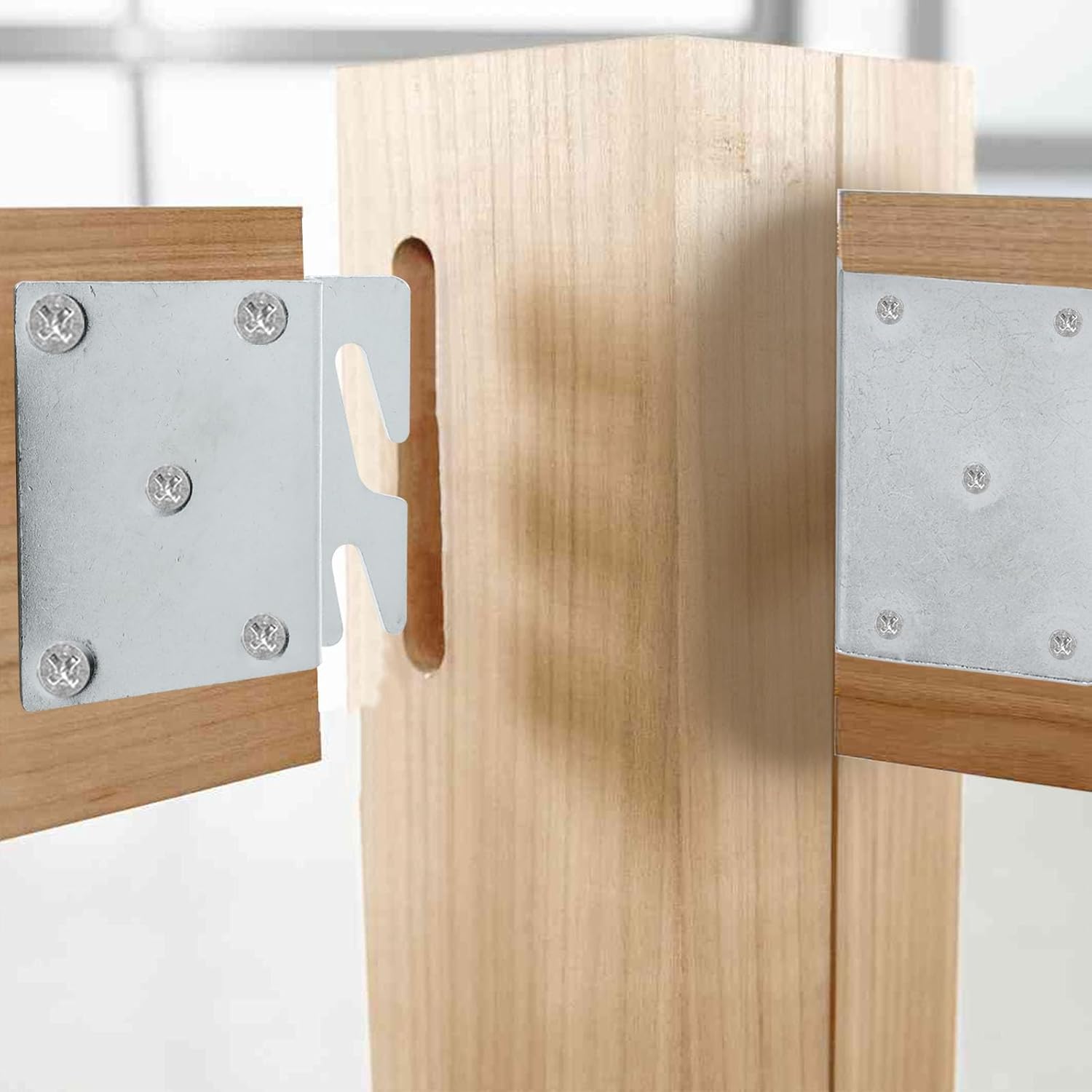
Look at how the side rail meets the headboard post. If there is a flat steel plate with hooks on the rail dropping into slots on the post, you have rail hooks — the most common system, sold by plate length and hook count. If there is a bolt going through the post into the rail end, you have bolt-through, and you need the bolt diameter and length, usually 1/4 in-20 or M6. If the rail sits on a wooden ledger strip with no metal at all, it is a traditional joint and the fix is glue and screws, not hardware. Photograph the joint before you take anything apart.

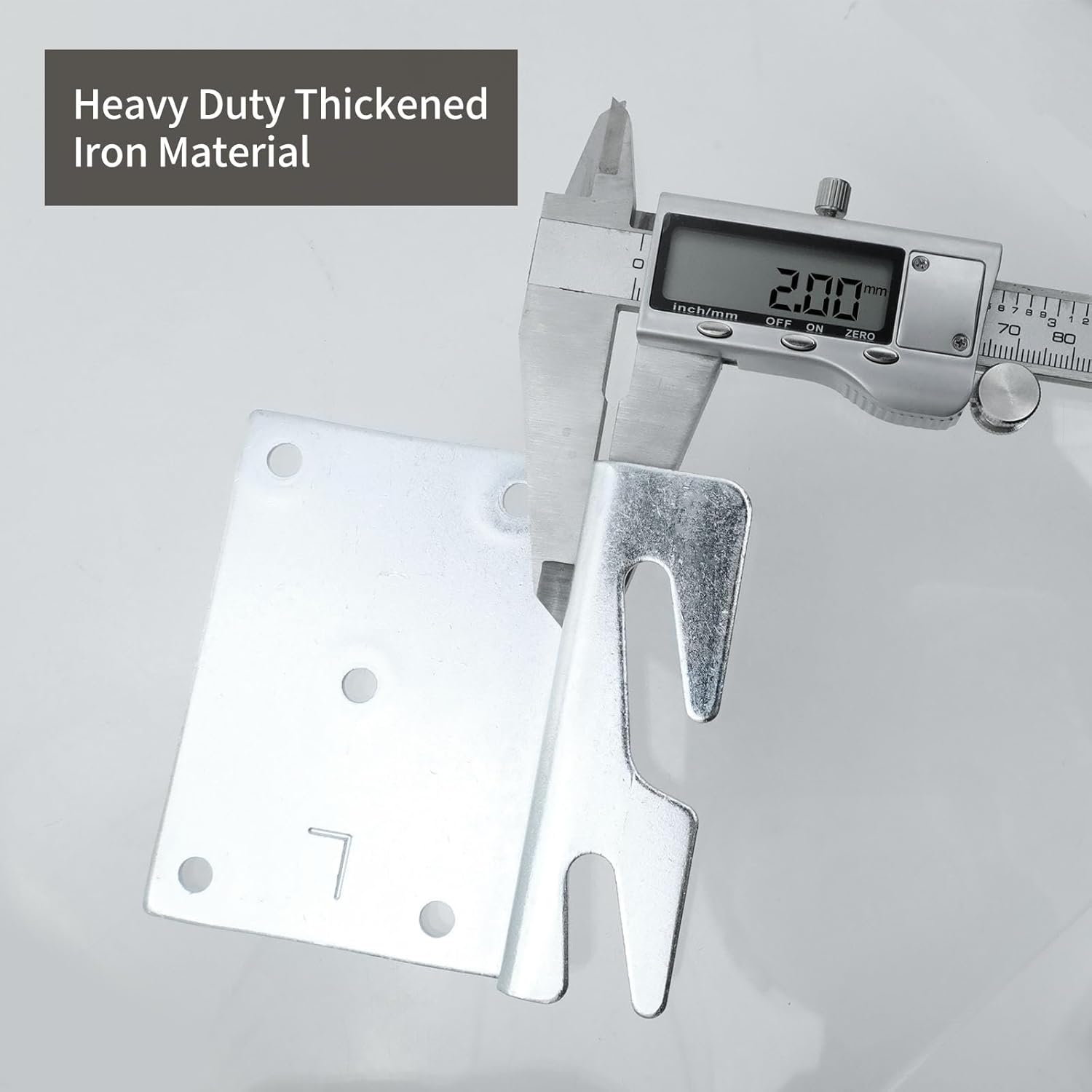
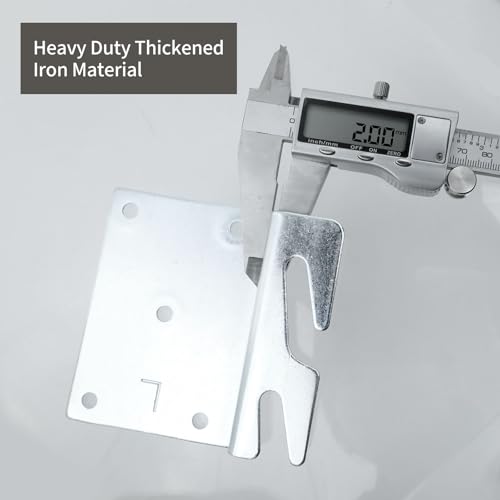
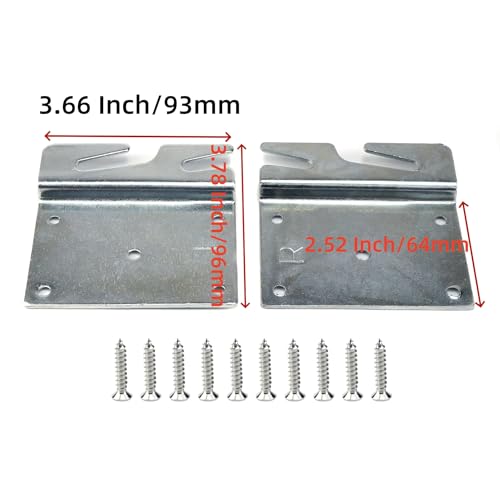
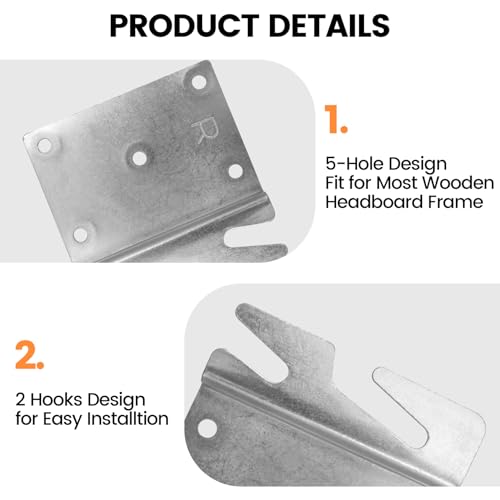
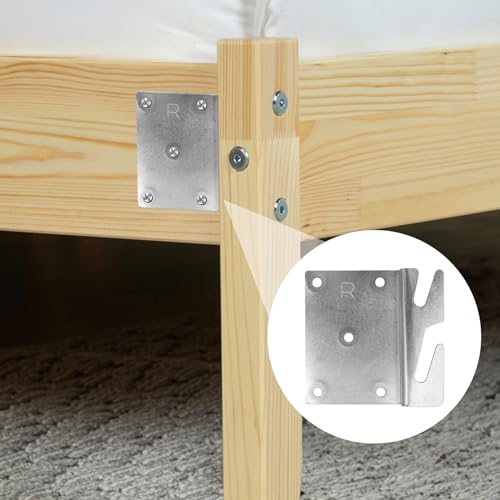
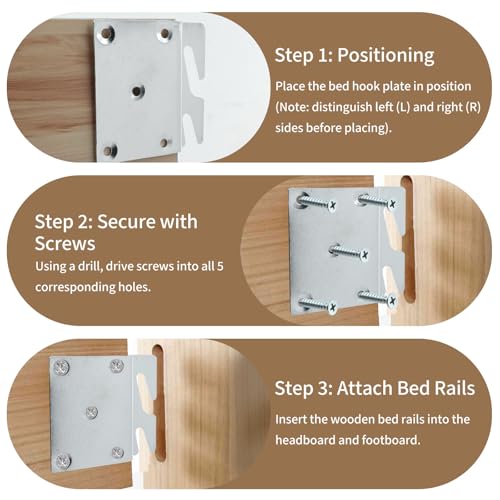
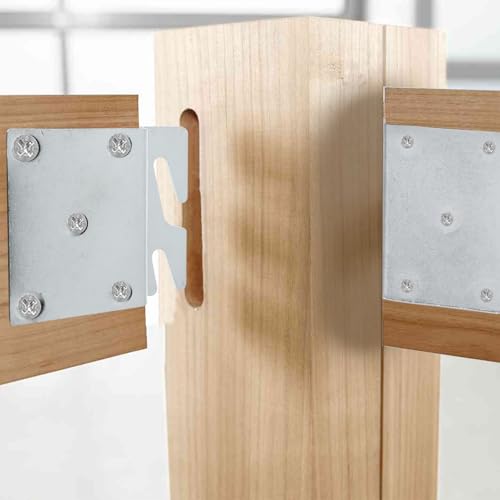
Prime Mcredy Bed Rail Brackets, Heavy Duty Silver Bed Frame Hooks, 5-Hole, 4Pcs




As an Amazon Associate we earn from qualifying purchases. Product prices and availability are accurate as of the date/time indicated.
Start here: identify which system your bed uses before ordering — hooks and bolts are not interchangeable, and neither part fits the other frame.
The five systems, and how to tell them apart
Rail hooks and slots
A steel plate is screwed or recessed into the end of each side rail, with two to four hooks stamped into it. The headboard and footboard posts carry matching plates with slots. The rail lifts up, drops in, and the bed’s own weight locks it. Almost every mass-market wooden bed uses this.
Bolt-through
A bolt passes through the post and threads into a barrel nut or a threaded insert in the rail end. Stronger and more rigid than hooks, common on heavier and older frames, and the system most likely to work loose over time because a single bolt carries the whole joint.
Pin and bracket
Pegs on the rail drop into a bracket on the post. A simpler cousin of the hook system, generally on lighter frames, and the one that rattles first.
Wooden ledger and screws
No hardware at all: a strip of timber inside the rail carries the slats, and the rail is screwed or joined into the post. Found on older and handmade beds. If this joint is loose, the answer is re-gluing rather than a bracket, and the method is in our guide to re-gluing a loose joint.
Centre rail and legs
Separate from the perimeter: a rail running head to foot down the middle, with one or more legs to the floor. Queen and king beds need it, and a missing or wrongly set leg is a common cause of sagging and noise.
| What you see | System | Order by | Typical strength |
|---|---|---|---|
| Steel plate with hooks, slots in post | Rail hook | Plate length, hook count, hook spacing | Good |
| Bolt head visible on the post | Bolt-through | Bolt diameter, length, barrel nut size | Very good |
| Round pegs into a bracket | Pin and bracket | Peg diameter and spacing | Fair |
| Timber ledger, no metal | Traditional joint | Nothing — glue and screws | Good when sound |
| Rail down the middle with a leg | Centre support | Rail length, leg height | Essential on queen and king |
Measuring hook plates so the replacement fits
Hook plates are not standardised between makers, so three measurements decide compatibility.
- Plate length, top to bottom. Usually 100–180 mm.
- Number of hooks, two, three or four. More hooks spread the load and rattle less.
- Hook spacing, centre to centre. This is the one that must match the slots in the post exactly.
If the plate is damaged but the post slots are fine, order by the slots. If both are damaged, replace all four plates and both post plates as a set — mixing a new plate into three old ones puts the whole frame slightly out of square.
Recessed plates sit in a routed pocket flush with the rail end; surface-mounted ones screw straight on and stand a few millimetres proud. They are not interchangeable without re-routing, so note which you have.
Bolt-through: the sizes that turn up
Bed bolts are usually coarse-thread and larger than furniture bolts.
| Thread | Diameter | Typical length | Note |
|---|---|---|---|
| 1/4 in-20 UNC | 6.35 mm | 65–90 mm | The most common in the US |
| 5/16 in-18 UNC | 7.94 mm | 75–100 mm | Heavier frames |
| M6 | 6 mm | 60–90 mm | European and imported frames |
| M8 | 8 mm | 70–110 mm | Heavier imported frames |
1/4 in-20 and M6 are close enough to be confused and will not cross-fit. Measure an existing bolt with a caliper, or take it to the shop. And check whether the rail end holds a barrel nut — a cylindrical nut sitting in a cross-drilled hole — because a bolt alone is useless without one, and they are sold separately.
Bed bolts loosen. That is not a fault, it is the joint working; a bolt through end grain compresses the timber slightly every night. Retighten every six months, or fit a bolt with a nylon-insert nut where the design allows it.
Noise, which is usually the joint and not the slats
A squeaking bed is nearly always metal moving against timber at a rail joint, or a slat shifting in its holder. Before buying anything, find the noise:
- Press down on each corner in turn with the mattress off. A corner that clicks is the rail joint.
- Push each slat sideways. One that moves is the source of a sharper, higher noise.
- Rock the whole frame side to side. Movement here with tight corners means the centre support or the slat base.
The full diagnosis, and the four causes in the order to check them, are in our guide to a squeaking wooden bed frame. Replacing hardware fixes noise only when the hardware is actually the cause.
What to buy
- Bed rail hook brackets The common system; match plate length and hook spacing On Amazon →
- Bed bolts, M6 x 100 mm For a bolt-through frame; measure the existing bolt first On Amazon →
- Barrel nuts, M6 A bed bolt is useless without one, and they sell separately On Amazon →
- Adjustable centre support leg Queen and king frames need one, set to the right height
- Digital caliper Separates 1/4 in-20 from M6, which look identical
What to buy


Fitting, and the one check people skip
- Photograph the joint before dismantling. Hook orientation and which face the plate sits on are both easy to get wrong on reassembly.
- Assemble on a flat floor, loosely, all four corners before tightening anything. A frame tightened corner by corner ends up out of square.
- Check the diagonals. Measure corner to corner both ways; equal diagonals mean square. This is the step almost everyone omits, and an out-of-square frame is what makes slats pop out later.
- Set the centre leg last, with the frame square and the slats in, so it touches the floor without lifting the rail.
- Retighten after a fortnight. Everything beds in.
Questions we get asked
Are bed frame brackets universal?
No. Hook plates vary in length, hook count and hook spacing between makers, and none of it is standardised. Measure the plate and the slot spacing, or replace all four rails’ hardware as a matching set.
What size are bed frame bolts?
Most often 1/4 inch-20 UNC or M6, with 5/16 inch and M8 on heavier frames. The imperial and metric sizes are close enough to confuse and will not cross-fit, so measure with a caliper. Check whether you also need the barrel nut, which is usually sold separately.
Why do my bed bolts keep coming loose?
Because a bolt into end grain compresses the timber slightly under load every night, so the joint relaxes. Retighten twice a year. If a bolt will no longer hold at all, the hole has enlarged — a barrel nut one size up, or a threaded insert, restores it.
Can I convert a hook frame to bolt-through?
Usually yes, and it makes the frame more rigid, but it means drilling the posts and the rail ends accurately and fitting barrel nuts. Corner brackets added to the existing hook system are the easier way to get most of the same rigidity.
Do I need a centre support leg?
On a queen or king, yes — the slats span too far without one and the middle sags whether or not you can see it. The height matters as much as the presence: a leg set too long lifts the middle of the bed, and one too short does nothing.